

In today’s competitive digital environment, website authority plays a crucial role in how easily a site can compete in search results. When I analyze a website’s SEO performance, one of the first metrics I look at is its ahrefs domain rating. This metric, which some users refer to as ahrefs domain authority, helps estimate the strength of a website’s backlink profile compared to others on the web.
Many website owners and SEO beginners often ask the same question: how to increase domain rating ahrefs and whether improving this domain ranking ahrefs score can truly strengthen their search performance.
While it is true that ahrefs’ domain rating does not directly control Google rankings, it reflects the strength of a website’s backlinks, a well-known ranking signal.
In this detailed guide, I will explain:
- What Domain Rating means
- How Ahrefs calculates DR
- Proven strategies to increase Domain Rating
- Common mistakes that slow down DR growth
- Realistic expectations for improving website authority
If you are managing a website, blog, or online business, understanding how to improve your Domain Rating can help you build a stronger and more sustainable SEO strategy. Many businesses accelerate this process by working with professional SEO link building services that focus on acquiring high-quality editorial backlinks from authoritative websites.
What Is Domain Rating (DR) in Ahrefs and Why Is It Important for SEO?
Domain Rating (DR) is a metric developed by Ahrefs that measures the strength of a website’s backlink profile on a scale from 0 to 100.
The higher the score, the stronger the backlink authority of the domain is considered to be.
Ahrefs calculates Domain Rating by analysing:
- The number of websites linking to your domain
- The authority of those linking websites
- How link equity is distributed across domains
A website with many high-quality backlinks from trusted domains usually has a higher DR score.
Ahrefs Domain Comparison: Understanding DR vs. UR
While ahrefs domain rating (DR) tells you about the strength of your entire website, it is only half of the story. To truly master these metrics and improve your search performance, you must understand url rating ahrefs (UR).
Think of this as an ahrefs domain comparison between the “Macro” and the “Micro” levels of your SEO authority.
1. Domain Rating (DR) – The Macro View
DR is a site-wide metric. It represents the collective strength of every backlink pointing to your entire domain.
- The Benefit: A high DR acts like a “lifting tide” for all your content. It makes it significantly easier for new blog posts to get indexed and reach the first few pages of Google without needing immediate external links.
- The Goal: You increase ahrefs domain rating to improve your site’s overall “reputation” in the eyes of search engines.
2. URL Rating (UR) – The Micro View
Url rating ahrefs (UR) measures the strength of a specific page’s backlink profile on a scale of 0 to 100.
- The Benefit: Google ranks pages, not just websites. If you are targeting a high-competition keyword, a high DR helps your site get noticed, but a high UR is what wins the top 3 spots in the SERPs.
- The Goal: You increase UR by building targeted backlinks directly to a specific article or by using strategic internal linking from your highest-authority pages.
The Power Dynamic: Why Both Matter
To dominate search results, you need a balance. If you have a High DR but Low UR on a specific post, you might rank on page 2 or 3, but you’ll struggle to hit #1. Conversely, a Low DR but High UR means that specific page is strong, but the rest of your site remains “weak” in the eyes of competitors.
| Feature | Ahrefs Domain Rating (DR) | URL Rating Ahrefs (UR) |
| Scope | Entire Domain (site-wide) | Specific URL (page-level) |
| Primary Focus | Overall Authority & Trust | Ranking for a specific keyword |
| Growth Driver | Site-wide link building & PR | Targeted guest posts & internal links |
Confirmed Facts About Domain Rating Updates
It is important to track your progress correctly during an Ahrefs DR update. Here is what is confirmed about how these metrics move:
- Relative Scaling: DR is a relative metric. If your competitors grow faster than you, your DR might stay the same or even drop, even if you are gaining links.
- Link Equity Distribution: Links from a site that links to thousands of other pages pass less “juice” than a link from a site that only links to a few high-quality sources.
- Not a Ranking Factor: Always remember that while high DR correlates with better rankings, it is a third-party metric. Google uses its own version of authority (PageRank), which Ahrefs attempts to mimic with DR and UR.
Important Clarification
It is important to understand that Domain Rating is not a Google ranking factor.
Google does not use Ahrefs data. Instead, DR is a third-party estimate used by SEO professionals to evaluate link strength.
However, websites with higher DR often perform better in search results because they tend to have strong backlink profiles, which Google does consider.
Ahrefs Domain Rating Explained
At its core, ahrefs’ domain rating is a logarithmic scale from 0 to 100. This means it is much easier to grow your score from 10 to 20 than it is to move from 70 to 80. Because the score is relative to every other site on the web, your ahrefs domain rank might fluctuate even if you aren’t losing links, simply because other sites are growing faster than yours.
How Does Ahrefs Calculate Domain Rating for a Website?
Ahrefs calculates Domain Rating using a complex algorithm that evaluates the quality and distribution of backlinks across domains.
Three main factors influence how the score is calculated.
Referring Domains
Ahrefs focuses heavily on unique referring domains rather than the total number of backlinks.
For example:
- 100 backlinks from a single website carry limited authority.
- 100 backlinks from 100 different websites signal stronger authority.
This is why link diversity is important for improving Domain Rating.
Authority of Linking Websites
Not all backlinks have equal value.
A backlink from an authoritative website passes more link equity than links from small or low-quality websites.
For example, a link from a well-known technology publication will typically have more influence than several links from small personal blogs.
Link Equity Distribution
Ahrefs also considers how many external domains a linking website connects to.
If a website links to thousands of domains, each link transfers a smaller portion of authority.
This means editorial links within high-quality content usually carry more value than links placed in directories or large link lists.
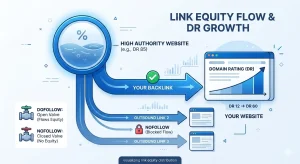
When an authoritative site links to you, it passes what SEOs call ‘Link Juice’ or Link Equity. Think of this as a vote of confidence. If a high-authority page with very few external links points to your site, you receive a larger share of that equity, which directly impacts your DR.
What Is Considered a Good Domain Rating Score in Ahrefs?
Many website owners worry about their Domain Rating score without understanding typical benchmarks.
The meaning of a “good” DR depends on the size and maturity of the website.
Below is a general guideline used by many SEO professionals.
| DR Range | Site Type / Authority Level | SEO Competitiveness |
| 0 – 10 | New / Personal Blogs | Very Low |
| 10 – 30 | Small Business / Niche Sites | Developing |
| 30 – 50 | Established Niche Leaders | Moderate |
| 50 – 70 | Major Industry Authorities | High |
| 70 – 100 | Global Brands (e.g., NYT, Apple) | Extreme |
For many small businesses and blogs, reaching DR 30 to DR 50 is already a strong achievement.
Instead of chasing extremely high scores, it is often more useful to focus on steady growth and quality backlinks.
Note: Remember that DR is logarithmic. This means it is significantly easier to jump from DR 10 to 20 than it is to jump from DR 70 to 80. As your DR increases, you will need higher-quality links to move the needle.
How To Increase Domain Rating in Ahrefs Effectively?
The most reliable way to improve your domain ranking ahrefs is by strengthening your website’s backlink profile. A higher ahrefs domain rank signals to the tool that your site is a powerhouse in your niche.
However, improving your ahrefs domain ranking is not just about getting a large number of links; it’s about the quality of those referring domains. A few backlinks from authoritative websites can have a greater impact than hundreds of links from low-quality sources.
If you are trying to understand how to increase domain rating Ahrefs, the key principle is to focus on earning trustworthy backlinks from credible websites within your industry. Below are several proven strategies that SEO professionals consistently use to improve Domain Rating in a sustainable way.
Build High-Quality Backlinks
Backlinks remain the most important factor influencing Domain Rating because the metric is designed specifically to measure the strength of a website’s backlink profile.
When another website links to your content, it signals that your site is a valuable resource. Ahrefs measures this signal and transfers a portion of the linking website’s authority to your domain.
However, not all backlinks provide equal value. The authority passed by a backlink depends on several factors such as the credibility of the linking website, the relevance of the content, and the number of external links present on the page.
Strong backlinks usually come from:
- Industry websites that publish relevant content within your niche
- Reputable blogs with engaged audiences and established credibility
- News publications that are recognised as authoritative sources
- Educational websites such as universities or research platforms
- Authoritative niche platforms that specialise in your industry
For example, if you run a digital marketing website, a backlink from a respected marketing blog carries far more authority than a random link from an unrelated website.
It is important to focus on earning backlinks naturally through valuable content and outreach, rather than attempting to artificially inflate link numbers.
The ultimate goal is not simply to collect backlinks but to earn links from relevant and trustworthy websites that add genuine credibility to your domain.
Pro Tip: Relevance Trumps Rating. Don’t get blinded by high numbers. In the eyes of search engines, Niche Relevancy is often more important than the DR score itself. A backlink from a DR 30 website that is strictly within your industry often carries more weight and “ranking power” than a DR 60 link from a generic news site or an unrelated niche.
Use Guest Posting to Earn Contextual Backlinks
Guest posting is one of the most widely used strategies for building backlinks and improving Domain Rating.
In this approach, you contribute an article to another website or blog in your industry. In return, the publisher allows you to include a backlink to your website within the content or author bio.
Guest posting provides multiple benefits beyond just improving DR:
- It helps build authority within your industry by sharing expertise with a wider audience.
- It can drive referral traffic from readers who discover your content.
- It generates editorial backlinks, which are considered among the most valuable types of links.
For example, if you publish a well-researched article on an established industry blog, the backlink included in the article can pass strong authority to your website.
However, guest posting should always focus on delivering real value to readers. Articles that are overly promotional or written only to insert links are less likely to be accepted by reputable publishers.
Effective guest posts typically include:
- Unique insights or expertise
- Practical advice or tutorials
- Original research or case studies
- Well-structured and informative content
When done correctly, guest posting can become a long-term strategy for building both backlinks and professional relationships within your industry.
Create Content That Naturally Attracts Links
One of the most sustainable ways to increase Domain Rating is by publishing content that naturally earns backlinks over time.
Some types of content are more likely to be referenced by other websites because they provide unique value, insights, or useful resources.
Examples of link-worthy content include:
- Comprehensive guides that cover a topic in great depth
- Industry research reports that present original data
- Original data studies that provide statistics or insights
- Infographics that simplify complex topics visually
- Interactive tools or calculators that solve practical problems
For instance, if you publish a detailed industry report containing unique data, journalists, bloggers, and researchers may cite your findings and link back to your website as a source.
This process is often called “link earning”, because the backlinks are gained naturally rather than through direct outreach.
High-quality content has several advantages for improving Domain Rating:
- It encourages organic backlinks from other websites
- It strengthens your reputation as an authoritative source
- It creates long-term SEO value as links accumulate over time
While creating this type of content requires more effort, it often generates sustainable backlink growth, which is one of the strongest signals for increasing Domain Rating.
Use Broken Link Building
Broken link building is another effective strategy for acquiring backlinks while helping other website owners improve their content.
Over time, websites often accumulate links that lead to pages that no longer exist. These are called broken links, and they create a poor user experience for visitors.
Broken link building works by identifying these broken links and offering your content as a replacement.
The process generally involves three steps:
- Finding broken links on relevant websites within your industry using SEO tools.
- Creating or identifying high-quality content that matches the original topic of the broken page.
- Contacting the website owner and suggesting your content as a replacement link.
This strategy is effective because it provides value to both parties.
The website owner benefits by fixing a broken link, improving their site’s usability. At the same time, you gain the opportunity to earn a relevant backlink that can strengthen your Domain Rating.
For example, imagine a blog post that links to an outdated resource that no longer exists. If you have created similar content that covers the same topic, the website owner may replace the broken link with your page.
Because these backlinks are usually placed within relevant editorial content, they can pass meaningful authority and contribute positively to your backlink profile.
What are the Advanced “Pro” Strategies for High-Velocity DR Growth?
While basic guest posting is a great start, reaching the “Authority Tier” (DR 60+) requires a more sophisticated approach. Here are the advanced tactics the pros use to scale authority.
1. The “Middleman” Strategy (Bridge Linking)
It is notoriously difficult to get high-authority sites to link directly to your “Money Pages” (Sales or Service pages). They prefer linking to educational resources.
- The Tactic: Create a “Linkable Asset”, such as a free tool, a calculator, or a massive data study.
- The Flow: Build all your high-DR backlinks to this asset. Then, use internal links to pass that “link juice” from the asset to your commercial pages.
- Why it works: You earn the link easily because the content is valuable, and you still benefit from the authority boost across your entire domain.
2. Digital PR via HARO and Connectively
If you want links from “Unicorn” sites like Forbes, The New York Times, or TechCrunch, you won’t get them through standard outreach. You need Digital PR.
- The Tactic: Use platforms like Connectively (formerly HARO) or Featured.com. These sites connect journalists with expert sources.
- The Result: By providing a high-quality quote to a journalist, you can earn a “Brand Mention” and a backlink from a DR 80+ news site. Just 2 or 3 of these can move your DR more than 50 low-quality guest posts.
3. Debunking the “Nofollow” Myth
Many beginners believe that rel="nofollow" or rel="ugc" links are “useless” because they don’t pass DR or link equity directly. This is a mistake.
- The Reality: While it’s true that Ahrefs doesn’t count $nofollow$ links toward your DR score, a profile with 100% dofollow links looks suspicious to Google.
- The Strategy: A natural, “healthy” backlink profile includes a mix of link types. High-traffic $nofollow$ links (like those from Wikipedia or major news comments) drive referral traffic, which signals to Google that your site is a legitimate brand, not just a link-building experiment.
How Can Internal Linking Help Improve Domain Rating?
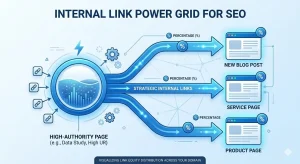
Internal linking is often overlooked but still plays an important role in overall SEO performance.
Although internal links do not directly increase Domain Rating, they help distribute link equity across a website.
Passing Authority Across Pages
When one page earns backlinks, internal links allow that authority to flow to other pages within the same domain.
This helps strengthen the overall site structure.
Improving Website Crawlability
Search engines discover pages more efficiently when internal links connect content logically.
Better crawlability supports stronger indexing and visibility.
Strengthening Key Pages
Strategic internal linking can help support important pages such as:
- Service pages
- Product pages
- Cornerstone content
This creates a stronger internal SEO framework.
How Long Does It Take to Increase Domain Rating in Ahrefs?
Domain Rating growth depends on multiple factors, including link acquisition speed and backlink quality.
Typical timelines may look like this:
| SEO Activity Level | Expected DR Growth Timeline |
| Minimal link building | 6 to 12 months |
| Moderate outreach | 3 to 6 months |
| Active link building campaigns | 1 to 3 months noticeable improvement |
However, Domain Rating is relative, meaning it also depends on how quickly other websites acquire backlinks.
For example, if many high-authority sites gain links faster than your website, your DR may grow more slowly.
What Common SEO Mistakes Prevent Domain Rating From Increasing?
Several common mistakes can slow down or even damage Domain Rating growth.
Buying Low-Quality Backlinks
Cheap backlink packages often come from spam networks or automated websites.
These links provide little authority and may harm long-term SEO performance.
Some website owners search online for where to buy backlinks in an attempt to grow Domain Rating quickly. While paid links can exist within legitimate editorial partnerships, cheap automated backlink packages often come from spam networks and provide little real authority. High-quality backlinks should always come from trusted publishers, real websites, and relevant industry sources.
Ignoring Relevance
Links from unrelated industries often carry weaker signals.
Search engines and SEO tools both favour topically relevant backlinks.
Over-Optimised Anchor Text
Using the same keyword anchor repeatedly can appear unnatural.
Healthy backlink profiles usually contain:
- Branded anchors
- Natural phrases
- Generic anchors
Building Links Too Quickly
Unnatural spikes in backlink growth can appear suspicious.
A steady, natural growth pattern is typically more sustainable.
Sometimes, your DR isn’t growing because of ‘anchor weight’ from Toxic Links. If your site is targeted by spammy bot networks or low-quality directories, these bad links can stagnate your growth. While Google is better at ignoring spam now, a manual audit and a Disavow file (submitted via Search Console) can help clean up your profile and allow your legitimate authority to shine through.
Can a New Website Increase Its Domain Rating Quickly?
Yes, but growth depends on consistent SEO efforts.
Let’s consider a simple real-world scenario.
Example Scenario
A new SaaS website launches a marketing blog.
Their strategy includes:
- Publishing detailed SEO guides
- Creating original industry research
- Guest posting on marketing websites
- Building relationships with industry bloggers
Over six months, the website gradually earns backlinks from several authoritative marketing websites.
As a result, its Domain Rating grows from DR 0 to DR 35.
This type of progress is achievable when link building efforts are consistent and strategic.
What Are the Biggest Myths About Increasing Domain Rating in Ahrefs?
There are many misconceptions about Domain Rating.
Separating facts from myths helps avoid ineffective SEO strategies.
Confirmed Facts
- Domain Rating measures backlink authority.
- Referring domains influence DR more than total backlinks.
- High-authority links pass stronger signals.
Proposed Strategies
Several SEO techniques are commonly recommended to increase Domain Rating.
Examples include:
- Guest blogging
- Digital PR campaigns
- Resource page outreach
These methods can be effective when used responsibly.
Common Misinformation
Some claims about Domain Rating are incorrect.
Examples include:
- Domain Rating directly controls Google rankings.
- Internal links alone increase DR.
- Buying backlinks guarantees fast DR growth.
These claims can lead to poor SEO decisions.
What Is the Most Sustainable Way to Increase Domain Rating in Ahrefs?
The most sustainable strategy focuses on long-term SEO practices.
Three elements consistently contribute to steady Domain Rating growth:
Valuable Content
Publishing useful, informative content encourages natural backlinks.
Relationship-Based Outreach
Building relationships with industry publishers and bloggers often leads to natural link opportunities.
Consistent SEO Efforts
SEO is a long-term process. Regular content updates, outreach, and link acquisition gradually strengthen website authority.
Rather than chasing shortcuts, focusing on quality, relevance, and consistency produces more reliable results.
Case Study: How We Scaled a Client’s Website from DR 12 to DR 67 in Just 2 Months?
Many SEO guides talk about Domain Rating in theory, but they rarely show the direct correlation between authority growth and keyword rankings.
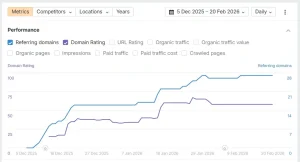
When we took over this client’s website in December 2025, it was an “SEO ghost town.” The domain was stagnant, with zero presence on the first page of Google. By executing a high-velocity link-earning strategy, we didn’t just move a metric—we unlocked massive organic visibility.
The DR Growth Timeline: A 45-Day Authority Sprint
Ahrefs’ Domain Rating is a logarithmic scale, meaning jumps get harder as you go higher. However, with the right quality of referring domains, growth can be explosive. Here is exactly how the numbers moved:
| Date | Domain Rating (DR) | Milestone Reached |
| Dec 12, 2025 | 12 | Baseline (Project Start) |
| Dec 15, 2025 | 15 | First 2 high-authority guest posts indexed |
| Dec 21, 2025 | 38 | Featured on a major industry news site (Viral impact) |
| Jan 17, 2026 | 60 | Authority threshold reached; site is now a “competitor” |
| Jan 26, 2026 | 67 | Achieved steady-state authority with daily traffic flow |
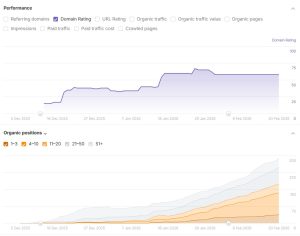
The “Authority-to-Ranking” Correlation
The most critical takeaway is that Google began to “trust” the content as the DR increased. We tracked the organic positions for the site’s core keywords alongside the DR growth.
Before we started, the site had only one post in the top 100 results (sitting at position #56). Within six weeks, the landscape changed entirely.
Organic Position Growth Table
| Google Ranking Position | Dec 2025 (Baseline) | Jan 15, 2026 (Mid-Point) | Now (Current Status) |
| Positions 1 – 3 | 0 | 3 | 38 |
| Positions 4 – 10 | 0 | 14 | 97 |
| Positions 11 – 25 | 0 | 20 | 39 |
| Positions 25 – 50 | 0 | 25 | 75 |
| Positions 51+ | 1 | 40 | 40 |
Key Insight: Notice the jump from 14 keywords to 97 keywords in the top 10 positions. This is the “Authority Dividend.” Once your DR crosses a certain threshold (in this case, DR 60), Google becomes much more willing to test your content on the first page.
3 Pillars of This Success Story
How did we achieve these results for our client? We followed three non-negotiable rules:
- Quality over Quantity: We didn’t build 500 cheap links. We secured 12–15 powerhouse links from sites that already had massive organic traffic and high DR.
- Topic Relevance: Every link came from a domain that was topically related to the client’s niche. A DR 40 link from a relevant site is often worth more than a DR 70 link from a random news site.
- Content Refinement: We didn’t just build links; we updated the client’s existing content to ensure it was “link-worthy.” This included adding original data and interactive elements like calculators and infographics.
Conclusion
Understanding how to increase domain rating Ahrefs requires recognising that Domain Rating is primarily a measurement of backlink authority.
Although it does not directly influence search engine rankings, it provides valuable insight into the strength of a website’s backlink profile compared with other domains.
By focusing on earning high-quality backlinks, producing valuable content, and maintaining consistent SEO practices, website owners can gradually improve their Domain Rating and strengthen their online authority.
Over time, these efforts contribute to a stronger website that is better positioned to compete in search results.
Frequently Asked Questions
How many backlinks are required to increase Domain Rating?
There is no fixed number. Domain Rating depends mainly on the number and authority of referring domains, not just total backlinks.
Why does Domain Rating sometimes decrease?
Domain Rating can decrease when other websites gain backlinks faster, causing relative authority scores to shift.
Can social media links increase Domain Rating?
Most social media links are nofollow, so they typically have minimal impact on Domain Rating.
Does content quality influence Domain Rating?
Content itself does not directly increase DR, but high-quality content attracts backlinks, which improve DR.
What is the fastest way to increase Domain Rating?
The fastest ethical approach is earning backlinks through high-quality content, guest posts, and outreach campaigns.
Should I focus on Domain Rating or organic traffic?
Organic traffic is generally a more important performance metric, but Domain Rating helps evaluate backlink strength.
Can removing spam backlinks improve Domain Rating?
Removing toxic links may improve overall SEO health, but it does not always immediately increase DR.