

White label link building has become an important delivery model for SEO agencies, digital marketing consultants and businesses looking to expand their services without recruiting a dedicated outreach team.
Building quality backlinks is not simply about contacting hundreds of websites and requesting placements.
It involves competitor research, identifying suitable publications, evaluating editorial standards, developing relevant content, managing publisher relationships and monitoring links after publication.
For an agency managing several client websites, delivering these activities consistently can become expensive and operationally demanding.
This is where white label link building offers a practical business advantage.
An agency can outsource specialist link acquisition while retaining its own branding, client relationship, campaign strategy and commercial pricing.
However, the financial attraction of outsourcing should not distract from backlink quality. A provider offering 50 inexpensive placements may create less business value than one earning five genuinely relevant editorial references.
Drawing on published insights from experienced SEO professionals, industry service models and practical backlink evaluation principles, we examined what makes white label link building commercially worthwhile, how to assess suppliers and which strategies deserve greater priority in 2026.
Our central conclusion is straightforward: successful white label campaigns depend on publisher relevance, editorial credibility, financial transparency and measurable client outcomes, not backlink volume alone.
What Is White Label Link Building?
White label link building is an outsourced SEO service in which a specialist provider researches, acquires and reports backlinks on behalf of another agency, allowing that agency to deliver the service under its own brand.
The agency remains responsible for the client relationship, while the fulfilment partner handles agreed operational activities.
For example, suppose a UK digital marketing agency manages SEO for 15 businesses. Five of those businesses require continuous backlink acquisition, but the agency does not have its own outreach specialists.
Instead of recruiting additional employees, the agency can appoint a white label partner to manage publisher research, outreach, content creation and placements.
The partner supplies unbranded reports, which the agency reviews and incorporates into its client deliverables.
| Responsibility | SEO agency | White label partner |
| Client communication | Primary responsibility | Usually no direct contact |
| SEO objectives | Defines and approves | Advises where agreed |
| Competitor backlink analysis | Reviews findings | Performs detailed research |
| Publisher outreach | Oversees quality | Executes |
| Content development | Approves requirements | Produces where included |
| Backlink placement | Approves or audits | Coordinates |
| Performance reporting | Presents to clients | Supplies supporting data |
| Billing | Controls retail pricing | Charges agreed fulfilment fees |
White labelling changes who performs and presents the service. It does not automatically determine whether the backlinks are high quality or compliant with search engine policies.
Why Are SEO Agencies Investing in White Label Link Building?
The primary attraction is access to specialist delivery capacity without maintaining the equivalent permanent staffing infrastructure.
For smaller agencies, this can make backlink services financially possible. For established agencies, it can increase capacity during periods of rising demand.
Lower Fixed Operating Costs
An internal link building department may require outreach specialists, SEO analysts, editors, content writers, project managers and paid research platforms.
These expenses continue even when client demand declines.
Under a white label arrangement, an agency can often purchase agreed deliverables, monthly capacity or a managed campaign instead.
The financial benefit comes from converting some fixed employment and infrastructure costs into more flexible supplier expenses.
This does not eliminate management costs, and the potential savings depend on volume, pricing and supplier performance.
Access to Specialist Outreach Experience
Experienced providers understand how to identify appropriate publishers, develop editorial pitches and evaluate placement opportunities.
Agencies unfamiliar with link building can benefit from that operational experience.
However, access to publisher contacts should never substitute for independent quality checks.
Improved Capacity Planning
A growing agency may need to support several sectors simultaneously, including SaaS, ecommerce, professional services and financial services.
Working with a specialist allows additional campaigns to be introduced without immediately expanding permanent headcount.
Greater Focus on Client Relationships
Outsourcing repetitive prospecting, outreach coordination and publication monitoring can free internal resources for technical SEO, content strategy, account management and commercial development.
The strongest white label relationship is therefore not simply a cheap backlink supplier. It is an operational partnership with well-defined responsibilities.
How Does White Label Link Building Work Step by Step?
We consider a structured delivery process essential for maintaining quality across multiple client accounts.
Step 1: Audit the Existing Backlink Profile
Before acquiring links, examine the website’s existing referring domains, strongest pages, link attributes, anchor text and historical acquisition patterns.
This helps reveal whether the website needs stronger topical coverage, more relevant referring domains or better supporting content.
Our approach to competitor backlink analysis is particularly useful at this stage because it identifies publishers already referencing competing businesses.
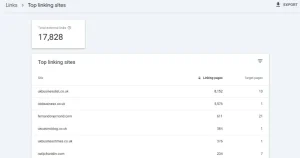
Existing backlink profile and referring domains before starting a white label link building campaign.
Step 2: Identify Commercially Important Target Pages
Not every website page deserves the same outreach investment.
Prioritise pages that support meaningful business objectives, such as service enquiries, product discovery, qualified leads or useful research resources.
Review whether each target page offers sufficient value to justify an editorial reference.
For example, a SaaS company may have a detailed industry benchmark report that publishers find more useful than a generic product sales page.
Step 3: Research Relevant Publishers
The provider identifies publications covering topics relevant to the client.
A finance company might benefit from respected business publications, financial education platforms or specialist industry resources.
Publisher selection should consider the exact audience, content quality and reason for linking.
Step 4: Evaluate the Proposed Websites
A publisher should pass manual quality checks before approval.
Domain Rating, organic traffic estimates and backlink metrics can assist with screening, but none of these figures independently establishes editorial quality.
A high-metric website publishing unrelated commercial content across numerous industries may be an unsuitable candidate.
Step 5: Develop Useful Content and Outreach Pitches
The strongest campaigns provide publishers with material worth referencing.
That may include expert commentary, original research, useful explanations, case studies or practical resources.
Agencies can also use specialist guest posting services when the objective is to contribute genuinely useful content to relevant third-party publications.
A guest post should offer independent value to its readers rather than exist solely to carry a keyword-rich backlink.
Step 6: Obtain Approval and Publish
The agency reviews the proposed publisher, article subject, target page and expected link arrangement.
The publisher should retain legitimate editorial discretion.
Any commercial consideration must be handled transparently, including appropriate link qualification where required.
Step 7: Verify the Live Placement
After publication, check the exact URL rather than relying on a supplier’s statement that the link has been delivered.
Confirm that the page loads, the link points to the correct destination, its attributes are accurate and the surrounding content makes sense.
Step 8: Monitor and Report Results
A backlink should not be treated as a completed business outcome merely because it appeared online.
Monitor whether the placement remains live, whether it attracts qualified referrals and how relevant organic performance changes over time.
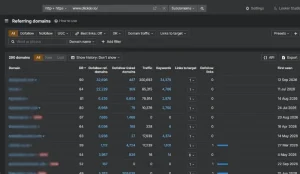
Backlink verification report showing the linking page, destination URL, anchor text and publisher quality metrics.
Which White Label Link Building Strategies Are Most Effective? Our Percentage Ratings
We assess link acquisition methods using an editorial priority framework.
These percentages are our strategic suitability ratings, not measured ranking increases, guarantees, customer satisfaction surveys or independently established industry averages.
Our scoring considers the following weighted factors:
| Evaluation factor | Weight |
| Topical relevance | 30% |
| Editorial independence and credibility | 25% |
| Potential audience and referral value | 20% |
| Long-term sustainability | 15% |
| Policy compliance and controllability | 10% |
| Total | 100% |
Higher ratings indicate methods we would generally prioritise for sustainable agency campaigns, assuming they are executed appropriately.
| Link building method | Editorial priority rating | Main consideration |
| Independently earned editorial backlinks | 96% | Strong editorial credibility |
| Earned digital PR backlinks | 94% | Newsworthiness and specialist outreach |
| Relevant resource-page references | 89% | Genuine usefulness |
| Expert commentary and industry citations | 88% | Recognised subject expertise |
| Broken link building | 84% | Suitable replacement resources |
| High-quality guest contributions | 83% | Editorial independence and content value |
| Genuine industry partnership links | 81% | Real commercial relationships |
| Relevant local business citations | 74% | Stronger suitability for local businesses |
| Paid promotional placements with correct attributes | 55% | Referral and awareness value, not purchased ranking credit |
| Paid ranking-focused link insertions | 12% | Significant link spam risk |
| Manipulative PBN backlinks | 5% | High long-term search risk |
An individual guest contribution may outperform a poor editorial opportunity. These ratings are prioritisation tools rather than predictions for specific links.
What Makes a White Label Backlink High Quality?
One of the biggest mistakes in outsourced link building is judging a backlink only by the referring website’s authority score.
We assess a placement through a combination of contextual and technical factors.
Topical Relevance
The subject of the linking website, the individual article and the destination page should connect logically.
For example, a specialist payroll provider receiving a reference from an article about SME payroll compliance has a clear contextual relationship.
An unrelated entertainment blog linking to the same payroll service simply because both sites possess certain SEO metrics offers a weaker editorial justification.
Our detailed analysis of relevant backlinks explores why topical alignment and genuine editorial value matter more than chasing impressive domain scores.
Organic Traffic and Audience Quality
A publisher with authentic readership may offer referral traffic, industry exposure and opportunities for further editorial recognition.
Organic traffic estimates can be useful screening indicators, but agencies should investigate unusual declines, irrelevant ranking keywords and signs of manipulated traffic.
Domain Rating and Domain Authority
Domain Rating and Domain Authority are proprietary third-party SEO metrics.
They are not Google’s own ranking scores.
A publisher with DR 45 and substantial industry relevance may be preferable to one with DR 80 that publishes unrelated link-selling content.
Editorial Standards
Review recent articles for originality, accuracy, readability, publication frequency and editorial consistency.
If every article appears designed to promote unrelated businesses through commercial anchors, that should prompt further investigation.
Link Position and Context
A genuine editorial link within a relevant article can be valuable because readers understand why the reference exists.
However, an in-content link is not automatically acceptable merely because its placement appears natural.
The method of acquisition and any commercial arrangement remain important.
Publisher Independence
A backlink should ideally represent a genuine editorial decision.
Agencies should be particularly cautious of private blog networks, artificial publishing arrangements and websites created mainly to manipulate ranking signals.
Fernando Raymond, SEO Expert, expressed a principle in his published discussion of SEO packages that remains relevant:
“Backlinks remain a cornerstone of SEO success, but quality far outweighs quantity.”
That observation captures an important distinction between building a backlink portfolio and merely purchasing link volume.
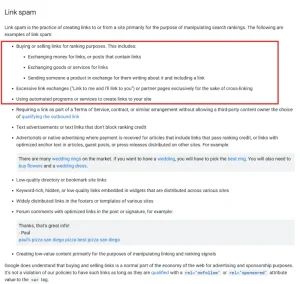
Google’s official explanation of link spam and the risks associated with manipulative backlink practices.
How Much Does White Label Link Building Cost in 2026?
White label link building costs vary according to the provider, industry, editorial requirements, content production, geography and number of placements.
The first financial distinction is between a standard retail SEO package and a genuine agency wholesale agreement.
For context, our published link building plans currently include a $1,999 monthly tier with eight backlinks and a $3,999 tier with 15 or more backlinks. These are publicly advertised package prices, not confirmed white label wholesale rates.
Agencies should request separate reseller quotations and confirm which fulfilment services are included.
Illustrative Agency Budget
The following figures demonstrate a hypothetical six-placement campaign. They are financial planning assumptions, not a quotation or observed market average.
| Campaign expense | Example monthly cost |
| Six outsourced placements at $200 each | $1,200 |
| Additional content production | $150 |
| Internal management and quality assurance | $150 |
| Total direct campaign cost | $1,500 |
| Client billing | $2,400 |
| Gross contribution before general overhead | $900 |
In this example, the agency earns a 37.5% gross contribution margin.
The calculation is:
Gross contribution margin = ($2,400 − $1,500) ÷ $2,400 × 100 = 37.5%
The markup on direct costs is 60%.
These are different measures. Markup compares profit with costs, while margin compares profit with revenue.
The example also assumes additional content expenses are not already included in the supplier’s fee. Agencies should avoid counting the same expense twice.
What Can Reduce an Agency’s Margin?
Several factors can affect profitability, including unsuitable placements, extra editorial revisions, delayed publication, additional outreach, currency conversion expenses and extensive account-management time.
Agency owners should examine contribution profit per client rather than assuming that every outsourced backlink produces the same return.
We also recommend maintaining a contingency allowance for unexpected campaign costs instead of pricing exclusively around the provider’s headline rate.
Is White Label Link Building More Profitable Than an In-House Team?
The financial answer depends on campaign volume and operating structure.
White label fulfilment can be attractive when demand is uncertain or when the agency needs specialist capacity without permanent recruitment.
An in-house team may become more economical once an agency has substantial, predictable monthly demand and the management capability to maintain its own outreach operations.
| Business consideration | In-house team | White label partner |
| Fixed employment costs | Higher | Generally lower |
| Initial setup | Recruitment and training | Supplier onboarding |
| Direct operational control | Higher | Contract-dependent |
| Ability to scale quickly | Recruitment-dependent | Supplier-capacity-dependent |
| Specialist publisher access | Must be developed | May already exist |
| Quality assurance | Internal | Shared responsibility |
| Confidentiality risk | Internal governance | Additional supplier controls |
| Cost at sustained high volume | May become competitive | Depends on wholesale rates |
An agency should compare the fully loaded internal cost per acceptable placement against the outsourced cost per acceptable placement.
That means counting the cost of rejected opportunities, management time, tools, content and remediation.
Comparing staff salaries directly against a supplier’s per-link quotation does not provide a complete financial picture.
How Do We Evaluate a White Label Link Building Provider?
We recommend assessing prospective partners before committing client campaigns.
A structured scorecard helps agencies avoid choosing a supplier solely on price or advertised domain metrics.
| Provider evaluation criterion | Maximum score |
| Publisher relevance and quality checks | 25 |
| Transparent placement and approval process | 20 |
| Google policy awareness and commercial link handling | 20 |
| Reporting accuracy and verification | 15 |
| Client confidentiality and account protection | 10 |
| Delivery terms and remediation procedures | 10 |
| Total | 100 |
For internal procurement purposes, an agency could provisionally classify assessment scores of 85–100 as strong, 70–84 as requiring specific improvements, and below 70 as unsuitable for immediate rollout.
These are suggested internal decision thresholds, not independently tested provider ratings.
A high numerical score should never override a serious compliance concern.
Questions to Ask Before Signing
- Can we approve publishers before publication?
- Will every placement have a publicly accessible source URL?
- How do you distinguish earned editorial links from paid promotional placements?
- Are paid links appropriately qualified?
- Can we reject unsuitable publishers without unexpected charges?
- Are content writing and revisions included?
- How are publication delays communicated?
- What happens when a backlink disappears?
- Do your reports contain third-party branding?
- Will you agree not to solicit our end clients directly?
A professional provider should be able to explain its workflow clearly, including what it cannot guarantee.
What Should a White Label Link Building Agreement Include?
A written agreement reduces uncertainty for both parties.
We would review five contractual areas before beginning a substantial campaign.
Scope of work: Define what is included, such as analysis, outreach, editorial development, target-page planning, placement verification and reporting.
Approval rights: State who approves publishers, topics, link attributes and proposed destinations.
Replacement and remediation: Clarify what happens if an agreed placement is removed, changed, incorrectly attributed or found to be unsuitable.
Confidentiality: Set expectations concerning unbranded reporting, client data access, communication restrictions and non-solicitation.
Billing and cancellation: Document payment schedules, campaign termination, outstanding work and refund or credit arrangements.
An agreement should also distinguish activities the supplier can control from outcomes that neither party can guarantee.
For example, a supplier may agree to replace an eligible lost placement, but should not promise that Google will index every page or improve a particular keyword’s position.
What Are the Biggest Risks of White Label Link Building?
Outsourcing creates commercial opportunities, but it also transfers part of the operational process to an external party.
The agency remains accountable to its client.
Low-Quality Publisher Networks
Some services market large inventories of websites without explaining their ownership, audience or editorial purpose.
An attractive Domain Rating does not necessarily establish that those websites provide meaningful value.
Excessive Commercial Anchor Text
Repeating the same exact-match keyword across unrelated articles can create a conspicuously artificial backlink pattern.
Anchor text should be descriptive and appropriate to the editorial context.
There is no universally safe percentage of branded, partial-match and exact-match anchors.
Improperly Qualified Paid Links
Google’s policies distinguish genuine editorial references from paid links intended to manipulate search rankings.
Paid advertising or sponsored placements can be legitimate marketing activities, but Google’s guidance calls for the appropriate rel=”sponsored” or rel=”nofollow” qualification.
A reseller should not promise that purchasing followed editorial links for ranking purposes is automatically compliant.
Unverifiable Reporting
A spreadsheet of publisher names and authority metrics is insufficient if the agency cannot identify the actual published pages.
Reports should show verifiable placement details.
Confidentiality Failures
A supplier contacting an end client unexpectedly, sending branded invoices or sharing account details with unauthorised parties can damage the agency’s commercial relationship.
The operational agreement should address these risks before work begins.
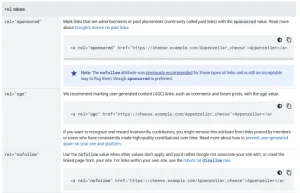
Google’s official guidance on sponsored, nofollow and user-generated link attributes.
How Should Agencies Measure White Label Link Building Results?
We evaluate link building through both deliverables and business outcomes.
A completed campaign may produce the intended number of backlinks without generating a proportional improvement in organic traffic.
That does not necessarily mean every placement failed, because rankings depend on wider factors including content quality, search intent, competition, technical performance and search engine changes.
It does mean the agency should investigate outcomes instead of reporting only volume.
| KPI | What it measures | Why it matters |
| Accepted live placements | Delivered and approved backlinks | Supplier fulfilment |
| Relevant referring domains | Distinct qualified linking websites | Backlink profile development |
| Link retention rate | Previously delivered links remaining live | Placement durability |
| Target-page organic clicks | Search visits to selected pages | Organic visibility |
| Non-branded impressions | Search exposure beyond brand queries | Keyword discovery |
| Relevant keyword positions | Visibility for target searches | Directional search performance |
| Referral traffic | Visits from linking pages | Direct audience value |
| Qualified enquiries | Leads associated with organic or referral visits | Commercial return |
How Is Link Retention Calculated?
Suppose 40 accepted placements are monitored and 36 remain live at the end of the agreed measurement period.
Link retention rate = 36 ÷ 40 × 100 = 90%
This percentage reflects that specific monitored group, not an industry average.
Agencies should also distinguish links intentionally removed under agreed terms from links lost unexpectedly.
How Is Organic Traffic Growth Calculated?
If a target page receives 800 organic clicks in the baseline period and 1,040 in a comparable later period:
Organic click growth = (1,040 − 800) ÷ 800 × 100 = 30%
However, this does not establish that link building alone caused the increase.
The agency should consider other SEO changes, seasonality, search demand and the timing of the campaign.
That principle is particularly relevant to performance measurement. Artificially increasing link counts is not an appropriate substitute for assessing relevance, sustainability and useful business outcomes.
How Long Does White Label Link Building Take to Deliver Results?
The first delivered placement and the first measurable SEO improvement are two different milestones.
Publisher research, outreach, editorial approval and content production can take several weeks depending on the campaign.
Organic performance changes may take longer and cannot be guaranteed within a fixed period.
Our suggested planning structure is a 90-day operational rollout.
| Period | Main activity | Expected operational output |
| Days 1–15 | Audit, client briefing and provider assessment | Approved campaign plan |
| Days 16–30 | Publisher prospecting and quality checks | Qualified outreach opportunities |
| Days 31–60 | Content development, pitching and placements | Initial accepted live links |
| Days 61–75 | Further outreach and placement monitoring | Expanded qualified coverage |
| Days 76–90 | Delivery audit and performance evaluation | Client report and next-quarter strategy |
These periods are planning guidelines, not guaranteed fulfilment dates.
At the end of the first 90 days, an agency should have enough operational information to judge communication quality, publisher suitability, cost control and initial delivery standards.
Longer-term SEO evaluation should continue beyond this rollout.
Is White Label Link Building Suitable for Every Business?
Not necessarily.
White label delivery is well suited to agencies that already provide SEO services but need specialist backlink acquisition capacity.
It may also appeal to consultants who want to expand their service range without establishing a dedicated publishing and outreach department.
However, it is less attractive when clients lack suitable content, the business cannot support the service economically or the agency is unwilling to perform quality assurance.
Different industries also require different editorial considerations.
SaaS and technology: Relevant software publications, integration partnerships, original product research and specialist interviews can create useful opportunities.
Financial and professional services: Editorial accuracy, credible sources, industry knowledge and strong publication standards become particularly important.
Local businesses: Regional publications, genuine local partnerships, professional directories and community resources may be more appropriate than broad international outreach.
Ecommerce: Useful product research, specialist comparisons, original guides and relevant industry publications may offer stronger editorial reasons for references.
Healthcare and other sensitive sectors: Providers should apply heightened scrutiny to factual accuracy, publisher credibility and the claims made in contributed material.
A single publisher inventory cannot satisfy every industry’s editorial requirements equally well.
Can White Label Backlinks Improve AI Search Visibility?
A growing number of agencies are positioning digital PR, editorial coverage and brand mentions as part of broader AI search visibility strategies.
There is a reasonable commercial argument for pursuing genuine recognition in publications that cover a company’s industry.
Relevant third-party coverage can help people discover a brand and create useful public information about its products or expertise.
However, agencies should be careful about claiming that a backlink guarantees inclusion in ChatGPT, Google AI Overviews, Perplexity or other AI-generated responses.
These systems use different information retrieval and generation methods, and their behaviour changes over time.
We would therefore treat AI visibility as an additional monitoring objective rather than an automatic consequence of purchasing backlinks.
Where relevant, an agency can monitor brand mentions, referral sources, appearances in selected AI answers and broader brand-search demand.
The measurable goal should remain useful market visibility rather than artificially manufactured authority signals.
How Can Agencies Avoid Common White Label Link Building Mistakes?
From a commercial and SEO perspective, avoidable mistakes often arise before outreach begins.
| Common mistake | Potential consequence | Better approach |
| Choosing the cheapest provider | Weak editorial quality | Assess cost per accepted, relevant placement |
| Buying links based only on DR | Irrelevant publishers | Review the actual website and linking page |
| Skipping target-page analysis | Poor campaign alignment | Map links to useful business objectives |
| Using repeated exact-match anchors | Manipulative patterns | Prioritise descriptive editorial wording |
| Ignoring paid-link attributes | Search policy exposure | Verify the commercial arrangement |
| Reporting only backlink counts | Weak client accountability | Include business and search KPIs |
| Failing to monitor links | Unnoticed placement losses | Schedule periodic verification |
| Promising guaranteed rankings | Unmanageable client expectations | Agree on controllable deliverables |
| Omitting confidentiality terms | Commercial relationship risk | Document client communication restrictions |
A good provider relationship depends on the agency’s own standards as much as the supplier’s capabilities.
Even established outreach partners require clear briefs, editorial review and appropriate monitoring.
What Should a White Label Link Building Report Include?
The reporting process should be sufficiently detailed for the agency to verify delivery without exposing unnecessary client information.
A practical monthly report includes:
- Reporting period, campaign objectives and client target URLs.
- Approved publisher domains and exact live article URLs.
- Anchor text, link attributes and relevant contextual information.
- Publisher relevance, authority metrics and estimated traffic where available.
- Publication and verification dates.
- Lost or amended links requiring follow-up.
- Organic performance indicators and important campaign limitations.
- Recommendations for the next reporting period.
Data sources and report dates should be identified internally so metrics can be reproduced.
It is also worth separating the fulfilment report, which confirms what the provider delivered, from the performance report, which explains what changed for the client’s website.
A professional agency should be able to reconcile those two reports without implying that every improvement was caused directly by a particular backlink.
How Does White Label Link Building Support Long-Term Agency Growth?
A sustainable white label partnership can support recurring agency revenue, broader service packages and improved operational focus.
However, stronger agency margins do not come simply from adding a markup to supplier invoices.
They come from delivering a service clients continue to value.
Our analysis of the wider benefits of backlinks highlights why search discovery, referral traffic, credibility and long-term visibility should all be considered when evaluating link acquisition.
The strongest reseller relationships typically have three commercial characteristics.
First, the agency understands the client’s business objectives and does not outsource strategic accountability.
Second, the provider has a repeatable delivery process that can be verified and improved.
Third, both parties establish realistic expectations about costs, publisher selection, reporting and remedial action.
As agencies mature, they may also adopt a hybrid approach, keeping strategy and quality assurance internally while outsourcing specialist research, writing and outreach capacity.
This arrangement can offer a useful balance between control and scalability.
Final Verdict
White label link building can be a commercially effective way for SEO agencies to expand service delivery, manage resource constraints and introduce specialist backlink acquisition without building a complete internal outreach department.
Our editorial assessment is that the operating model has strong potential when agencies retain strategic oversight, maintain approval rights and evaluate providers beyond headline backlink prices.
Nevertheless, outsourcing is not automatically cheaper, safer or more effective than internal delivery.
The financial result depends on campaign economics, supplier reliability, editorial standards and the agency’s ability to maintain quality assurance.
The strongest campaigns are built around genuinely relevant publications, appropriate links, useful content and measurable business objectives.
For agencies considering a partnership, we recommend starting with a controlled pilot, documenting acceptance criteria and reviewing actual delivery performance before increasing volume.
The objective should never be to accumulate the largest possible number of backlinks.
It should be to build a credible, sustainable online presence while protecting client trust and the agency’s long-term commercial reputation.
Frequently Asked Questions About White Label Link Building
What is the difference between white label link building and ordinary link building?
Ordinary link building describes acquiring backlinks. White label link building describes a service arrangement in which a specialist fulfils link building work for an agency that presents the service under its own brand.
Is white label link building safe for SEO?
White labelling itself is not a search ranking violation. Risk depends on how links are acquired, their editorial purpose and whether commercial placements comply with Google’s policies.
Do white label backlink providers guarantee rankings?
No credible provider can guarantee a particular Google ranking. Contractual commitments can cover controllable work such as agreed deliverables, verification and eligible replacements.
Can small SEO agencies use white label link building?
Yes. It can help smaller agencies access specialist fulfilment without recruiting an entire outreach team, provided the pricing and quality requirements are commercially viable.
Are high-DR backlinks always better?
No. Domain Rating is a third-party metric, not a Google ranking score. Relevance, editorial legitimacy, page quality and audience value also matter.
How many backlinks should an agency build each month?
There is no universal number. The appropriate campaign depends on competition, client objectives, content quality, existing referring domains, budget and genuine editorial opportunities.
Can a white label partner work with multiple clients?
Yes. Agencies often use the same fulfilment partner across several accounts, provided each campaign receives suitable research, separate reporting and appropriate confidentiality safeguards.
Should agencies buy backlinks for SEO?
Agencies should distinguish genuinely earned editorial links from paid promotions. Purchasing links intended to pass ranking credit can violate Google’s spam policies.
Paid placements should be correctly qualified and evaluated for legitimate advertising or referral value.
What happens if an outsourced backlink disappears?
The provider’s agreement should explain whether the placement qualifies for a replacement, credit or other remedy. Agencies should not assume lifetime retention without explicit contractual terms.