

What Are the Different Types of Backlinks in SEO?
There are many types of backlinks in SEO, but understanding which ones genuinely help a website rank is more important than collecting as many links as possible.
Backlinks remain an important component of search engine optimisation because they help search engines discover content, understand relationships between websites and evaluate relevance.
However, the value of a backlink depends on its source, editorial context, placement, link attributes and overall quality.
In our review of backlink strategies and published insights from experienced SEO professionals, we found that one recurring mistake is treating every backlink as equally valuable.
A contextual backlink from a respected industry publication is fundamentally different from a profile link on an unrelated website, even when both are technically followed links.
For businesses investing in SEO, this difference has commercial implications. Spending money on the wrong backlinks can waste marketing budgets and expose a website to avoidable search risks.
This article examines 22 types of backlinks, compares their potential SEO value using an editorial percentage-rating framework, explains which should be prioritised and identifies the practices that businesses should approach cautiously.
We also examine how backlink quality influences traffic, authority, brand discovery and the long-term return on an SEO investment.
What Is a Backlink, and Why Does It Matter for SEO?
A backlink is a hyperlink from one website to another.
For example, imagine a respected business publication publishes an article about digital marketing trends and links to an SEO agency’s original research.
That hyperlink is a backlink for the agency receiving it.
A backlink can help a website in several ways:
- Search visibility: Relevant external links can contribute signals used by search engines to evaluate pages.
- Website discovery: Crawlers can find pages through links from other websites.
- Referral traffic: Readers can click through to the linked website.
- Brand credibility: Mentions from recognised publishers can increase awareness and trust.
- Commercial opportunities: Relevant visitors may become enquiries, subscribers or customers.
These benefits are not guaranteed by the presence of a link.
For a more detailed explanation of these mechanisms, we have covered the wider benefits of backlinks for SEO, including search visibility, discovery and referral traffic.
Are All Backlinks Equally Valuable?
No. Consider two backlinks pointing to the same accounting software website.
Backlink A: A contextual recommendation in an independently written article about small-business accounting software.
Backlink B: A link in the comment section of an unrelated entertainment blog.
Both are backlinks, but Backlink A is more relevant to the target audience and has stronger editorial justification.
That distinction is central to evaluating link quality.
How Are Backlinks Classified?
Before comparing the different backlink types, it is important to understand that they fall into several overlapping categories.
| Classification | What It Describes | Examples |
| Link attributes | How the hyperlink is qualified | Followed, nofollow, sponsored, UGC |
| Acquisition method | How the backlink was obtained | Editorial, guest posting, digital PR |
| Website or source | Where the link originates | News sites, directories, forums |
| Placement | Where the link appears on a page | Article content, footer, sidebar |
| Anchor text | The clickable words used | Branded, partial-match, exact-match |
One backlink can fit several categories simultaneously.
For example, a guest article could contain a contextual followed link with branded anchor text. If the placement is paid, it should instead be appropriately qualified under Google’s rules.
Confusing these categories can lead to misleading backlink reports and poor investment decisions.
Types of Backlinks by HTML Attribute
The first category concerns how a link is marked in HTML.
1. Dofollow Backlinks
A dofollow backlink is the commonly used SEO term for a standard followed hyperlink.
There is no special rel=”dofollow” attribute required. A normal HTML hyperlink is followed by default unless another relevant attribute or restriction changes its treatment.
For example:
<a href=”https://example.com”>Example Website</a>
Followed backlinks from trustworthy and relevant pages can contribute link-based ranking signals.
Main advantages:
- Can support link equity and organic search visibility.
- Allows search engines to discover linked content.
- Can generate referral traffic.
- Can strengthen relationships between relevant pages.
Limitations: A followed link is not automatically a good link. Spammy or manipulative followed links may be ignored or create policy risks.
Our explanation of how dofollow links work explores these distinctions in more detail.
2. Nofollow Backlinks
A nofollow backlink contains rel=”nofollow”.
Example:
<a href=”https://example.com” rel=”nofollow”>Example Website</a>
This attribute signals that the linking website does not necessarily endorse the destination for ranking purposes.
Google treats nofollow as a hint, rather than an absolute instruction to disregard the link in every circumstance.
Nofollow backlinks may still have commercial value through referral traffic, brand exposure and potential future editorial mentions.
A nofollow mention in a respected publication can therefore be more useful to a business than a followed link from an irrelevant, low-quality website.
3. Sponsored Backlinks
Sponsored backlinks are links associated with advertising, sponsorship, affiliate relationships or other commercial consideration.
The preferred attribute is:
rel=”sponsored”
For example:
<a href=”https://example.com” rel=”sponsored”>Sponsored Website</a>
Sponsored links are not inherently problematic. Businesses legitimately pay for advertising, sponsorships and promotional exposure.
The important distinction is whether a paid placement is transparently qualified rather than being used to manipulate organic search rankings.
Google also accepts rel=”nofollow” for qualifying paid links, although sponsored is more specific.
4. UGC Backlinks
UGC stands for user-generated content.
These backlinks commonly appear in:
- Forum discussions.
- Blog comments.
- Community submissions.
- User profiles.
- Public discussion platforms.
The HTML attribute is:
rel=”ugc”
UGC links are not automatically harmful, but they often carry less direct editorial endorsement.
A useful community contribution may still introduce relevant readers to a business.
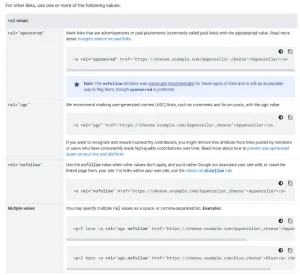
Google’s official documentation explains followed links, nofollow, sponsored and UGC link attributes and how publishers should qualify outbound links.
The following assessment examines backlink sources and acquisition methods rather than treating HTML attributes as independent link-building strategies.
5. Editorial Backlinks
Our editorial SEO priority rating: 96% | Risk: Low when genuinely earned
Editorial backlinks are links independently added by publishers because they believe another website provides valuable information.
For example, a technology journalist writing about cybersecurity may reference original research published by a security company.
The company did not create the link itself. The publisher chose to reference its research.
This editorial independence makes the backlink particularly attractive.
Editorial links can contribute to:
- Search authority and relevance.
- Qualified referral traffic.
- Brand recognition.
- Professional credibility.
- Long-term content discovery.
Expert assessment: These backlinks deserve high priority because they reflect genuine recognition. Nevertheless, a link’s value still depends on the quality and relevance of the specific linking page.
6. Digital PR Backlinks
Our editorial SEO priority rating: 94% | Risk: Low when genuinely earned
Digital PR backlinks are earned through newsworthy research, expert commentary, data stories and public-interest campaigns.
For example, a financial services company might publish an original study examining how small businesses manage cash flow.
If journalists reference that research, the resulting links can introduce the company to relevant audiences.
Successful digital PR campaigns usually depend on having something worth reporting.
Useful approaches include original datasets, credible expert analysis, industry surveys with disclosed methodology and genuinely new findings.
Expert assessment: Digital PR can generate authoritative coverage, but its commercial value should be judged by relevance and audience quality rather than publication prestige alone.
7. Guest Posting Backlinks
Our editorial SEO priority rating: 83% | Risk: Low to high, depending on execution
Guest posting involves contributing content to another website.
A useful guest article introduces expertise to an established audience and may include a contextual backlink when that reference genuinely helps readers.
A strong guest posting opportunity normally has:
- Relevant subject matter.
- Genuine readership.
- Independent editorial standards.
- Original, useful content.
- Natural references.
- Transparent treatment of commercial arrangements.
Fernando Raymond, SEO Expert, has previously written:
“When it comes to guest posting, you should give importance to the quality of the link than quantity.”
This principle is especially important when companies evaluate large lists of potential publishing websites.
A guest posting campaign should not consist of mass-producing low-value articles with repeated commercial anchor text. Google identifies manipulative link patterns, including certain paid and excessive guest-post linking practices, as link spam.
Our approach to evaluating guest posting opportunities prioritises publisher relevance, editorial quality and legitimate audience value.
8. Contextual Backlinks
Our editorial SEO priority rating: 92% | Risk: Depends on how the link is acquired
Contextual backlinks appear naturally within the main body of relevant content.
For example, an article about ecommerce conversion rates may link to a recognised research report discussing online shopping behaviour.
The surrounding paragraph explains why the destination is useful.
Contextual links are often preferred because the reference is directly connected to the subject being discussed.
However, contextual placement does not make an artificial or paid ranking-manipulation scheme acceptable.
The strongest contextual backlinks combine relevant content, a credible source, editorial independence and an appropriate destination page.
9. Resource Page Backlinks
Our editorial SEO priority rating: 88% | Risk: Low
Resource pages contain curated links to useful guides, tools, organisations or educational material.
Examples include university research resources, professional association guides and industry learning centres.
A business may earn a resource backlink by publishing genuinely useful information that complements an existing resource collection.
For example, a free tax calculator could be useful to a small-business support organisation.
The key is to offer something that deserves inclusion rather than asking publishers to link to generic promotional content.
10. Broken Link Building Backlinks
Our editorial SEO priority rating: 84% | Risk: Low when relevant
Broken link building involves identifying external links that no longer work and suggesting suitable replacement material.
Suppose an industry website links to an outdated report that now returns a 404 error.
If another organisation has published a current resource covering the same topic, it may offer that resource to the publisher.
The publisher can then decide whether the replacement improves the page.
This method provides a practical reason for outreach.
The detailed process of broken link building includes identifying missing resources, confirming relevance and approaching website owners professionally.
11. Niche Edit Backlinks
Our editorial SEO priority rating: 63% | Risk: Moderate to high
Niche edits are links inserted into existing published content.
They may also be called curated link insertions.
An existing page can sometimes benefit from a new reference when the publisher discovers an updated or more useful resource.
However, the term is frequently associated with paid link insertion.
A paid link designed to pass ranking credit can violate Google’s link spam policies unless it is properly qualified.
Before evaluating a niche edit, consider whether the publisher has an independent reason to include the link and whether the arrangement is disclosed and marked appropriately.
12. Business Directory Backlinks
Our editorial SEO priority rating: 61% | Risk: Low for legitimate directories
Directory backlinks originate from websites that list businesses, products or professional services.
Examples include recognised industry directories and local business associations.
These backlinks may help customers discover companies and verify business information.
For local businesses, directory quality is more important than submission volume.
A listing on a respected professional directory can serve a genuine business purpose. Hundreds of automated submissions to unrelated directories usually cannot.
13. Local Citation Backlinks
Our editorial SEO priority rating: 74% for local businesses | Risk: Low
Local citations are references to a business’s name, address, phone number or other identifying details.
Some citations include backlinks, while others are unlinked mentions.
Common sources include local directories, chambers of commerce, professional associations and location-specific business resources.
These references can support local business discovery and information consistency.
A citation strategy should prioritise accurate information and legitimate platforms rather than indiscriminate link creation.
14. Social Media Profile Backlinks
Our editorial SEO priority rating: 38% | Risk: Low
Social media backlinks appear on company profiles, social posts and other social platform content.
Many are nofollowed or otherwise limited in direct ranking influence.
Their main value is often audience discovery.
A company maintaining legitimate social profiles can make it easier for customers, partners and journalists to find the correct website.
Social media should therefore be considered a brand distribution channel rather than a shortcut to link authority.
15. Forum and Community Backlinks
Our editorial SEO priority rating: 47% | Risk: Low to high
Forum backlinks appear in online discussions and specialist communities.
A relevant link can be useful when it directly answers a question or helps a community member solve a problem.
For example, a business owner asking about invoice automation may benefit from a detailed comparison of suitable software solutions.
However, repeatedly inserting promotional links into unrelated threads is spam, not meaningful community engagement.
Dinesh Kumar VM, Senior SEO Consultant, has written:
“It’s not just about building a bunch of backlinks, it’s all about building quality backlinks.”
His observation is particularly relevant to community link building, where creating large numbers of links is easy but generating lasting business value is much harder.
16. Blog Comment Backlinks
Our editorial SEO priority rating: 17% | Risk: Moderate if used for spam
Blog comment backlinks are hyperlinks added through article comment sections.
They are commonly nofollowed or marked as user-generated content.
A thoughtful comment may introduce a relevant reader to an author or business.
However, using comment sections primarily to insert keyword-rich links is a poor SEO strategy.
For most businesses, genuine participation is more valuable than the backlink itself.
17. Image and Infographic Backlinks
Our editorial SEO priority rating: 79% | Risk: Low when genuinely earned
Image backlinks arise when publishers reference visual resources.
Examples include original diagrams, infographics, research charts, photography and data visualisations.
A useful illustration can attract links from publishers who want to reference the original material.
However, publishing an infographic does not automatically create backlinks.
The visual must provide value, be discoverable and have a clear original source.
Avoid requiring keyword-rich followed links as a condition for using distributed images or widgets.
18. Unlinked Brand Mention Backlinks
Our editorial SEO priority rating: 87% | Risk: Low
An unlinked brand mention occurs when a publication refers to a business without linking to its website.
A company can identify these mentions and, where appropriate, ask the publisher whether adding a link would help readers.
For example, a journalist might reference a software company’s original study without linking to the research.
Suggesting the original report as a supporting reference may be reasonable.
The publisher should retain full editorial discretion.
19. Partner and Supplier Backlinks
Our editorial SEO priority rating: 81% | Risk: Low when relationships are genuine
Partnership backlinks can come from suppliers, distributors, professional collaborators or commercial partners.
For example, a technology provider may maintain a public directory of authorised integration partners.
A genuinely relevant business relationship can provide a useful reason for one company to link to another.
Problems arise when partnerships are created primarily to exchange ranking signals.
Excessive reciprocal linking arrangements can violate search engine spam policies.
20. Testimonial Backlinks
Our editorial SEO priority rating: 68% | Risk: Low to moderate
Testimonial backlinks can appear when businesses publish authentic customer feedback and identify the company providing it.
For example, an enterprise software provider may publish a case study explaining how a particular customer uses its product.
If the case study includes a relevant business website link, it can help readers discover the company.
Testimonials should be genuine, and any incentives or commercial relationships must be considered when qualifying links.
21. Podcast and Interview Backlinks
Our editorial SEO priority rating: 77% | Risk: Low when editorially earned
Podcast backlinks may appear in episode descriptions, interview pages and supporting resources.
These links can introduce a business to specialist audiences.
For B2B companies, professional interviews may provide particularly relevant exposure.
A financial technology founder appearing on an industry podcast could receive qualified visitors who are interested in the subject discussed.
The benefit should be evaluated through audience relevance, referrals and potential business relationships, not link attributes alone.
22. Educational and Government Website Backlinks
Our editorial SEO priority rating: 89% when highly relevant | Risk: Low when earned
Links from educational institutions, public bodies and government websites can be valuable when they reference genuinely useful information.
However, .edu, .ac.uk and .gov domains do not automatically provide superior SEO value.
A link from an irrelevant page is not necessarily better than a link from an excellent independent industry publication.
Businesses should focus on providing legitimate resources rather than pursuing domain extensions as a shortcut.
23. Press Release and Syndication Backlinks
Our editorial SEO priority rating: 51% | Risk: Moderate if used to manipulate rankings
Press release distribution can create awareness of business announcements.
However, automatically syndicated press releases do not necessarily provide meaningful editorial endorsements.
Links inserted into widely distributed promotional material should not be treated as equivalent to independently earned news coverage.
The strongest outcome is when a journalist examines the announcement and produces original reporting that references the business or research.
24. Reciprocal Backlinks
Our editorial SEO priority rating: 42% | Risk: Depends on scale and purpose
Reciprocal linking occurs when two websites link to one another.
This can happen naturally.
For example, a supplier may reference a distributor, while the distributor lists the supplier.
Such relationships are not automatically problematic.
The risk increases when websites participate in extensive exchanges solely to influence search rankings.
Natural commercial relationships and manipulative link exchanges should be assessed separately.
25. PBN Backlinks
Our editorial SEO priority rating: 8% for sustainable business SEO | Risk: High
PBN stands for Private Blog Network.
PBNs involve networks of websites that can be used to link to selected destinations.
Some operators use these networks to attempt to influence search rankings.
Although individual websites within a network may contain legitimate content, operating or using sites primarily to create manipulative ranking links presents substantial SEO risk.
Google’s link spam policies prohibit practices designed primarily to manipulate search rankings.
Hiding ownership, using different IP addresses or making a network appear independent does not establish compliance.
For businesses whose revenue depends heavily on organic search, we would generally prioritise independent editorial recognition over links controlled through such networks.
26. Automated and Spam Backlinks
Our editorial SEO priority rating: 1% | Risk: Very high
Automated link-building services may promise hundreds or thousands of backlinks in a short period.
These links commonly originate from low-value pages, automated profiles, spam comments and irrelevant websites.
Volume alone does not establish authority.
Search engines may ignore manipulative links, and serious link spam practices can expose websites to manual actions.
Businesses should avoid treating automated backlink quantity as an SEO performance indicator.
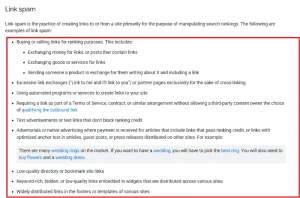
Google’s official link spam policies identify manipulative practices, including paid ranking links, excessive link exchanges, automated link creation and low-quality directory links.
Which Types of Backlinks Are Best for SEO? Our Percentage Comparison
We have assessed the main acquisition categories using an editorial priority framework.
The percentage scores represent how strongly we would generally prioritise each approach in a sustainable SEO strategy. They are not observed ranking uplift, success probabilities or independently measured industry averages.
Our assessment considers five factors:
- Topical relevance: 30%.
- Editorial independence and trust: 25%.
- Potential audience and referral value: 20%.
- Long-term sustainability: 15%.
- Policy compliance and controllability: 10%.
Actual suitability depends on the website, market and the quality of individual opportunities.
| Backlink Type | Editorial Priority | Typical Risk |
| Editorial backlinks | 96% | Low |
| Digital PR backlinks | 94% | Low |
| Contextual backlinks | 92% | Variable |
| Educational or government references | 89% | Low |
| Resource page backlinks | 88% | Low |
| Unlinked brand mention reclamation | 87% | Low |
| Broken link replacements | 84% | Low |
| Guest posting backlinks | 83% | Variable |
| Partner and supplier links | 81% | Low |
| Image and infographic links | 79% | Low |
| Podcast and interview backlinks | 77% | Low |
| Local citations | 74% | Low |
| Testimonial backlinks | 68% | Low–Moderate |
| Niche edits | 63% | Moderate–High |
| Business directories | 61% | Low |
| Press release syndication | 51% | Moderate |
| Forum and community backlinks | 47% | Variable |
| Reciprocal backlinks | 42% | Variable |
| Social media profile links | 38% | Low |
| Blog comment backlinks | 17% | Moderate |
| PBN backlinks | 8% | High |
| Automated spam backlinks | 1% | Very High |
Expert conclusion: For most businesses, editorial backlinks, digital PR, relevant content contributions, resource references and authentic professional relationships are more defensible priorities than large-scale self-created link campaigns.
What Makes a Backlink High Quality?
Backlink quality cannot be established through a single metric.
When evaluating relevant backlinks, we consider the relationship between the source website, the exact linking page, the target audience and the reason for the link.
1. Topical Relevance
A backlink should make sense within the subject of the linking content.
A cybersecurity provider receiving a link from a respected information security publication has a clearer topical connection than a link from an unrelated lifestyle article.
2. Editorial Independence
A genuine editorial choice is different from a purchased link placed specifically to influence rankings.
Understanding who controls the link is essential.
3. Page-Level Quality
A website may have a strong reputation but still publish weak individual pages.
Review the actual linking page, including its content, usefulness, visibility and editorial purpose.
4. Real Audience Potential
A useful backlink may introduce qualified visitors to a product, service or research resource.
Referral quality can sometimes justify an opportunity even when its direct ranking contribution is uncertain.
5. Technical Accessibility
A link should be checked for technical issues.
Relevant questions include whether the source page is accessible, whether the link resolves correctly, whether it is present in crawlable HTML and which link attributes apply.
6. Long-Term Sustainability
A backlink that exists because readers genuinely need the reference is often more defensible than one maintained through an artificial arrangement.
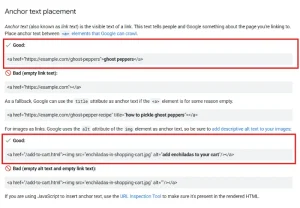
Google Search Central’s link best practices demonstrate crawlable hyperlinks and descriptive anchor text, both important when evaluating whether a backlink can be discovered and interpreted.
Dofollow vs Nofollow vs Sponsored vs UGC: Which Is Better?
The correct attribute depends on the relationship behind the link.
| Attribute | Typical Purpose | SEO Consideration |
| Followed | Ordinary editorial references | Eligible to contribute link-based signals |
| Nofollow | Links without full endorsement | Google generally treats the attribute as a hint |
| Sponsored | Advertising and paid relationships | Identifies commercial placements |
| UGC | User-submitted links | Identifies links within user-generated content |
For organic link acquisition, followed editorial links are commonly the primary target.
However, businesses should not attempt to convert every backlink into a followed link.
A legitimate sponsored link should be qualified, and a nofollow link can still deliver valuable customers.
There is also no universal percentage of followed and nofollow links that guarantees a natural profile.
The source and purpose of the links matter more than forcing a particular ratio.
What Are the Different Types of Backlink Anchor Text?
Anchor text is the clickable text associated with a hyperlink.
It can provide context about the destination page.
Branded Anchor Text
Uses a business or product name.
Example: Example Software
Exact-Match Anchor Text
Matches the target search phrase.
Example: accounting software for freelancers
Exact-match anchors can be descriptive, but repeatedly engineering them across external sites may create an unnatural pattern.
Partial-Match Anchor Text
Includes part of the target keyword within a longer phrase.
Example: software for managing freelance invoices
Generic Anchor Text
Uses non-descriptive wording.
Example: click here
Generic anchors are sometimes appropriate in context but generally provide less descriptive information.
Naked URL Anchor Text
Displays the website address itself.
Example: https://example.com
Image Anchor Text
An image can be used as a hyperlink.
When evaluating these links, the image’s alternative text and surrounding context may help explain the destination.
Our understanding of link equity and anchor text is useful when analysing how external and internal links connect related pages.
Important: There is no reliable universal formula requiring businesses to use a fixed percentage of branded, partial-match or exact-match anchors.
Anchor text should arise naturally from the publisher’s description of the referenced material.
How Many Backlinks Does a Website Need to Rank?
There is no fixed number of backlinks required to rank on Google’s first page.
Backlink requirements vary with:
- Search competition.
- Content relevance and usefulness.
- Existing domain and page reputation.
- Number and quality of competing referring domains.
- Target country and language.
- Technical SEO quality.
- Search intent.
A website targeting a competitive financial services keyword may face substantially different conditions from a local service provider targeting a small geographical area.
We recommend examining competitor quality rather than simply matching their total backlink count.
For example, a competitor with 20,000 links from a limited number of websites may have a very different profile from a competitor receiving independent references from hundreds of relevant publications.
The distinction between referring domains and total backlinks is therefore essential.
Does Backlink Velocity Matter?
Backlink velocity describes the rate at which a website gains links.
A sudden increase is not automatically suspicious.
Newsworthy research, viral content or significant media coverage can naturally attract many links within a short period.
Conversely, a slow campaign may still be manipulative if every placement exists solely to influence search rankings.
There is no official universal number of backlinks per day or month that guarantees safety.
Link origin, intent and quality are more meaningful than an arbitrary pace.
How to Evaluate Backlinks Before Investing in Link Building?
Businesses should treat backlink acquisition as a marketing investment.
Before committing resources, evaluate the following.
Step 1: Identify the Business Objective
Determine whether the campaign is intended to support organic rankings, generate referral traffic, increase brand awareness or promote a specific commercial page.
Step 2: Examine the Linking Website
Review its editorial purpose, relevant topics, audience and credibility.
Do not rely exclusively on third-party domain authority metrics.
Domain Authority, Domain Rating and similar metrics are proprietary SEO-tool estimates, not Google ranking scores.
Step 3: Inspect the Exact Page
Evaluate whether the page provides useful information and whether a link to your website would make sense to readers.
Step 4: Check Link Placement and Attributes
Verify where the link appears, which anchor text is used and whether it is followed or appropriately qualified.
Step 5: Review the Commercial Arrangement
If a placement involves payment, goods, services or sponsorship, ensure the relationship is disclosed and the link is qualified appropriately.
Step 6: Assess Opportunity Cost
Compare the expected benefit with the cost of content production, research, outreach and relationship management.
Step 7: Monitor the Outcome
Track referral traffic, relevant enquiries, link retention, rankings and qualified organic visibility.
How to Find and Analyse Your Website’s Backlinks
Backlink analysis should be a routine part of SEO management.
Method 1: Google Search Console
Google Search Console provides a free Links report for verified websites.
To access it:
- Sign in to Google Search Console.
- Select the correct website property.
- Open the Links report.
- Review Top linked pages.
- Examine Top linking sites.
- Inspect Top linking text.
- Export the data where further analysis is required.
The report shows a sample of links known to Google, not necessarily every backlink on the web.
It also does not provide a complete classification of followed, nofollow, sponsored and UGC links.
Method 2: Ahrefs
Ahrefs can help SEO professionals examine discovered backlinks, referring domains, anchors and lost links.
It is also useful for competitor backlink research.
However, Ahrefs maintains its own crawl index, which is separate from Google’s.
A backlink not appearing in Ahrefs does not automatically mean it has no value or has not been discovered by Google.
 The official Ahrefs Site Explorer backlink report helps identify linking pages, referring domains, anchor text and discovered link attributes.
Method 3: Semrush
Semrush provides tools for backlink analysis, competitor research and link-risk investigation.
Its third-party scores can help prioritise manual reviews, but they should not be treated as definitive proof that a link is harmful.
A complete backlink analysis process combines tool data with human review.
Which Backlinks Should Businesses Avoid?
High-risk backlink practices include purchasing unqualified links intended to manipulate rankings, large-scale automated link creation, excessive reciprocal exchanges and spam submissions.
Businesses should also investigate websites with irrelevant content, misleading editorial practices or suspicious outbound linking patterns.
However, a low third-party metric does not automatically make a backlink harmful.
Similarly, one unfamiliar linking website does not necessarily require intervention.
Our approach to identifying potentially toxic backlinks emphasises context, evidence and manual investigation before corrective action.
Should You Disavow Low-Quality Backlinks?
Not automatically.
Google advises that most websites do not need to use its Disavow Links tool.
The tool is generally intended for situations involving substantial artificial or low-quality links where a manual action has occurred or is likely.
Incorrect disavowal can harm search performance by excluding legitimate backlinks.
A backlink audit should distinguish genuinely manipulative relationships from ordinary links that merely look weak in an SEO tool.
How Do Backlinks Affect Business Revenue and Marketing ROI?
For business owners, backlinks should be evaluated as part of a wider marketing strategy.
A backlink campaign can support discoverability and commercial activity, but link count alone is not a financial performance indicator.
An Illustrative Backlink Investment Calculation
Consider a hypothetical B2B business investing $3,000 in a content-led outreach campaign.
Assume the campaign achieves:
| Measurement | Illustrative Result |
| Campaign investment | $3,000 |
| Relevant referring domains earned | 6 |
| Cost per referring domain | $500 |
| Referral visits attributed | 120 |
| Visitor-to-lead conversion rate | 5% |
| Expected leads | 6 |
| Lead-to-customer conversion assumption | 20% |
| Expected customers | 1.2 |
| Gross profit per customer | $3,500 |
| Expected gross profit contribution | $4,200 |
| Illustrative campaign ROI | 40% |
The 40% figure is calculated as:
(($4,200 – $3,000) / $3,000) × 100
This is a financial modelling example, not a real campaign result or a forecast.
Actual campaigns may generate fewer referrals, no attributable customers or a negative return.
The calculation also excludes any organic search improvement, which is difficult to attribute to individual backlinks with certainty.
Our financial assessment: A campaign should be judged by meaningful business outcomes over time, not simply the number of links delivered.
What Types of Backlinks Should Different Businesses Prioritise?
Different organisations require different approaches.
| Business Type | Backlink Opportunities to Prioritise |
| Local service businesses | Legitimate local citations, regional publications, professional associations |
| SaaS companies | Original research, integrations, software comparisons, expert articles |
| Ecommerce brands | Product coverage, independent reviews, industry resources |
| B2B service providers | Expert commentary, podcasts, industry publications, case studies |
| Financial businesses | Credible specialist publications, original data, relevant educational resources |
| Startups | Founder interviews, research-led PR, genuine partnerships |
For finance-related businesses, accuracy and editorial credibility are especially important because the published information may influence significant financial decisions.
Links should support trustworthy content rather than attempt to compensate for poor financial information.
How to Build a Balanced Backlink Strategy in 2026
We recommend developing a link-building plan around quality, relevance and commercial priorities.
An example allocation of outreach and content-development effort could be:
| Activity | Illustrative Allocation |
| Original research and linkable content | 35% |
| Digital PR and editorial outreach | 30% |
| Relevant guest contributions and partnerships | 20% |
| Monitoring, maintenance and performance analysis | 15% |
| Total | 100% |
These percentages are an illustrative planning model, not measured industry norms.
Businesses should adjust their investment based on existing content, staff capacity, competition and achievable opportunities.
Our broader review of link building techniques examines how different acquisition approaches can work together.
What Should You Measure After 30, 60 and 90 Days?
During the first 30 days, establish the backlink baseline, identify valuable target pages and evaluate existing referring domains.
By day 60, review outreach activity, published content, relevant editorial placements and early referral performance.
By day 90, reassess link quality, lost links, qualified traffic, enquiries and changes in organic visibility.
These are review milestones rather than promises that rankings will increase within a particular period.
A sustainable backlink strategy is an ongoing business process, not a fixed-volume purchase.
Backlinks and AI Search Visibility: What Is Changing?
Businesses increasingly want their brands to appear in AI-generated answers as well as traditional search results.
Relevant public references can help make research, products and organisations discoverable across the wider web.
However, there is no established conversion formula showing that one additional backlink produces a specific increase in AI citations.
An AI platform may mention or reference a business for reasons beyond conventional backlink authority.
For this reason, companies should not assume that high Domain Rating backlinks automatically guarantee visibility in AI answers.
We would prioritise original information, clearly identified expertise, independent editorial coverage and material that genuinely answers user questions.
Such content has broader value beyond any single search interface.
Final Verdict: Which Types of Backlinks Deserve Your Investment?
Understanding the different types of backlinks is only the beginning.
The real challenge is recognising why a particular website would link to your content and whether that connection has genuine value for readers.
In our expert assessment, editorial references, digital PR, relevant contextual links, useful resources and authentic professional relationships offer the most defensible long-term opportunities.
Guest posting and specialist outreach can complement these strategies when content quality, audience relevance and search engine policies remain central to the process.
Businesses should be cautious about artificial networks, unqualified paid placements and automated backlink schemes.
From a commercial perspective, the goal is not simply to increase backlink totals. It is to build a credible online presence that supports relevant search visibility, referral traffic and measurable business growth.
The most valuable backlink is not necessarily the one with the highest SEO-tool score. It is the one that provides a legitimate connection between trustworthy content and the audience that needs it.
Frequently Asked Questions About Types of Backlinks
Are dofollow backlinks better than nofollow backlinks?
Followed editorial links are generally more directly relevant to link-based ranking signals. Nofollow links may still provide traffic, brand recognition and other benefits.
Can backlinks improve Google rankings?
Relevant, trustworthy backlinks can contribute to ranking signals, but no individual backlink guarantees improvement. Content quality, technical SEO and search intent also matter.
How many backlinks should a new website build each month?
There is no universal recommended number. A new website should prioritise relevant, legitimate opportunities rather than pursue an arbitrary link quota.
Do social media backlinks improve SEO?
Social links can support content discovery, traffic and brand visibility. Their direct ranking influence should not be assumed.
How can I check if a backlink is toxic?
Review its origin, surrounding content, purpose, linking behaviour and potential policy violations. Third-party toxicity scores are investigative aids rather than final judgments.