

Choosing the best backlink checker in 2026 is no longer about finding the tool that displays the biggest backlink number.
The strongest backlink tools now help SEO professionals answer much more important questions:
- Who is linking to my competitors?
- Which referring domains am I missing?
- Which links have recently disappeared?
- Which pages naturally attract backlinks?
- Are suspicious links actually worth investigating?
- Which backlink opportunities can realistically be replicated?
- Is my link profile becoming stronger or simply larger?
For this ClickDo IO review, we compared the leading backlink checker tools using the same practical criteria an experienced SEO professional would use when analysing a website or competitor.
We assessed database coverage, freshness, competitor research, backlink-gap functionality, link-quality metrics, monitoring, ease of use, free access and overall value.
We also checked current product documentation rather than simply repeating old backlink-index figures that continue to circulate in SEO comparison articles.
The result is our ranking of the 15 best backlink checker tools for the second half of 2026 and heading into 2027.
Quick Picks: Best Backlink Checkers for Late 2026 and 2027
If you do not want to read all 15 reviews, these are the tools that stood out most strongly during our comparison:
- Best Overall: Semrush
- Best for Competitor Research: Ahrefs
- Best Value for Agencies: SE Ranking
- Best for Historical Backlinks: Majestic
- Best for Domain Authority: Moz Link Explorer
- Best for Beginners: Ubersuggest
- Best Desktop Tool: SEO SpyGlass
- Best for Link Prospecting: LinkMiner
- Best for Unnatural-Link Investigation: CognitiveSEO
- Best for Backlink Monitoring: Linkody
- Best Free Opportunity Finder: Collaborator
- Best Simple SEO Audit Tool: SEOptimer
- Best for Content-Led Link Research: BuzzSumo
- Best Free First-Party Data: Google Search Console
Our Overall Verdict
For most professional SEO campaigns during the second half of 2026, Semrush takes our number-one position.
Its current backlink database exceeds 43 trillion links, and the platform says its database is refreshed at least hourly. More importantly, the backlink data connects directly with competitor analysis, backlink-gap research, auditing and wider SEO workflows.
Ahrefs remains our first choice when the objective is specifically to reverse-engineer competitors. Its Site Explorer is currently powered by a database of around 35 trillion live backlinks.
SE Ranking is the standout value option. Its current backlink database sits around 2.7–2.9 trillion indexed backlinks, while its functionality includes backlink research, Domain Trust, Page Trust, toxicity indicators and competitor analysis.
The most important conclusion from our review, however, is that there is no universal winner for every SEO workflow.
A freelancer checking one website does not need the same tool as an agency managing 50 competitive campaigns.
How We Reviewed the Best Backlink Checker Tools?
Instead of ranking tools according to brand recognition or headline database size alone, we compared them across eight practical areas.
1. Backlink Database Coverage
A useful backlink checker needs enough coverage to reveal meaningful patterns.
We looked at whether each platform could provide useful information about:
- Individual backlinks
- Referring domains
- Linking pages
- Target URLs
- Anchor text
- Follow and nofollow attributes
- New links
- Lost links
Database size matters, but it is not the only consideration.
A 40-trillion-link database is not automatically more useful than a smaller database if the interface makes it difficult to find the links that actually matter.
2. Data Freshness
Backlink data loses value when it is several months behind reality.
This is particularly important for:
- Digital PR
- Active outreach
- Link monitoring
- Competitor campaigns
- Lost-link recovery
- Website migrations
We therefore gave additional weight to tools capable of identifying recent link changes quickly.
3. Competitor Backlink Research
This was one of the most important areas in our review.
A professional backlink checker should help answer:
Which domains are helping competitors rank that are currently missing from our backlink profile? That means looking beyond total link numbers.
Understanding the distinction between referring domains and backlinks is particularly important here. One competitor might have 100,000 backlinks from 200 domains. Another might have only 8,000 backlinks but receive them from 1,500 relevant domains. The second profile can tell a very different story.
4. Backlink Quality Metrics
We compared the authority and quality metrics available inside each platform.
Depending on the tool, these may include:
- Domain Authority
- Domain Rating
- Authority Score
- Domain Trust
- Page Trust
- Trust Flow
- Citation Flow
- Spam Score
- Toxicity Score
One important point emerged repeatedly during our review:
None of these metrics is a Google ranking score.
They are proprietary measurements created by SEO software providers. They are useful for comparison but should never replace manual evaluation.
5. Backlink Gap Analysis
A strong backlink checker should help turn data into opportunities.
A backlink gap analysis identifies websites linking to competitors but not to your domain.
These can become strong outreach prospects because the websites have already demonstrated an interest in your industry.
6. Monitoring
Links disappear.
Pages get deleted.
URLs change.
Websites close.
Links become nofollow.
A good backlink checker should therefore help users track both gained and lost links rather than providing only a static snapshot.
7. Ease of Use
An SEO platform can have excellent data and still be unnecessarily difficult to use.
We considered how quickly someone could move from entering a domain to answering a practical SEO question.
8. Value
Finally, we considered what each platform delivers relative to the type of user it targets. Our objective was not to identify the cheapest product.
It was to determine whether the functionality makes sense for the intended user.
Top 15 Best Backlink Checker Tools for Late 2026 and 2027
1. Semrush – Best Overall Backlink Checker
Our rating: 5/5
Best for: Agencies, professional SEOs, ecommerce businesses and complete backlink auditing.
After comparing the major platforms, Semrush is our best overall backlink checker for late 2026 and heading into 2027. Semrush currently reports more than 43 trillion backlinks and 390 million referring domains in its database. Its backlink database is refreshed at least hourly.
Those numbers are impressive, but they are not the main reason we ranked it first.
What Stood Out in Our Review?
Semrush combines:
- Backlink Analytics
- Referring-domain analysis
- Anchor-text analysis
- Competitor backlinks
- Backlink Gap
- New backlinks
- Lost backlinks
- Broken backlinks
- Backlink Audit
- Authority Score
- Toxicity indicators
- Google Search Console integration
This means you can move from identifying a competitor link to investigating its quality and looking for similar opportunities without constantly switching platforms.
Backlink Audit
Backlink Audit is particularly useful for larger or older websites. Semrush says it assesses backlinks using 50+ parameters and provides an AI-based Toxicity Score. It can also monitor new, lost and broken backlinks.
However, we would not recommend automatically disavowing every backlink Semrush labels suspicious. A toxicity score should trigger manual investigation, not automatic action.
ClickDo IO’s process for finding potentially toxic backlinks explains why link context needs to be reviewed before deciding what to do.
Who Should Choose Semrush?
We would recommend it for:
- SEO agencies
- Ecommerce sites
- SaaS brands
- In-house SEO teams
- Competitive affiliate sites
- Digital PR teams
- Businesses running ongoing link-building campaigns
Where Semrush Is Weaker?
The biggest disadvantage is cost.
Someone who only wants to check a handful of backlinks each month probably does not need the full Semrush ecosystem.
Expert Review Verdict
Semrush is our best all-round backlink checker for the second half of 2026 and into 2027.
It combines one of the largest backlink databases with practical workflows for competitor analysis, monitoring and auditing.
2. Ahrefs – Best for Competitor Backlink Research
Our rating: 5/5
Best for: Competitor analysis, content research and link prospecting.
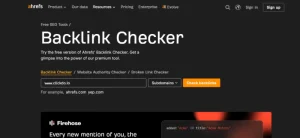
If our ranking were based exclusively on competitor backlink research, Ahrefs could easily take first place. Its Site Explorer currently uses a database of approximately 35 trillion live backlinks.
What Stood Out in Our Review?
Ahrefs makes it extremely easy to investigate:
- Competitor backlinks
- Referring domains
- New links
- Lost links
- Broken backlinks
- Anchor text
- Best-linked pages
- Link growth
- Competing domains
The strength of Ahrefs is not simply seeing that a competitor has 20,000 backlinks. It helps you understand why those links exist.
Link Intersect
One of the most useful workflows is identifying domains that link to several competitors but not to you. For example, imagine three websites ranking above you all receive links from the same industry publication. That publication immediately becomes more interesting than a random domain linking to only one competitor.
Content Research Advantage
Ahrefs also makes it straightforward to analyse which competitor pages attract links.
This can reveal whether backlinks are being earned through:
- Original research
- Statistics
- Calculators
- News stories
- Definitions
- Free tools
- Templates
- Guides
That information can influence content strategy as much as outreach strategy.
Who Should Choose Ahrefs?
Ahrefs is particularly strong for:
- SEO consultants
- Affiliate marketers
- Link builders
- Competitive content sites
- Digital PR professionals
- In-house SEO teams
Expert Review Verdict
Ahrefs is our best backlink checker for competitor research heading into 2027.
If your main question is “Where are competitors getting links that I could realistically earn too?”, Ahrefs deserves to be near the top of your shortlist.
3. SE Ranking – Best Value Backlink Checker for Agencies
Our rating: 4.7/5
Best for: Agencies, freelancers and growing SEO teams.
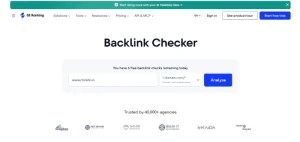
SE Ranking was one of the strongest value propositions we found during this review. Its backlink platform currently reports approximately 2.7–2.9 trillion indexed backlinks, with around six billion pages crawled daily.
Features We Liked
SE Ranking provides:
- Backlinks
- Referring domains
- Domain Trust
- Page Trust
- Toxicity Score
- Anchor analysis
- New links
- Lost links
- Broken backlinks
- Backlink Gap
- Competitor analysis
Its current backlink checker also reports follow/nofollow ratios and backlink-quality metrics.
Why Agencies Should Consider It?
Agency users generally need more than a backlink checker.
They also need:
- Rank tracking
- Auditing
- Competitor research
- Client reporting
- Project management
SE Ranking combines these capabilities without forcing smaller agencies immediately into the pricing territory associated with some enterprise platforms.
Expert Review Verdict
SE Ranking is our best-value backlink platform for agencies and freelancers going into 2027.
For many teams, it delivers enough professional functionality to avoid needing several separate SEO subscriptions.
4. Majestic – Best for Historical and Topical Link Analysis
Our rating: 4.5/5
Best for: Historical backlink research and link-quality investigation. Majestic remains different from most all-in-one SEO platforms.
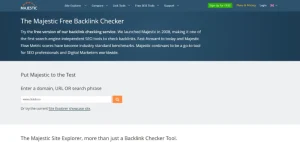
Its biggest strengths are backlink-specific metrics such as:
- Trust Flow
- Citation Flow
- Topical Trust Flow
Why Majestic Still Matters?
Trust Flow attempts to help users assess backlink quality, while Citation Flow is more closely related to link quantity and influence. Topical Trust Flow adds another dimension by categorising websites according to subject matter.
That can be extremely useful. Imagine two potential backlink sources both have similar authority. One is strongly associated with digital marketing. The other is associated with an unrelated industry. For ClickDo IO, the first source would generally make far more contextual sense.
Majestic introduced Topical Trust Flow specifically to add topical information to its link index.
Historical Research
Another reason Majestic remains relevant is its historical link data.
This becomes particularly helpful when investigating:
- Expired domains
- Acquired websites
- Legacy penalties
- Old SEO campaigns
- Domain history
- Previous link-building agencies
Expert Review Verdict
Majestic remains one of the best specialist backlink tools for investigating link history, topical relevance and trust.
It is less attractive if you want one platform to handle every SEO task, but extremely useful when backlink forensics matter.
5. Moz Link Explorer – Best for Domain Authority Analysis
Our rating: 4.3/5
Best for: Domain Authority, Spam Score and straightforward backlink research.
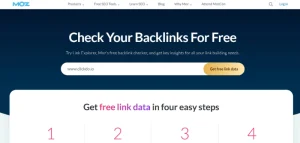
Moz remains one of the most recognisable names in backlink SEO because of metrics such as:
- Domain Authority
- Page Authority
- Spam Score
What We Like About Moz?
Moz generally presents backlink data in a way that is easier for beginners to understand than some enterprise platforms. It is particularly useful when evaluating potential link partners. For example, after finding an opportunity in Ahrefs, you may want a second opinion on the domain.
Moz can provide another perspective through DA and Spam Score. ClickDo IO also explains how to check Domain Authority correctly rather than assuming every high-DA website automatically represents a strong backlink opportunity.
Important Limitation
Domain Authority is not Google’s measurement of authority. It is a Moz metric. That means a DA 70 website is not automatically better than a DA 45 website for every SEO campaign.
Relevance, real traffic, editorial quality and context still need to be reviewed.
Expert Review Verdict
Moz is our preferred choice when Domain Authority and Spam Score are central to the workflow.
It is particularly suitable for beginner and intermediate users who want useful backlink metrics without an overwhelming interface.
6. Ubersuggest – Best Backlink Checker for Beginners
Our rating: 4.2/5
Best for: Bloggers, small businesses and users starting SEO.
Ubersuggest remains one of the easiest ways to begin exploring backlinks.
Its current backlink reports include metrics such as:
- Domain Authority
- Total backlinks
- Referring domains
- Page Authority
- Spam Score
- Anchor text
- First-seen dates
- Last-seen dates
Its Backlink Opportunity report currently allows users to compare a website against up to five competitors.
Why Beginners May Prefer It?
With advanced platforms, beginners sometimes spend more time learning the software than analysing the links. Ubersuggest simplifies the workflow.
Enter a website, review the backlink profile, check competitors and move into opportunity analysis.
Where It Falls Behind?
Advanced SEOs may eventually want deeper filtering, historical analysis or more sophisticated competitive workflows.
Expert Review Verdict
Ubersuggest is our best backlink checker for beginners heading into 2027.
It gives new users enough data to understand backlink SEO without immediately introducing unnecessary complexity.
7. SEO SpyGlass – Best Desktop Backlink Checker
Our rating: 4.4/5
Best for: Detailed audits and users who prefer desktop SEO software.
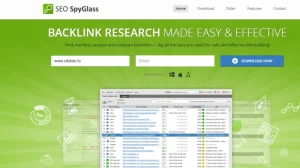
SEO SpyGlass is part of SEO PowerSuite and takes a different approach from completely cloud-based competitors.
Its current backlink checker advertises approximately:
- 3.6 trillion external backlinks
- 264 million domains
- 7.1 billion pages crawled daily
What We Liked?
SEO SpyGlass can provide detailed analysis of:
- Referring domains
- Anchor text
- Follow status
- New links
- Lost links
- Competitor links
- Historical patterns
- Penalty Risk
One particularly useful feature is the ability to examine backlink growth historically.
That can reveal when competitors accelerated their link-building activity and which campaigns may have caused the change.
Who Should Use It?
SEO SpyGlass suits:
- Technical SEOs
- Freelancers
- Desktop-tool users
- Large audits
- Competitor investigations
Expert Review Verdict
SEO SpyGlass is one of the most underrated backlink-analysis tools in this comparison.
It is especially attractive to users who want granular control and substantial data without depending entirely on browser-based tools.
8. Serpstat – Best Multi-Purpose Competitor Tool
Our rating: 4.1/5
Best for: Businesses combining backlink research with general competitor analysis.
Serpstat combines backlink analysis with a much broader SEO toolkit.
Its backlink reports can be used to investigate:
- Referring domains
- Linking pages
- Lost backlinks
- Anchor text
- Follow attributes
- Competitor profiles
- Top-linked pages
Why We Included It?
Serpstat makes most sense for teams that already want competitor keyword research, auditing and rank tracking. Rather than purchasing a backlink-only platform, users can analyse links as part of a broader competitor-research workflow.
Expert Review Verdict
Serpstat is a strong multi-purpose option, particularly when backlink analysis is only one part of a wider competitor strategy.
9. LinkMiner – Best for Backlink Prospecting
Our rating: 4.4/5
Best for: Finding backlinks worth attempting to replicate.
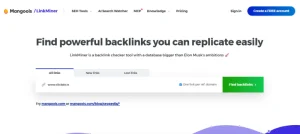
LinkMiner by Mangools stood out because of how easily it moves from raw backlink data into actual prospect evaluation. The platform currently advertises approximately 9.5 trillion backlinks, using data that incorporates Majestic’s Fresh and Historic indexes.
Standout Feature: Link Preview
One of our favourite features is the live website preview. When you select a backlink, LinkMiner can show the linking page while highlighting the location of the anchor. That removes the need to open dozens of browser tabs simply to locate a link.
Link Strength
LinkMiner also provides a proprietary Link Strength metric incorporating multiple backlink signals.
It can separate:
- All links
- New links
- Lost links
and offers an option to display only one backlink per referring domain.
Why Link Builders May Like It?
The workflow is particularly suitable for prospecting.
You can:
- Enter a competitor.
- Find its backlinks.
- Filter the results.
- Preview the page.
- Check placement.
- Save promising prospects.
- Build an outreach list.
Expert Review Verdict
LinkMiner is our favourite backlink checker for marketers who want to move quickly from competitor research into link prospecting.
10. CognitiveSEO – Best for Unnatural-Link Investigation
Our rating: 4.1/5
Best for: Complex backlink audits and investigating legacy SEO problems.
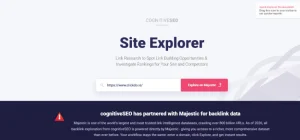
CognitiveSEO focuses more heavily on backlink quality and unnatural-link investigation than many general SEO platforms. Its backlink analysis is designed to identify patterns that may deserve closer inspection.
When We Would Use It?
CognitiveSEO becomes particularly relevant when dealing with:
- Previous aggressive SEO campaigns
- Exact-match anchor manipulation
- Legacy paid links
- Suspicious networks
- Manual-action investigations
- Acquired websites with uncertain SEO history
Important Warning
No third-party software can definitively tell you that Google considers an individual backlink toxic. A classification should therefore be used to prioritise manual review.
Expert Review Verdict
CognitiveSEO is a specialist choice rather than the best everyday backlink checker.
For difficult historical link investigations, however, its more forensic approach can be valuable.
11. Linkody – Best for Backlink Monitoring
Our rating: 4.3/5
Best for: Monitoring placements and detecting lost backlinks.
Linkody’s strength is not simply discovering links.
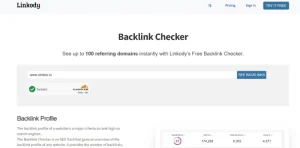
It is keeping track of them. Its free backlink checker currently provides up to 100 referring domains, together with information such as source URL, target URL, anchor text, relationship type and authority metrics.
Why Monitoring Matters?
Imagine you spend several weeks earning a backlink from an important publication.
Three months later:
- The article disappears.
- Your destination URL changes.
- The backlink becomes nofollow.
- The page returns an error.
Without monitoring, you may never notice.
Who Should Use Linkody?
It is particularly suitable for:
- SEO agencies
- Guest-post campaigns
- Digital PR
- Link-building agencies
- Businesses maintaining important placements
Expert Review Verdict
Linkody is our preferred specialist tool when monitoring existing backlinks matters more than having the biggest discovery database.
12. Collaborator – Best Free Backlink Opportunity Finder
Our rating: 4.3/5
Best for: Turning competitor backlink research into potential placements.
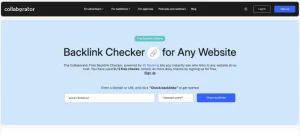
Collaborator provides one of the more interesting backlink checker models in this review. Its free backlink checker uses SE Ranking data and currently allows signed-in users up to 20 checks per day.
Users can inspect up to 50 backlinks, while referring domains that are also available through the Collaborator marketplace may be highlighted.
Why This Is Different?
Suppose you discover that a competitor has a backlink from an industry publication.
A normal backlink checker tells you:
This backlink exists.
Collaborator may additionally indicate whether that publisher is available through its marketplace.
That creates a much shorter journey from:
competitor backlink → potential link-building opportunity
What We Liked?
Current reports can show:
- Backlinks
- Anchor text
- Dofollow/nofollow status
- Link dates
- Referring domains
- Marketplace availability
Expert Review Verdict
Collaborator is one of the most practical free backlink tools for active link prospecting.
It is not a replacement for Ahrefs or Semrush, but its research-to-opportunity workflow makes it genuinely useful.
13. SEOptimer – Best Simple Backlink Checker for Small Businesses
Our rating: 3.9/5
Best for: Straightforward backlink reports and general SEO auditing. SEOptimer is a sensible option for users who do not need enterprise-scale backlink intelligence.
It focuses on making SEO data accessible.
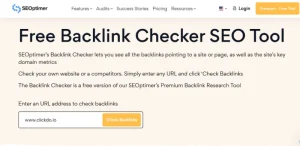
Typical backlink analysis can include:
- Backlink totals
- Referring domains
- Anchor text
- Follow attributes
- Target pages
- Link strength indicators
Why We Included It
Not every business needs millions of filters and advanced competitor dashboards.
A small local business may simply want to know:
- Who links to us?
- Are we gaining links?
- Which pages attract backlinks?
- How does our backlink profile compare with competitors?
SEOptimer provides an easier entry point for those users.
Expert Review Verdict
SEOptimer is a practical choice for SMEs and freelancers that need straightforward backlink information inside a wider SEO audit workflow.
14. BuzzSumo – Best for Content-Led Backlink Research
Our rating: 4.1/5
Best for: Digital PR, journalists and content marketers.
BuzzSumo is different from the other backlink checkers on this list. We would not choose it as the primary tool for a forensic backlink audit.
Its strength is understanding why content attracts attention and links.
The Question BuzzSumo Helps Answer
Traditional backlink tools usually answer:
Who linked to this URL?
BuzzSumo is more useful when asking:
What type of content keeps attracting links, shares and media attention in this industry?
That can be extremely valuable for:
- Digital PR
- Data studies
- Journalist outreach
- Research-led content
- Statistics pages
- Trending topics
- Newsjacking
Expert Review Verdict
BuzzSumo is our preferred specialist option for content-led backlink research rather than technical backlink auditing.
15. Google Search Console – Best Free First-Party Backlink Data
Our rating: 4.4/5 for owned websites
Best for: Free backlink data for websites you control.
Google Search Console belongs in almost every SEO toolkit.
Its Links report provides information about:
- Top linking sites
- Top linked pages
- Top linking text
- Internal links
However, one misconception needs correcting.
Google Search Console Does Not Show Every Backlink
Google explicitly states that the Links report is not a comprehensive list of every link.
It shows a sample of links Google has discovered, and its interface tables can be limited to 1,000 rows. Google also provides larger exports for certain link datasets.
That means we would not describe Search Console as the most complete backlink checker.
It is better considered:
The best free first-party Google backlink dataset for a website you own.
Where Search Console Falls Short
You cannot use it to deeply analyse a competitor.
It also lacks the advanced authority, gap and prospecting features provided by dedicated backlink platforms.
Expert Review Verdict
Every website owner should use Google Search Console, but professional backlink research should usually combine it with a third-party tool.
Backlink Checker Comparison: Our 2026/27 Rankings
| Rank | Tool | Best For | Our Rating | Free Access |
| 1 | Semrush | Best overall | 5/5 | Limited |
| 2 | Ahrefs | Competitor research | 5/5 | Limited |
| 3 | SE Ranking | Agencies/value | 4.7/5 | Trial/limited |
| 4 | Majestic | Historical research | 4.5/5 | Limited |
| 5 | Moz Link Explorer | DA and Spam Score | 4.3/5 | Limited |
| 6 | Ubersuggest | Beginners | 4.2/5 | Limited |
| 7 | SEO SpyGlass | Desktop analysis | 4.4/5 | Yes |
| 8 | Serpstat | Multi-purpose SEO | 4.1/5 | Limited |
| 9 | LinkMiner | Link prospecting | 4.4/5 | Limited |
| 10 | CognitiveSEO | Unnatural-link analysis | 4.1/5 | Trial |
| 11 | Linkody | Monitoring | 4.3/5 | Free checker |
| 12 | Collaborator | Free opportunities | 4.3/5 | Yes |
| 13 | SEOptimer | Small businesses | 3.9/5 | Limited |
| 14 | BuzzSumo | Content and PR | 4.1/5 | Limited |
| 15 | Google Search Console | First-party data | 4.4/5 | Yes |
Which Backlink Checker Has the Biggest Database?
Database figures change continuously, so any table should be treated as a September 2026 snapshot rather than a permanent ranking.
Based on currently published vendor figures:
| Tool | Published Backlink Database |
| Semrush | 43T+ backlinks |
| Ahrefs | 35T live backlinks |
| LinkMiner | 9.5T backlinks |
| SEO SpyGlass | 3.6T external backlinks |
| SE Ranking | Approx. 2.7–2.9T backlinks |
Semrush currently reports more than 43 trillion backlinks, Ahrefs reports 35 trillion live backlinks, LinkMiner approximately 9.5 trillion and SEO SpyGlass around 3.6 trillion external backlinks.
But our review does not recommend choosing software on this metric alone. Crawler size, recrawl behaviour, filtering and interface design can make a major difference to practical usefulness.
Which Backlink Metrics Actually Matter?
A backlink checker may provide dozens of columns. Most people do not need all of them. During our review, these were the measurements we considered most useful.
Referring Domains
The number of unique websites linking to you is often more informative than total backlink count.
Imagine:
Website A
- 20,000 backlinks
- 40 referring domains
Website B
- 3,000 backlinks
- 700 referring domains
Website A has more backlinks.
Website B has dramatically greater domain diversity.
That is why we recommend analysing referring domains alongside total links.
Anchor Text
Anchor text reveals how websites describe the destination page.
A natural backlink profile commonly includes a mixture of:
- Brand anchors
- URL anchors
- Page-title anchors
- Generic phrases
- Topic-related phrases
- Partial-match keywords
Large concentrations of manipulated exact-match commercial anchors deserve closer investigation.
Follow and Nofollow
A normal hyperlink without nofollow, sponsored or ugc attributes is commonly referred to in SEO as a dofollow link.
ClickDo IO has a detailed explanation of how dofollow links work.
However, we would not automatically dismiss nofollow links.
A link from a major publication can still generate:
- Referral traffic
- Brand searches
- Visibility
- Additional citations
- Journalist discovery
- Customer trust
even when the hyperlink carries a nofollow-style attribute.
Linking-Page Quality
One of the biggest mistakes we see is evaluating only the domain. Always open the actual page containing the backlink.
Check:
- Is the page indexed?
- Is it relevant?
- Is the content useful?
- Is the backlink naturally placed?
- Does the site have real editorial standards?
- Is the page full of unrelated paid links?
- Could actual users follow the link?
Authority
Third-party authority metrics are useful for prioritisation. They are not absolute measurements of backlink quality. A relevant industry site with moderate authority can be more useful than a very high-authority website where the backlink makes no contextual sense.
Link Equity
SEO professionals commonly call the value transferred through links link equity or “link juice”. ClickDo IO’s explanation of how link juice works covers how contextual relevance, page strength and link placement can affect the value of a link.
New and Lost Links
Do not analyse backlinks as a one-time exercise.
Monitor what changes.
A valuable backlink disappearing can indicate:
- Deleted content
- Website migration
- Changed URL
- Editorial update
- Broken target
- Expired domain
Sometimes reclaiming a lost backlink is significantly easier than earning a new one.
Which Backlink Checker Should You Choose? Take This Quick Quiz
What is Your Primary Objective?
Competitor research?
Choose Ahrefs.
Complete SEO and backlink management?
Choose Semrush.
Agency work on a tighter budget?
Choose SE Ranking.
Historical backlink investigation?
Choose Majestic.
Simple backlink analysis?
Choose Ubersuggest.
Monitoring links that already exist?
Choose Linkody.
Finding potential placements?
Try Collaborator or LinkMiner.
Checking backlinks for free on your own domain?
Start with Google Search Console.
What is Your SEO Experience Level?
Beginner:
Ubersuggest, Moz or Google Search Console.
Intermediate:
SE Ranking, LinkMiner or Serpstat.
Advanced:
Ahrefs, Semrush, Majestic or SEO SpyGlass.
How to Reverse Engineer Competitor Backlinks?
Finding competitor links is one of the highest-value uses of a backlink checker.
Here is the process we recommend.
Step 1: Identify Your Real Search Competitors
Do not automatically choose the businesses you consider your commercial competitors.
Search your important keywords.
Identify which domains repeatedly appear above you.
Those are your SEO competitors.
Step 2: Check Their Referring Domains
Enter three to five competitors into your preferred backlink checker.
Look for:
- Strong referring domains
- Common linking websites
- Recently gained links
- Highly linked pages
- Editorial backlinks
- Resource pages
- Industry publications
ClickDo IO’s guide to finding backlinks for a site covers this process in more depth.
Step 3: Find Competitor Overlap
Use:
- Ahrefs Link Intersect
- Semrush Backlink Gap
- SE Ranking Backlink Gap
- Ubersuggest Backlink Opportunity
The objective is to identify websites linking to several competitors but not you.
Those domains have already demonstrated that they link within your industry.
Step 4: Find Out Why the Link Exists
This is where human analysis becomes more valuable than the software.
Open the source page.
Look at the competitor link.
Ask why it was included.
Was the competitor:
- Quoted as an expert?
- Used as a data source?
- Included in a list?
- Referenced for research?
- Featured in a case study?
- Added to a directory?
- Interviewed?
- Mentioned for a free tool?
Without understanding the reason, you cannot properly replicate the strategy.
Step 5: Prioritise Replicable Links
Some links cannot realistically be copied. For example, a competitor might receive a link because its CEO went to university with the publication owner.
That tells you very little. Instead, focus on opportunities where you can offer equal or greater value.
Examples include:
- Resource pages
- Industry lists
- Expert commentary
- Statistics
- Original research
- Broken-link replacements
- Guest contributions
- Free tools
- Calculators
- Case studies
Step 6: Create a Better Reason to Link
The backlink checker provides data. It does not provide the reason someone should link to you.
Improve the asset first.
A competitor may have:
“15 ecommerce statistics”
You could create:
“75 UK Ecommerce Statistics for 2027, Based on Government and Industry Data”
Now outreach has a stronger value proposition.
How We Evaluate Whether a Backlink Is Worth Pursuing?
During backlink analysis, we use several checks rather than relying on one authority score.
- Relevance: Does the source website genuinely belong to your industry or audience?
- Editorial Quality: Does the website publish useful content or exist mainly to place links?
- Organic Visibility: Does the website appear capable of attracting real search visibility?
- Context: Does the backlink make sense in the sentence and article?
- Placement: A naturally placed contextual link is generally preferable to an unrelated footer or sitewide link.
- Outbound-Link Behaviour: Does every article seem to contain unrelated commercial links? That can be a warning sign.
- Traffic Potential: Could real people click the link? A backlink that sends relevant visitors can provide value beyond rankings.
Backlink Quantity vs Quality: What Our Review Found?
One idea consistently appears across professional backlink tools:
Link quantity by itself is not enough.
A site with thousands of weak links can still lose to a website with a smaller but stronger backlink profile.
For example:
Site A
- 80,000 backlinks
- 120 referring domains
- Many sitewide links
- Weak topical relevance
Site B
- 7,000 backlinks
- 850 referring domains
- Industry publications
- Editorial contextual links
Raw backlink count suggests Site A is stronger.
A deeper analysis might show the opposite.
This is why ClickDo IO’s explanation of competitor backlink analysis focuses on reviewing the actual source rather than blindly copying competitor links.
What About Toxic Backlinks?
“Toxic backlink” is an SEO industry term rather than an official Google classification for every suspicious link.
Semrush, CognitiveSEO and similar platforms can flag patterns that deserve investigation.
That is useful.
The problem begins when users treat a software score as a command.
A tool might flag:
- Low-authority domains
- Strange anchor text
- Link networks
- Suspicious IP patterns
- Unusual TLDs
- High outbound-link counts
These are clues.
They are not automatically proof that Google is penalising the site.
Should You Use Google’s Disavow Tool in 2026 or 2027?
For most websites, not routinely.
Google’s guidance says its systems can usually determine which links to trust without website owners providing additional information.
The disavow tool is primarily intended for situations involving a considerable number of spammy or artificial backlinks and where those links have caused or are likely to cause a manual action.
If you have an unnatural-links manual action, Google’s own process recommends making a good-faith attempt to remove problematic links and using the disavow tool for links that cannot be removed.
Do Not Do This
Avoid:
- Exporting every “toxic” backlink from an SEO tool.
- Automatically converting the export into a disavow file.
- Uploading it without reviewing the links.
You could accidentally disavow legitimate backlinks.
Better Approach
Investigate:
- Who created the backlink?
- Why does it exist?
- Was it purchased?
- Is it part of a manipulative scheme?
- Is there a manual action?
- Is the link genuinely unnatural?
The disavow tool should be treated as an advanced remedial tool, not routine monthly backlink maintenance.
What Is Changing in Backlink Analysis for 2027?
The fundamental purpose of backlinks is not disappearing.
What is changing is the context in which SEO teams use backlink data.
Backlinks and Brand Authority Are Becoming More Connected
Modern search visibility extends beyond traditional blue-link rankings.
Brands increasingly want to understand:
- Where they are mentioned
- Which sources cite them
- Which websites recommend competitors
- Which publications influence industry discussions
- Which pages are referenced by AI systems
This means backlink analysis is moving closer to brand citation analysis.
Content Quality Is Becoming More Important to Link Acquisition
Generic content is becoming easier to produce. That means generic content is becoming less remarkable.
The assets most likely to earn valuable backlinks going into 2027 include:
- Original research
- Unique data
- Expert analysis
- Statistics
- First-party experience
- Calculators
- Tools
- Case studies
- Investigations
- Industry surveys
Human Review Still Matters
AI can classify thousands of backlinks.
It can identify anomalies.
It can prioritise domains.
But backlink acquisition ultimately involves humans making editorial decisions.
The most important question remains:
Why would a legitimate website want to send its audience to this page?
No backlink checker can fully answer that for you.
Our Recommended Backlink Checker Stack for 2027
If budget allows, we would not necessarily rely on one tool.
Professional SEO Stack
Ahrefs or Semrush + Google Search Console
This gives you:
- Competitive research
- Third-party backlink discovery
- Own-site Google data
- Link monitoring
- Gap analysis
Agency Stack
Semrush or SE Ranking + Google Search Console + specialist monitoring where required
Beginner Stack
Google Search Console + Ubersuggest + Collaborator
Link-Building Stack
Ahrefs/SE Ranking + LinkMiner/Collaborator
Historical Audit Stack
Majestic + Semrush/SEO SpyGlass + Google Search Console
The exact combination depends on the problem you are trying to solve.
Final Verdict: Which Is the Best Backlink Checker for Late 2026 and 2027?
After reviewing the leading platforms, Semrush is our best overall backlink checker for the second half of 2026 and heading into 2027.
It combines a very large backlink database with auditing, competitor intelligence, backlink-gap analysis and wider SEO functionality.
Ahrefs takes our top recommendation for pure competitor backlink analysis.
If the objective is understanding exactly how competing websites earn their links, Ahrefs Site Explorer remains exceptionally strong.
SE Ranking is our best-value professional option, particularly for agencies and freelancers that want strong backlink functionality without immediately choosing the most expensive platforms.
Majestic remains excellent for historical and topical link analysis, while Moz continues to be useful for marketers working heavily with Domain Authority and Spam Score.
For beginners, Ubersuggest is easier to approach.
For active monitoring, Linkody is particularly useful.
For free competitor prospecting, Collaborator deserves attention.
And for websites you own, Google Search Console should always remain part of the workflow—just remember that Google’s Links report is a sample, not a complete backlink index.
The biggest lesson from our review is simple:
The best backlink checker is not necessarily the tool showing the largest backlink count. It is the tool that helps you make the best SEO decisions from the links it finds.
For professional SEO, that means looking beyond numbers.
Analyse relevance.
Analyse referring-domain diversity.
Inspect the actual source page.
Understand why competitors earn links.
Track what you gain and lose.
And most importantly, build content and resources that credible websites genuinely have a reason to reference. That is likely to remain the foundation of successful backlink SEO through the rest of 2026, 2027 and beyond.
FAQs About Backlink Checker Tools
What is the best backlink checker for 2027?
Based on our September 2026 review, Semrush is our best overall choice heading into 2027, while Ahrefs is our preferred option for deep competitor backlink research.
What is the best free backlink checker?
Google Search Console is our first choice for free backlink data on a website you own. Collaborator and Linkody also offer useful free competitor-checking functionality.
Is Ahrefs better than Semrush for backlinks?
For pure competitor backlink research, we slightly prefer Ahrefs. For a broader workflow combining backlink analysis, auditing and wider SEO features, Semrush takes our overall number-one position.
Is Google Search Console a backlink checker?
Yes. Search Console includes a Links report showing top linking sites, linked pages and anchor text. However, Google states that the report is a sample rather than a comprehensive list of every backlink.
Which backlink checker has the largest database?
Among the major tools reviewed here, Semrush currently advertises more than 43 trillion backlinks, while Ahrefs reports approximately 35 trillion live backlinks. These numbers change as the platforms crawl and update their indexes.
Why does Ahrefs show more backlinks than Google Search Console?
The platforms use different datasets and reporting methods. Search Console intentionally shows a sample of Google’s known links, whereas Ahrefs operates its own web crawler and commercial backlink database.
Why do Semrush and Ahrefs show different numbers?
They use independent crawlers, indexes, filtering systems and refresh schedules. Different results are normal.
Can I check competitor backlinks for free?
Yes. Several free or limited tools allow competitor searches, including Collaborator, Linkody, Ubersuggest and other backlink checkers.
What is a good backlink?
A good backlink normally comes from a legitimate, relevant website and appears naturally within useful content where the link benefits the reader.
What is more important: backlinks or referring domains?
Both matter, but referring domains help show how widely distributed your backlink profile is. Thousands of links from one domain should not be interpreted the same way as links from hundreds of independent websites.
Are nofollow backlinks useless?
No. Nofollow links can still generate referral traffic, brand awareness, citations, journalist discovery and a more natural backlink profile.
Are Domain Authority and Domain Rating Google ranking factors?
No. Domain Authority is created by Moz and Domain Rating by Ahrefs. They are third-party comparative metrics rather than official Google ranking scores.
How often should I check backlinks?
A small website may only need a detailed monthly review. Sites actively running SEO, digital PR or link-building campaigns may benefit from weekly monitoring or automated alerts.
Can bad backlinks hurt SEO?
Manipulative links created to influence rankings can cause problems, particularly when they form part of deliberate link schemes. However, random spam links do not automatically mean a website needs to use the disavow tool.
Should I disavow toxic backlinks?
Not simply because an SEO tool labels them toxic. Google’s guidance says most websites do not need to use the disavow tool routinely. It is primarily intended for serious unnatural-link situations connected to, or likely to result in, a manual action.
How do I find backlinks to my website?
For a website you own, begin with Google Search Console. For deeper analysis or competitor research, use Ahrefs, Semrush, SE Ranking, Moz, Majestic or another third-party backlink checker.
Can backlink checkers find link-building opportunities?
Yes. One of their most valuable uses is finding domains that already link to competitors but not to your website. Those websites can then be manually reviewed as potential outreach prospects.
How many backlinks do I need to rank?
There is no fixed number. Compare the specific pages already ranking for your target keyword and examine their referring domains, link quality, topical relevance, content strength and overall authority.
Is backlink checking still important for SEO in 2027?
Yes. Backlink analysis remains useful for understanding website authority, competitive gaps, digital PR performance, brand citations and link-building opportunities. The focus is increasingly shifting from simply counting links to understanding why trustworthy sources choose to cite particular websites.