


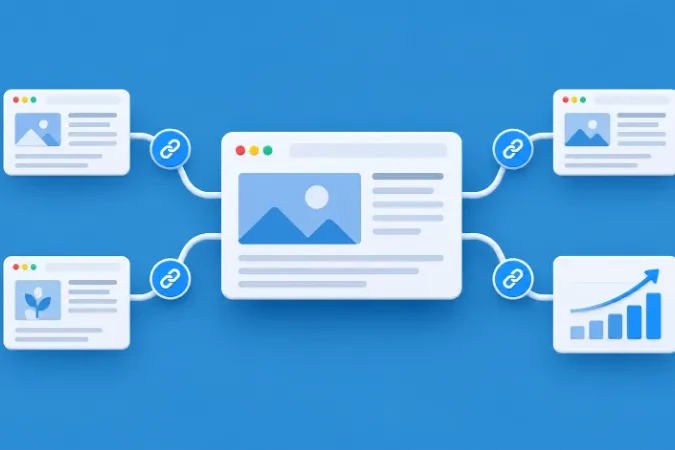
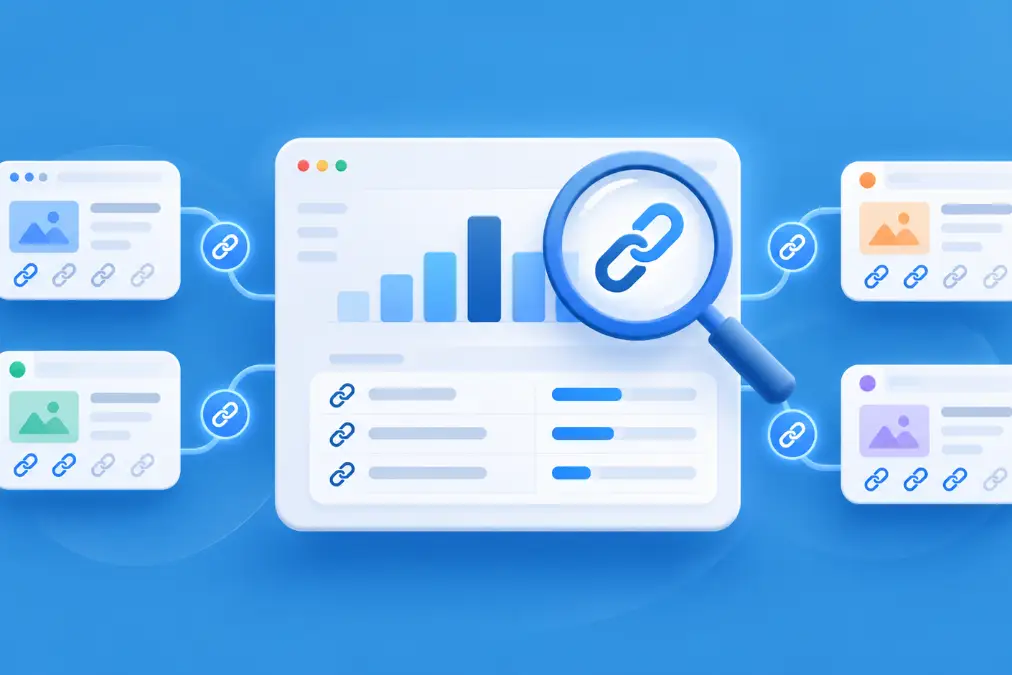
A backlink gap analysis identifies websites that link to your competitors but do not currently link to your website. It helps uncover relevant publications, directories, associations, resource pages and content opportunities that may strengthen your SEO strategy.
However, the process is not about copying every competitor backlink. The real objective is to understand why a competitor earned a link and determine whether your business can create something equally useful or better.
At ClickDo IO, we approach backlink gap analysis as competitive research. We examine the referring website, the exact linking page, the competitor content being referenced and the reason the link exists.
This produces a more useful strategy than relying only on backlink totals or third-party authority scores.
What Is a Backlink Gap Analysis?
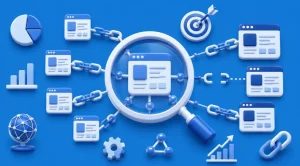
A backlink gap analysis compares your backlink profile with the profiles of selected competitors.
For example, if three competing software companies receive links from an industry association, several technology publications and a university resource, but your company does not, those sources may form part of your backlink gap.
Not every missing link is worth pursuing. Some competitor backlinks may be paid, outdated, irrelevant, user-generated or impossible to reproduce. Every opportunity should therefore be reviewed manually before outreach begins.
Why Is Backlink Gap Analysis Important?
A backlink gap analysis can help a business:
- Find websites already interested in its industry.
- Discover content formats that attract citations.
- Identify digital PR, partnership and directory opportunities.
- Prioritize relevant prospects instead of random websites.
- Find underlinked service, product or content pages.
- Understand why competitors earn stronger industry visibility.
The most valuable finding is not that a competitor has a link. It is understanding what caused the publisher to provide it.
The link may have been earned through original data, an expert quotation, a free tool, a useful comparison or a strong industry resource.
How Does Backlink Gap Analysis Support E-E-A-T?
E-E-A-T refers to experience, expertise, authoritativeness and trustworthiness. A backlink gap strategy can support these qualities when it helps a business demonstrate real knowledge and attract legitimate editorial references.
Experience may be shown through case studies, tested processes and first-hand findings. Expertise can be communicated through specialist explanations, transparent methodologies and qualified authors.
Authoritativeness may develop when respected organizations cite the business, while trustworthiness depends on accurate sourcing, clear disclosures and honest limitations.
E-E-A-T should not be treated as a backlink score. A large number of links does not automatically make a website authoritative or trustworthy.
How Does Information Gain Improve a Backlink Strategy?
A backlink campaign is more likely to succeed when the target page adds something that competing content does not already provide.
Before publishing a linkable asset, we recommend asking:
If someone has already read the leading pages on this subject, will this page still teach them something useful?
The information-gain checklist supplied for this article recommends original data, first-hand experience, expert interviews, real reporting and proprietary analysis as ways to add genuine value. It also warns against increasing word count without improving the answer.
The document correctly notes that Google’s information-gain patent shows ownership of an idea but does not prove that the system is used exactly as described in current search rankings.
A linkable asset might therefore include original research, a tested calculator, a local market comparison, a practical template or first-hand campaign findings.
How Do You Conduct a Backlink Gap Analysis?
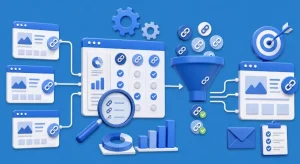
Step 1: Define the Objective
Start by deciding what the backlink campaign should achieve.
The objective may be to improve a service page, support a product launch, promote original research, enter a new country or strengthen authority within a topic.
At ClickDo IO, we also consider whether the desired outcome is organic visibility, referral traffic, brand awareness, leads or publisher relationships.
Step 2: Identify the Right Competitors
Backlink analysis should include organic-search competitors, not only familiar business rivals.
Organic competitors are websites that repeatedly rank for the same target keywords. They may include publishers, marketplaces, directories, review websites, associations or software platforms.
Three to five closely relevant competitors are usually enough for an initial analysis.
A small local company should avoid comparing itself only with multinational brands that have larger PR budgets and decades of media coverage.
Step 3: Choose the Comparison Level
Backlink gaps can be analyzed at different levels.
| Comparison level | Best use |
| Root domain | Comparing complete backlink profiles |
| Subdomain | Comparing blogs, stores or regional websites |
| Subfolder | Comparing content hubs or service categories |
| Exact page | Comparing individual articles, tools or landing pages |
Domain-level analysis provides a broad market view. Page-level analysis helps explain why a particular competitor page attracts links.
For most campaigns, we use both.
Step 4: Collect Competitor Backlink Data
SEO tools such as Ahrefs Link Intersect, Semrush Backlink Gap and Majestic Clique Hunter can identify domains that link to competitors but not to your website.
Google Search Console can help review your own top linking sites and externally linked pages, but it does not provide a complete competitor comparison.
Different tools use separate crawlers and databases, so their totals may differ. Use one main platform consistently and manually verify the most important opportunities.
Step 5: Export and Clean the Results
Export the missing referring domains together with the exact linking-page URLs.
Useful data includes the competitor destination page, anchor text, link attribute, estimated traffic, country, language and first-seen date.
Remove:
- Scraped, hacked or automatically generated pages.
- Irrelevant directories and profile links.
- Expired domains and websites containing malware.
- Pages with no clear editorial purpose.
- Links unrelated to the target market or audience.
Third-party authority scores can help organize the data, but they should not replace human review.
Step 6: Understand Why the Link Exists
Open the exact referring page and examine the surrounding content.
Determine whether the competitor was referenced as a source, expert, supplier, example or research publisher.
The competitor may have earned the link through a survey, calculator, statistics page, expert comment, partnership or newsworthy announcement.
This stage helps distinguish a genuine opportunity from a link that cannot realistically be reproduced.
Step 7: Score the Opportunities
At ClickDo IO, we prioritize backlink opportunities according to relevance and editorial value rather than authority metrics alone.
A simple scoring framework can assess topical relevance, audience alignment, editorial legitimacy, business value and attainability.
| Factor | Priority |
| Topical relevance | Very high |
| Editorial legitimacy | Very high |
| Audience alignment | High |
| Attainability | High |
| Business value | High |
| Domain metrics | Supporting factor |
A specialist industry website may be more valuable than a general publication with a higher third-party authority score.
Step 8: Create a Better Linkable Asset
Backlink gap analysis often reveals that a website needs better content before it needs more outreach.
The target page should offer a clear reason for another publisher to reference it.
Strong linkable assets may include:
- Original research or customer data.
- Free calculators and practical templates.
- Industry benchmarks or market reports.
- Expert interviews and case studies.
- Current statistics with clear sourcing.
- Local or country-specific comparisons.
The asset should improve the available information through freshness, experience, usability, localization or original evidence.
Step 9: Personalize the Outreach
Outreach should focus on the recipient’s audience rather than your need for a backlink.
Mention the exact page being discussed and explain how your resource could improve, update or support it.
Avoid generic templates, false compliments, misleading subject lines and demands for particular anchor text.
At ClickDo IO, we prefer outreach built around a legitimate editorial reason. The goal is to start a useful conversation, not pressure an editor into adding a link.
Step 10: Track the Results
Record the referring domain, target page, opportunity type, contact, outreach date, response and placement status.
Success should be measured through more than the number of acquired links.
Relevant referral traffic, publisher relationships, brand mentions, leads and links retained over time can all demonstrate value.
Ranking improvements should not automatically be attributed to one backlink because search visibility can also change due to content updates, technical SEO, competition, seasonality and user demand.
How Should Global Businesses Conduct Backlink Gap Analysis?

International campaigns should be separated by country, language and target market.
A US campaign may prioritize American trade publications, state organizations, universities and local business resources. Campaigns in Canada, Europe, Asia or Australia may require different publishers, terminology and industry associations.
The destination page should also match the reader’s location, language, currency, regulations and product availability.
A trusted regional publication may provide more useful relevance and referral traffic than a larger international website with no clear connection to the target audience.
Which Backlink Gap Analysis Mistakes Should Be Avoided?
Common mistakes include copying every competitor link, selecting the wrong competitors and prioritizing authority metrics over relevance.
Businesses should also avoid building links only to the homepage, promoting generic content and sending identical outreach messages to every publisher.
Paid links intended to influence rankings can conflict with search-engine spam policies. Commercial placements should be transparently disclosed and qualified appropriately.
Backlink gap analysis should also not automatically lead to disavowing domains. A link should not be removed simply because a third-party tool labels it suspicious.
Backlink Gap Analysis Checklist
Before completing the analysis, confirm that the team has:
- Defined the SEO and business objective.
- Selected genuine organic-search competitors.
- Compared both domains and important pages.
- Reviewed the exact referring URLs.
- Removed irrelevant and unsafe prospects.
- Identified why competitors earned each link.
- Prioritized relevance and editorial value.
- Created content with genuine information gain.
- Personalized the outreach.
- Tracked traffic, links and business outcomes.
Conclusion
Backlink gap analysis is not simply a process of finding websites that link to competitors. It helps businesses understand how competitors earn recognition, citations and authority within a market.
The strongest approach combines SEO tool data with manual research. Businesses should review the exact linking pages, understand why each link exists and prioritize opportunities based on relevance, editorial legitimacy and audience value.
At ClickDo IO, we believe the most important question is not, “Where can we get a backlink?” It is, “What can we create or contribute that genuinely deserves to be referenced?”
When supported by useful content, first-hand expertise and personalized outreach, backlink gap analysis can strengthen search visibility across US and global markets without relying on manipulative link-building tactics.
FAQs About How To Do a Backlink Gap Analysis?
What Is a Backlink Gap?
A backlink gap is a relevant website or page that links to one or more competitors but does not currently link to your website.
How Many Competitors Should Be Analyzed?
Three to five closely related organic-search competitors are normally sufficient for an initial backlink gap analysis.
Can Backlink Gap Analysis Be Done for Free?
A basic analysis can be started using Google Search Console, manual search research and limited free backlink tools. A complete competitor comparison normally requires a paid SEO platform.
Should Every Competitor Backlink Be Replicated?
No. Every opportunity should be reviewed for relevance, editorial quality, audience fit, safety and attainability.
Can Backlink Gap Analysis Improve Rankings?
It can support a wider SEO strategy by identifying relevant content and link opportunities. However, no individual backlink guarantees higher rankings.
Is Backlink Gap Analysis Useful for International SEO?
Yes. Each country and language should be analyzed separately because competitors, publishers and audience expectations vary between markets.



[…] structured backlink gap analysis can reveal websites linking to several competitors without currently linking to your […]