

The best link building tools do much more than show you how many backlinks a website has. Modern link building involves several different processes: analysing competitors, finding relevant websites, identifying the right contacts, managing outreach, tracking responses and checking whether the backlinks you earn remain live.
Trying to manage all of this manually quickly becomes inefficient, particularly when working across several websites or client campaigns. The right link building software allows you to turn what would otherwise be hours of spreadsheet work into a structured workflow. However, there is an important distinction to make.
A link building tool cannot create authority by itself. Software can identify opportunities, organise outreach and measure results, but successful link building still depends on relevance, content quality, relationships and editorial value.
Quick Picks: What Are the Best Link Building Tools in 2026?
For anyone looking for a quick recommendation, these are the strongest options for different link building requirements:
- Best Overall Link Building Platform: Semrush
- Best for Competitor Backlink Research: Ahrefs
- Best for Outreach Management: BuzzStream
- Best for Agencies and Large Campaigns: Pitchbox
- Best for Finding Email Addresses: Hunter
- Best for Managed Link Building: Respona
- Best for Digital PR: BuzzSumo
- Best for Topical Link Analysis: Majestic
- Best for Backlink Monitoring: Linkody
- Best Free Link Tracking Tool: Google Search Console
There is no universal winner.
The best option depends on which part of the link building process currently creates the biggest bottleneck for your team.
What Are Link Building Tools?
Link building tools are SEO platforms designed to help websites discover, acquire, manage or monitor backlinks. Some specialise in backlink intelligence. Others focus on prospecting and outreach. More advanced platforms combine several parts of the process.
A typical link building campaign involves five stages:
- Finding link opportunities
- Evaluating potential websites
- Identifying relevant editors or website owners
- Conducting personalised outreach
- Tracking acquired and lost links
Without software, each stage can involve significant manual research. A good link building platform reduces that workload while giving you enough information to make better decisions about where your time should be invested.
What Features Should the Best Link Building Tools Have?
Not every link building tool needs to perform every function. The important question is whether its features solve a genuine problem within your workflow.
| Feature | Why It Matters | Practical Benefit |
| Competitor backlink research | Reveals where competing websites earn links | Finds proven opportunities |
| Link gap analysis | Identifies domains linking to competitors but not you | Builds targeted prospect lists |
| Domain quality metrics | Helps evaluate potential websites | Reduces low-quality outreach |
| Contact discovery | Finds editors and website owners | Saves prospecting time |
| Email verification | Reduces invalid outreach addresses | Protects email deliverability |
| Outreach automation | Manages emails and follow-ups | Makes campaigns scalable |
| Relationship management | Stores previous conversations | Prevents repetitive outreach |
| Link monitoring | Detects new and lost backlinks | Protects acquired link value |
| Reporting | Measures campaign progress | Improves client and internal reporting |
The strongest setup does not necessarily involve purchasing every tool available. In many cases, two or three specialised platforms working together are more useful than one complicated system that your team barely uses.
Top 10 Best Link Building Tools for 2026
1. Semrush – Best Overall Link Building Tool
Semrush is one of the strongest options for businesses looking to manage several parts of link building from the same SEO ecosystem.
Its backlink tools cover competitor research, backlink gaps, backlink auditing and prospect discovery. Semrush’s Backlink Gap feature can compare your domain against competing websites and reveal referring domains that link to competitors but not to your website.
Why Semrush Is Useful for Link Building?
The biggest advantage is integration. Link building rarely operates independently from the rest of SEO.
Before targeting a backlink, you may want to understand:
- Whether the referring website is relevant
- Which competitors already have the link
- Which page should receive the backlink
- Which keywords that page currently ranks for
- How your backlink profile compares with competitors
Semrush allows much of this research to remain within one platform.
Best For
Semrush is particularly suitable for:
- SEO agencies
- In-house marketing departments
- Competitive industries
- Businesses already using Semrush
- Teams wanting an all-in-one SEO workflow
Strategic Advantage
Instead of starting with a random list of websites, link builders can begin with domains already linking to relevant competitors. That immediately makes prospecting more focused.
Verdict: Semrush is one of the best link building tools when you need research, competitor intelligence and broader SEO data in the same environment.
2. Ahrefs – Best for Competitor Link Building Research
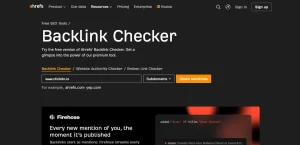
Ahrefs remains particularly powerful when the main objective is discovering where competitors are getting their backlinks. Its Link Intersect functionality identifies websites that link to competing domains or URLs without linking to yours.
This is one of the most useful forms of link prospecting because the website has already demonstrated an interest in your industry.
Powerful Link Prospecting
Ahrefs Content Explorer can also be used to discover:
- Guest blogging opportunities
- Unlinked brand mentions
- Popular content in your niche
- Broken pages with existing backlinks
- Websites publishing around specific subjects
Ahrefs describes Content Explorer as containing more than 21 billion pages and specifically positions the database for content research, PR and link prospecting.
Example
Suppose three competing finance websites have all received backlinks from the same industry publication. If your website has not, that publication becomes an obvious prospect. The opportunity is more valuable than a completely random domain because its editorial team already links to similar businesses.
Best For
Ahrefs works particularly well for:
- Competitor backlink analysis
- Broken link building
- Resource page research
- Unlinked mention campaigns
- Content-led link acquisition
Verdict: For discovering why competitors are earning backlinks and identifying opportunities they have already validated, Ahrefs is difficult to beat.
3. BuzzStream – Best Link Building Outreach Tool
Finding prospects is only half the link building process. Once hundreds or thousands of potential websites have been identified, managing the relationships becomes another challenge.
BuzzStream is designed specifically around this problem. It combines prospect research, personalised outreach, campaign organisation and relationship management.
Why BuzzStream Stands Out?
Instead of maintaining separate spreadsheets containing:
- Website names
- Editors
- Email addresses
- Outreach dates
- Replies
- Follow-ups
- Link status
BuzzStream allows campaigns to be managed in a more structured system.
It is particularly valuable when several people are working on outreach simultaneously.
Relationship-Based Link Building
Link building becomes considerably more effective when outreach is treated as relationship management rather than bulk emailing. BuzzStream makes it easier to see previous conversations and understand whether someone has already been contacted.
That can prevent one of the most common agency mistakes: repeatedly pitching the same publisher from different campaigns.
Best For
- Link building agencies
- Digital PR teams
- Blogger outreach
- Large outreach campaigns
- Multi-user SEO teams
Verdict: BuzzStream is one of the strongest tools for teams that already know how to find prospects but need a better system for managing outreach.
4. Pitchbox – Best for Scaling Agency Link Building
Pitchbox takes link outreach further into workflow automation. The platform is built specifically for agencies, publishers and brands conducting link building at scale, combining prospecting, outreach, follow-ups, CRM functionality and reporting.
Where Pitchbox Adds Value?
Large link building campaigns often fail because the process becomes operationally complicated.
Someone needs to:
- Research prospects
- Approve websites
- Find contacts
- Prepare pitches
- Send emails
- Schedule follow-ups
- Track responses
- Record successful placements
Pitchbox helps turn these activities into a repeatable process.
Why Agencies May Prefer It?
Its strength is less about checking an individual backlink and more about managing the entire acquisition pipeline.
For agencies handling multiple campaigns, that operational structure becomes increasingly important.
Best For
- SEO agencies
- Enterprise campaigns
- Large outreach teams
- Digital PR operations
- High-volume prospecting
Verdict: Pitchbox makes the most sense when link building has already become a serious operational function rather than an occasional SEO activity.
5. Hunter – Best for Finding and Verifying Outreach Emails
A perfect link prospect is useless if you cannot identify the right person to contact. Hunter specialises in finding professional email addresses associated with websites and companies.
Its tools include Domain Search, Email Finder and Email Verifier. Hunter also verifies addresses returned through its Email Finder, helping outreach teams reduce the risk of sending messages to invalid addresses.
Why Email Verification Matters?
Poor outreach lists can damage email performance. Sending large numbers of messages to invalid inboxes can increase bounce rates and potentially harm sender reputation. Hunter therefore solves a specific but important problem in the link building workflow.
Practical Workflow
For example:
- Find a promising website using Ahrefs or Semrush
- Identify the editor or content manager
- Use Hunter to locate the professional email
- Verify the address
- Add the contact to your outreach platform
This is where specialised tools can work better together than trying to force one platform to do everything.
Best For
- Blogger outreach
- Journalist outreach
- Guest posting campaigns
- Digital PR
- Prospect list enrichment
Verdict: Hunter is not a complete link building platform, but it is one of the most useful supporting tools for outreach-driven campaigns.
6. Respona – Best for Managed Link Building
Respona is worth separating from traditional outreach software because its current model places much more emphasis on done-for-you link building and digital PR.
According to Respona’s May 2026 documentation, users can select pages they want to promote while its team handles tasks including prospecting, contact discovery, outreach, follow-ups, negotiations and placements.
Why This Approach Is Different?
Traditional link building software gives you tools. Respona increasingly provides execution. That may appeal to companies that understand the importance of authority building but do not want an internal employee spending hours researching and emailing publishers.
Best For
- Businesses without internal outreach teams
- Brands wanting managed campaigns
- Companies prioritising digital PR
- Teams looking to reduce manual prospecting
Important Consideration
Outsourcing execution does not mean abandoning oversight.
Businesses should still review:
- Website relevance
- Editorial quality
- Placement context
- Anchor text
- Target pages
- Campaign objectives
Verdict: Respona is a particularly interesting choice for businesses that want link acquisition managed for them rather than simply purchasing another SEO dashboard.
7. BuzzSumo – Best for Digital PR and Journalist Link Building
Some of the most valuable backlinks do not originate from conventional SEO outreach. They come from journalists, publishers and editorial coverage.
BuzzSumo is particularly useful for this type of link building. Its platform supports journalist discovery, media research, content analysis, mention monitoring and backlink tracking. BuzzSumo currently says its media database can help users research and connect with hundreds of thousands of journalists.
Content-Led Link Building
BuzzSumo can also help answer an important question:
What content actually attracts links in this industry?
Rather than creating an infographic, report or guide because it seems linkable, marketers can study existing high-performing content first. That makes content creation considerably more evidence-based.
Digital PR Opportunities
BuzzSumo is particularly useful when link building involves:
- Original research
- Data studies
- Expert commentary
- Newsjacking
- Industry reports
- Journalist outreach
The platform can also monitor new backlinks and brand mentions, creating opportunities to turn existing coverage into stronger relationships.
Verdict: BuzzSumo is one of the strongest options when your backlink strategy overlaps heavily with content marketing and digital PR.
8. Majestic – Best for Evaluating Topical Link Quality
Link builders can easily become obsessed with generic authority scores. Majestic takes a more specialised approach.
Its Trust Flow and Topical Trust Flow metrics are designed to help users understand both the quality and topical relevance associated with a website’s backlink profile.
Why Topical Relevance Matters?
Imagine two potential backlinks. One comes from a powerful but completely unrelated website. The other comes from a respected publication directly connected to your industry. Generic authority metrics may not tell the entire story.
Majestic’s topical metrics provide another layer of information that can help link builders determine whether a prospect belongs within the same general subject area.
Best For
- Link quality evaluation
- Niche relevance analysis
- Competitor research
- Backlink audits
- SEO professionals who want deeper link-specific metrics
Important Clarification
Third-party metrics such as Trust Flow, Domain Rating or Domain Authority are not Google ranking factors. They should be used as diagnostic indicators rather than absolute measures of whether a website deserves a backlink.
Verdict: Majestic is particularly valuable as a second-stage qualification tool after prospects have already been discovered.
9. Linkody – Best for Tracking Acquired Links
Earning a backlink does not mean it will remain online indefinitely.
Pages disappear.
URLs change.
Links get removed.
Publishers update articles.
Redirects break.
Linkody focuses heavily on backlink monitoring and campaign tracking. It can notify users about new or lost links, monitor competitors and identify backlink gaps.
Why Monitoring Matters?
Suppose an agency earns 100 backlinks during a campaign.
Six months later, 15 disappear.
If nobody is monitoring them, the agency may continue reporting those links as active even though some of the campaign’s value has already been lost.
Monitoring creates an opportunity to recover them.
Useful Agency Functions
Linkody also offers:
- Competitor monitoring
- Anchor text analysis
- Link status tracking
- Link metrics
- Client reporting
- Backlink gap analysis
Its documentation also allows manually added prospects to be tracked through the acquisition process.
Verdict: Linkody is particularly useful after outreach starts producing results because it helps protect the backlinks you have already worked to acquire.
10. Google Search Console – Best Free Backlink Tool
Google Search Console is not a full link building platform, but it deserves a place in any link builder’s toolkit because it provides first-party information about links Google has discovered pointing towards your website.
The Links report can show:
- Top linked pages
- Top linking websites
- External backlinks
- Common linking text
Google does note that the report is not intended to provide a comprehensive list of every backlink it knows about.
Why Search Console Is Valuable?
Third-party SEO tools operate their own crawlers and databases. Their numbers will therefore differ. Search Console offers another perspective directly from Google’s systems and is particularly valuable for validating trends identified elsewhere.
Best For
- Small businesses
- New websites
- Free backlink monitoring
- Validating acquired links
- Identifying highly linked pages
Verdict: It cannot replace Ahrefs or Semrush for competitor research, but every website conducting link building should still be using Search Console.
Best Link Building Tools Comparison
| Tool | Best For | Main Strength | Role in Workflow |
| Semrush | Overall link building | SEO + backlink ecosystem | Research and management |
| Ahrefs | Competitor research | Link Intersect and large content dataset | Prospect discovery |
| BuzzStream | Outreach teams | Relationship management | Outreach |
| Pitchbox | Agencies | Scalable workflows | Prospecting and outreach |
| Hunter | Email discovery | Contact finding and verification | Contact research |
| Respona | Managed campaigns | Done-for-you execution | Acquisition |
| BuzzSumo | Digital PR | Journalist and content intelligence | PR outreach |
| Majestic | Link qualification | Topical Trust Flow | Prospect evaluation |
| Linkody | Monitoring | New/lost backlink tracking | Campaign protection |
| Google Search Console | Free monitoring | First-party Google link data | Validation |
Which Link Building Tool Should You Choose?
The answer depends on where your current process breaks down.
If You Cannot Find Enough Link Opportunities
Start with:
Ahrefs or Semrush
Both are strong for competitor backlink research and link gap analysis.
If You Have Prospects but Outreach Is Disorganised
Consider:
BuzzStream or Pitchbox
These platforms are much more focused on managing conversations, follow-ups and campaign workflows.
If Finding Contact Information Takes Too Long
Use:
Hunter
There is little value in paying for another complete SEO platform when contact discovery is the actual bottleneck.
If You Want Editorial and Journalist Links
Consider:
BuzzSumo
Content research and media intelligence become much more important when your strategy revolves around digital PR.
If You Need to Evaluate Link Relevance
Add:
Majestic
Its topical metrics can provide an additional quality signal when filtering prospects.
If You Already Build Links but Rarely Check Them Afterwards
Use:
Linkody plus Google Search Console
Acquired backlinks should be treated as digital assets that require ongoing monitoring.
A Practical Link Building Tool Stack
The most effective solution will often involve several tools rather than one.
For example:
Stage 1: Find Opportunities
Use Ahrefs or Semrush to identify websites linking to competitors.
Stage 2: Qualify Prospects
Review:
- Website relevance
- Organic visibility
- Editorial quality
- Backlink profile
- Existing outbound links
Majestic can add another layer of topical analysis here.
Stage 3: Find Contacts
Use Hunter to identify and verify the most appropriate email contact.
Avoid simply emailing generic addresses when a named editor, journalist or content manager can be found.
Stage 4: Manage Outreach
Move qualified prospects into BuzzStream or Pitchbox.
Personalise your outreach based on why the site is actually relevant rather than sending hundreds of identical templates.
Stage 5: Monitor the Result
Track acquired backlinks through Linkody, Semrush, Ahrefs or Search Console.
If an important backlink disappears, investigate it quickly. This creates a complete link building workflow rather than simply purchasing SEO software and hoping rankings improve.
How Can You Find Competitor Link Building Opportunities?
Competitor backlink analysis is one of the quickest ways to create a realistic prospect list.
The process is straightforward.
Step 1: Identify Real Search Competitors
Do not restrict your analysis to businesses you consider commercial competitors.
Look at the websites actually ranking above you for the keywords you want to improve.
Step 2: Compare Backlink Profiles
Use Ahrefs Link Intersect or Semrush Backlink Gap to find domains that link to competing websites but not yours. Both platforms specifically provide functionality for identifying this kind of missing backlink opportunity.
Step 3: Look for Repeated Domains
A website linking to several competitors can be much more interesting than one linking to only a single competitor.
Repeated links may indicate:
- An industry publication
- A resource page
- A journalist covering the sector
- An association
- A directory
- A regular contributor accepting expert insight
Step 4: Understand Why the Link Exists
This step is often ignored.
Do not simply copy the domain into an outreach spreadsheet.
Open the page.
Find out why your competitor received the backlink.
If it came from an original research study, offering an unrelated guest article is unlikely to work.
The outreach strategy should reflect the reason the website links externally in the first place.
Can AI Automate Link Building?
AI can make link building considerably more efficient.
It can assist with:
- Prospect classification
- Website summaries
- Personalisation research
- Outreach drafts
- Follow-up preparation
- Data categorisation
- Campaign reporting
But complete automation creates substantial risks. The easier it becomes to send thousands of emails, the easier it becomes to create thousands of irrelevant emails. That does not make outreach better.
The competitive advantage increasingly comes from using automation for research and administration while keeping human judgement around prospect quality, relationships and editorial fit.
Should You Use Automated Backlink Building Software?
This is where link building tools need to be separated from automated link creation services. Software that helps you discover legitimate editorial opportunities is very different from software designed to automatically generate hundreds or thousands of links.
Google defines link spam as creating links primarily to manipulate search rankings and specifically lists practices including automated link creation, excessive exchanges and buying links that pass ranking credit.
Paid advertising or sponsored placements are not automatically prohibited, but Google says commercial links should be appropriately qualified, with rel=”sponsored” preferred for paid placements.
The safest principle is straightforward:
Use automation to improve the link building process, not to manufacture ranking signals.
Final Verdict: Which Are the Best Link Building Tools?
There is no single piece of software that solves every link building problem.
Semrush offers one of the strongest overall ecosystems for SEO teams that want backlink research integrated with wider organic search activity.
Ahrefs is particularly powerful for competitor research, link gaps and finding proven link opportunities.
BuzzStream and Pitchbox become more valuable once prospecting turns into large-scale outreach, while Hunter solves the specific challenge of finding and verifying contact details.
For digital PR campaigns, BuzzSumo provides a different advantage by focusing on content performance, media coverage and journalist discovery.
Majestic can strengthen prospect evaluation through topical link metrics, while Linkody helps protect the backlinks already acquired.
Google Search Console should also remain part of the workflow because it provides free first-party visibility into links Google has discovered.
The most important point is that the best link building tools do not build authority automatically.
They make the process faster, more organised and more measurable.
Sustainable results still come from identifying relevant websites, creating something worth referencing, approaching the right people and earning backlinks that make editorial sense.
Frequently Asked Questions
What is the best free link building tool?
Google Search Console is one of the most useful free tools for checking websites and pages that already link to your domain, although it is not designed for competitor prospecting.
What is the best link building outreach software?
BuzzStream is particularly effective for managing outreach relationships, while Pitchbox is suited to larger agencies and more complex campaigns.
Can link building tools automatically create backlinks?
Some services claim to do this, but automatically generating links specifically to manipulate rankings can violate Google’s spam policies. Professional link building tools normally focus on research, outreach and monitoring instead.
Is Ahrefs or Semrush better for link building?
Ahrefs is particularly strong for deep competitor and backlink research. Semrush may be preferable when backlink work needs to integrate with keyword tracking, auditing and a wider SEO workflow.
Do backlinks still matter in 2026?
Backlinks remain useful signals of online authority and discovery, but quality and relevance matter considerably more than simply accumulating large numbers of links.
Should link builders focus on DA or DR?
Neither should be used in isolation. They are third-party metrics rather than Google ranking factors, so editorial quality, topical relevance, organic visibility and the context of the actual backlink should also be assessed.