


In our experience working across highly competitive industries, one question continues to surface repeatedly: how does link building help SEO, and is it still worth the investment in today’s landscape?
The answer is not just a simple yes, it requires a deeper understanding of how search engines evaluate websites and why backlinks remain one of the strongest ranking signals.
We have worked with businesses that invested heavily in content and technical SEO but struggled to rank. The missing piece, almost always, was a lack of authoritative backlinks. On the other hand, we have consistently helped websites achieve sustainable growth simply by strengthening their link profile with relevant, high-quality links.
This is not a coincidence. It is how search engines are designed to measure trust.
In this guide, we explain link building from a professional SEO perspective, focusing not just on theory, but on how it actually works in real-world campaigns and how it should be executed for long-term results.
What Is Link Building in SEO and Why Does It Matter?
From our standpoint as an SEO agency, link building has evolved beyond simple hyperlinking; it is now a cornerstone of Entity-based SEO.
A backlink acts as a third-party validation that connects your “entity” (your brand/website) to other trusted nodes on the web. When another website links to yours, they aren’t just sharing a URL; they are contributing to your Topical Authority. Search engines interpret these connections as trust signals.
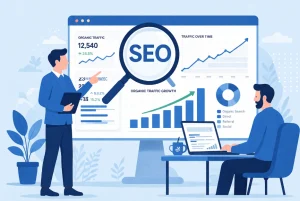
Unlike on-page SEO, which you can fully control, backlinks are an external vote of confidence. That is exactly why they carry more weight; they represent Information Gain, proving that your content offers unique value that others find worth referencing.
How Search Engines Interpret Links?
Over the years of managing SEO campaigns, we have seen how search engines use links in multiple ways.
They rely on them to discover new content, understand how topics are connected, and, most importantly, evaluate credibility. A website with strong backlinks is seen as more reliable than one without them.
This is why even technically perfect websites fail to rank if they lack external validation.
Why Link Building Remains Essential?
In nearly every campaign we audit, the pattern is clear: without backlinks, growth is limited.
It doesn’t matter how well content is optimised; without authority signals, search engines hesitate to rank it competitively.
Backlinks are not just important; they are foundational.
Link Building in the Age of AI: The ‘Human-Verified’ Signal
With the explosion of AI-generated content, search engines are facing a massive challenge: how do you distinguish between a site that simply “generates” info and a brand that truly “knows” its subject?
In 2026, high-quality backlinks act as a human-verified signal. While AI can write a perfect 2,000-word article in seconds, it cannot “earn” a link from a respected industry leader or a major news outlet. When a human editor at a high-authority site chooses to link to your content, it tells Google that your information has been vetted by a person. In a sea of AI noise, these “human votes” are the ultimate differentiator for ranking.
The Evolution of Link Building: 2020 vs. 2026
| Feature | Link Building (2020 Approach) | Authority Building (2026 Approach) |
| Primary Metric | Link Quantity & DA Score | Topical Relevance & Traffic |
| Strategy | Guest Post Spimming / PBNs | Digital PR & Data-Driven Assets |
| Anchor Text | Exact-Match Keywords | Branded & Natural Phrases |
| Content Focus | SEO-Optimized Filler | Information Gain & Unique Insights |
| Risk Level | High (Likely to trigger penalties) | Low (Focuses on Sustainable Growth) |
| Main Goal | Manipulating Rankings | Building Trust & E-E-A-T |
How Does Link Building Help SEO Rankings?
At its core, link building is about authority.
When trusted websites link to your content, they pass credibility signals that strengthen your domain. Over time, this builds what we refer to as “ranking power.”
We consistently observe that pages with strong backlink profiles outperform others, even when content quality is similar. Authority becomes the deciding factor.
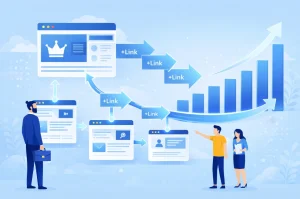
How Link Equity Works in Practice?
Link equity, often referred to as “link juice,” is something we apply strategically in every campaign.
Not all links carry equal value. A single backlink from a highly authoritative and relevant website can have more impact than dozens of low-quality ones.
When evaluating links, we focus on three key elements:
- The authority of the linking domain
- The relevance of the content
- The natural placement of the link
This layered approach determines whether a backlink will actually improve rankings or simply exist without impact.
Why Quality Always Outperforms Quantity?
One of the biggest misconceptions we encounter is the belief that more backlinks automatically lead to better rankings.
In practice, this is rarely true.
We have seen websites with hundreds of low-quality links fail to compete against those with a small number of highly relevant, authoritative backlinks.
Quality is not just important; it is the defining factor.
How Link Building Influences 2026 Search Rankings?
- Boosts Topical Authority: Backlinks from niche-relevant sites prove your site is an expert entity in a specific subject area.
- Increases Link Equity: High-quality “link juice” flows from authoritative domains to yours, raising your ranking potential.
- Improves Crawl Efficiency: Search engine bots discover and index your new content faster through external link paths.
- Validates Information Gain: Unique data or insights that earn links signal to Google that your content provides original value.
- Drives Referrer Traffic Value: Links from high-traffic pages send qualified users, which acts as a secondary “human” ranking signal.
Why Are Backlinks Important for SEO Success?
Backlinks play a central role in developing domain authority over time.
What we have learned from managing long-term campaigns is that authority compounds. As your backlink profile strengthens, it becomes easier to rank new content across multiple keywords.
This creates momentum, where SEO results accelerate rather than stagnate.
Strengthening Trust Signals
Search engines aim to deliver reliable results to users. Backlinks act as proof that your content is recognised and trusted by others.
We often compare this to professional endorsements. A recommendation from a trusted source carries significantly more weight than one from an unknown or irrelevant website.
Gaining a Competitive Edge
In competitive niches, backlinks are often the deciding factor between ranking on page one or being buried in search results.
When two websites have similar content and optimisation, the one with stronger backlinks almost always wins.
This is something we observe consistently across industries.
How Do Backlinks Improve Organic Traffic?
The most immediate impact of link building is improved rankings.
As pages move higher in search results, they naturally attract more visibility and clicks. This is especially valuable for high-intent keywords where traffic directly translates into leads or sales.
Referral Traffic Adds Immediate Value
Backlinks also generate direct traffic from other websites.
When placed strategically on relevant platforms, they bring in users who are already interested in your topic. This type of traffic tends to convert better because it is contextually aligned.
Case Study: Scaling Search Visibility Through Strategic Link Building
In a recent campaign for a client in the competitive UK service sector, we moved beyond basic guest posting to focus on Information Gain and high-authority digital PR.
The client had excellent technical SEO but was stuck on Page 2 for their primary keywords. By acquiring 12 high-authority, niche-relevant backlinks over a 6-month period, we saw the following impact:
| Metric | Before Campaign | After 6 Months | Growth % |
| Domain Rating (DR) | 24 | 41 | +70.8% |
| Organic Traffic (Monthly) | 1,200 | 2,880 | +140% |
| Top 3 Keyword Rankings | 4 | 22 | +450% |
| Referring Domains | 85 | 142 | +67% |
The Insight: The shift didn’t come from the number of links, but from the Topical Authority of the referring domains. By securing links from industry-leading publications rather than generic blogs, the “Trust Signal” sent to search engines was significantly stronger.
Maximizing Referrer Traffic Value
In 2026, Google looks closely at the “quality of the click.” We focus on Referrer Traffic Value, which measures how much actual human traffic a link sends to your site. A link on a page that nobody reads has very little value.
However, a link placed strategically within a high-traffic, relevant article provides a “double win”: it boosts your SEO through link equity and provides a steady stream of pre-qualified leads who are already engaged with your niche.
What Makes a Backlink High Quality?
We prioritise links from websites that are already trusted by search engines. These links carry significantly more weight and influence rankings more effectively.
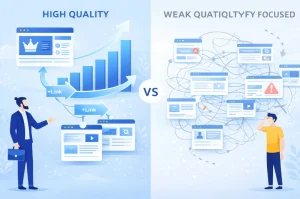
Relevance as a Critical Factor
Relevance is non-negotiable in our strategy.
A backlink from a closely related niche provides far more value than one from an unrelated website, regardless of its authority.
Natural Placement Within Content
Links embedded naturally within content perform better.
They appear more authentic to search engines and are more likely to generate actual clicks from users.
Strategic Anchor Text Usage
We ensure that anchor text remains natural and diverse.
Over-optimisation can reduce effectiveness and even trigger penalties, so maintaining balance is essential.
What Are the Best Link Building Strategies for SEO?

Content-Led Link Acquisition
Content-led link building is widely considered the most sustainable and scalable approach in SEO. Instead of chasing links directly, the focus is placed on creating assets that naturally attract them.
This typically includes in-depth guides, original research, data studies, and problem-solving resources that others find worth referencing. When content becomes a reliable source of information, it starts earning links passively over time.
For example, a detailed industry report that includes unique statistics or insights can be cited by blogs, journalists, and niche websites. These citations generate backlinks without direct outreach, making the process more organic and aligned with search engine expectations.
The long-term benefit of this strategy is that it continues to generate links even months or years after publication, building authority steadily.
Strategic Guest Posting
Guest posting remains effective when it is approached with a focus on relevance and quality rather than scale. Publishing on well-established, niche-relevant websites allows content to reach a targeted audience while earning contextual backlinks.
The value of guest posting lies not just in the link itself, but in the positioning. A well-written article on a respected platform can establish credibility, drive referral traffic, and strengthen brand presence.
For instance, contributing an expert article to a recognised industry blog can lead to both immediate visibility and long-term SEO benefits. The link becomes more meaningful because it is placed within relevant, high-quality content rather than appearing as a standalone insertion.
This strategy works best when each placement is carefully selected rather than mass-produced.
Digital PR and Media Coverage
Digital PR has evolved into one of the most powerful link building methods, particularly for acquiring high-authority backlinks. It involves creating stories, data-driven campaigns, or expert insights that are newsworthy and relevant to current trends.
When picked up by media outlets, these campaigns can generate links from highly authoritative domains, significantly boosting SEO performance.
A common example would be publishing a study or survey that reveals new insights within an industry. Journalists and publishers often reference such data, linking back as a source. These links tend to carry strong authority signals and can have a substantial impact on rankings.
Beyond SEO, digital PR also enhances brand credibility, making it a dual-purpose strategy.
Relationship-Based Outreach
Relationship-driven link building focuses on creating genuine connections within an industry rather than relying on one-off outreach requests.
By engaging with bloggers, editors, and website owners over time, opportunities for collaboration emerge more naturally. These relationships often lead to consistent backlinks, mentions, and partnerships that are difficult to replicate through cold outreach alone.
For example, maintaining ongoing communication with niche publishers can result in recurring content contributions or mentions whenever relevant topics arise. These links tend to be more trustworthy because they are based on familiarity and credibility rather than transactional intent.
This approach supports both SEO and long-term brand development.
Leveraging Broken Link Opportunities
Broken link building is a practical and mutually beneficial strategy. It involves identifying links on other websites that no longer work and offering relevant content as a replacement.
Website owners benefit by fixing user experience issues, while the content provider gains a backlink in return.
For instance, if a blog references a resource that is no longer available, replacing it with an updated and relevant page creates value for both parties. These links are often contextually strong because they are integrated into existing content that already holds relevance.
Although this method requires research and outreach, it can produce high-quality results when executed properly.
Does Link Building Still Work in SEO in 2026?
Link building remains a core component of SEO. Search engines continue to rely on backlinks to assess authority and trust, particularly in competitive search environments.
Websites with strong backlink profiles consistently outperform those without them, even when other SEO factors are similar. This demonstrates that links are still a primary differentiator in rankings.
How Link Building Has Evolved?
The evolution of link building has shifted the focus from quantity to quality and authenticity.
Search engines now evaluate not just the presence of links, but their context, relevance, and natural placement. Links that appear forced or manipulative are quickly identified, while those embedded within valuable content are rewarded.
For example, a single backlink from a well-respected, niche-relevant website can have more impact than dozens of low-quality links. This reflects a broader shift towards trust-based ranking systems.
As algorithms become more advanced, the emphasis on genuine value continues to increase.
Addressing Common Misconceptions
There is a widespread misconception that link building is no longer effective. In reality, its importance has not diminished, only the acceptable methods have changed.
Outdated tactics such as spammy link placements or automated link generation have lost effectiveness, but high-quality, strategic link building remains one of the strongest ranking factors.
The key difference today is that results depend on precision, relevance, and long-term planning rather than shortcuts.
What Are the Risks of Link Building and How to Avoid Them?
Common Risks
Link building carries risks when approached incorrectly. Low-quality backlinks from irrelevant or untrustworthy sources can weaken a website’s credibility and negatively impact rankings.
Over-optimised anchor text is another common issue. Repeating exact-match keywords excessively can signal manipulation, making the link profile appear unnatural.
In more severe cases, poor link building practices can lead to penalties that significantly reduce visibility in search results.
How to Minimise Risk?
Reducing risk in link building requires a focus on natural growth and quality control.
A balanced backlink profile should include a mix of branded, partial-match, and natural anchor text, along with links from diverse but relevant sources. Regular audits help identify harmful links and ensure that the overall profile remains healthy.
For example, reviewing backlinks periodically can reveal low-quality placements that may need to be disavowed or removed. This proactive approach helps maintain long-term SEO stability.
Ultimately, sustainable link building is achieved by prioritising value over shortcuts.
Internal Links vs External Backlinks: What’s the Difference?
Internal Links for Structure
Internal links connect pages within the same website and play a crucial role in organising content. They help users navigate related topics while guiding search engines through the site’s structure.
A strong internal linking system ensures that important pages receive visibility and that content is indexed efficiently. It also improves user engagement by encouraging visitors to explore more pages.
External Backlinks for Authority
External backlinks come from other websites and serve as endorsements. They signal that the content is valuable enough to be referenced externally, which strengthens credibility in the eyes of search engines.
These links are particularly important for improving rankings, as they directly influence how authority is measured.
Why Both Are Important?
Internal links and backlinks serve different but complementary purposes.
While internal links create structure and improve usability, backlinks build authority and enhance ranking potential. A balanced SEO strategy integrates both, ensuring that content is not only well-organised but also trusted externally.
When combined effectively, they create a strong foundation for sustainable search performance.
How Many Backlinks Are Needed for SEO?
There is no universal benchmark for the number of backlinks required.
Each niche and keyword has different levels of competition.
Our Strategic Approach
We analyse competitor backlink profiles to determine realistic targets.
This allows us to align strategies with actual market conditions rather than assumptions.
Quality Defines Success
In every campaign we manage, quality consistently outweighs quantity.
Link Building Best Practices for Long-Term SEO Growth

Focus on Consistency
Link building should be approached as a long-term strategy.
Consistent efforts lead to sustainable growth.
Prioritise Value
Content must provide genuine value.
Without it, link building becomes ineffective.
Maintain Diversity
A diverse backlink profile appears natural and reduces risk.
Monitor Performance Regularly
Regular audits ensure that your backlink profile remains healthy and continues to support rankings.
Conclusion: Why Link Building Remains Essential for SEO?
From our perspective as an SEO agency, link building is not optional; it is fundamental.
It directly influences how search engines evaluate authority, trust, and relevance.
Understanding how link building helps SEO allows businesses to move beyond guesswork and adopt strategies that deliver measurable results.
When executed correctly, link building does more than improve rankings; it builds credibility, drives qualified traffic, and creates a strong foundation for long-term success.
FAQs About Link Building and SEO
How does an SEO agency approach link building differently?
An agency focuses on strategy, quality, and long-term sustainability rather than quick wins.
Are backlinks still effective for competitive keywords?
Yes, backlinks are often the deciding factor in ranking for competitive terms.
What industries benefit most from link building?
All industries benefit, but highly competitive niches rely on it the most.
Can link building improve new websites?
Yes, it is essential for establishing authority for new websites.
How is backlink quality evaluated?
Quality is determined by authority, relevance, placement, and natural context.
Is manual outreach better than automated link building?
Manual outreach ensures higher relevance and authenticity, making it more effective.
What is the biggest mistake in link building?
Prioritising quantity over quality is one of the most common and damaging mistakes.

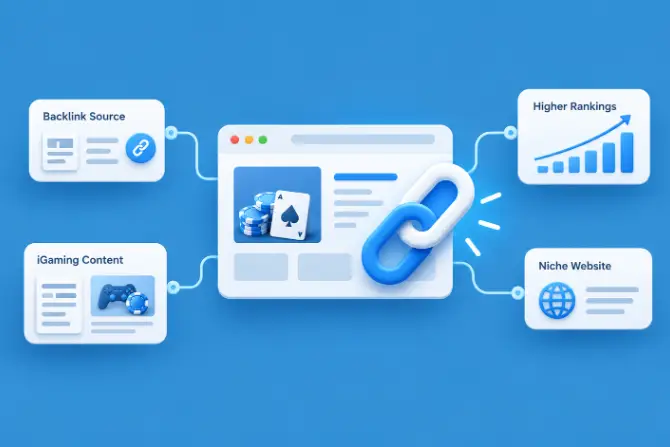

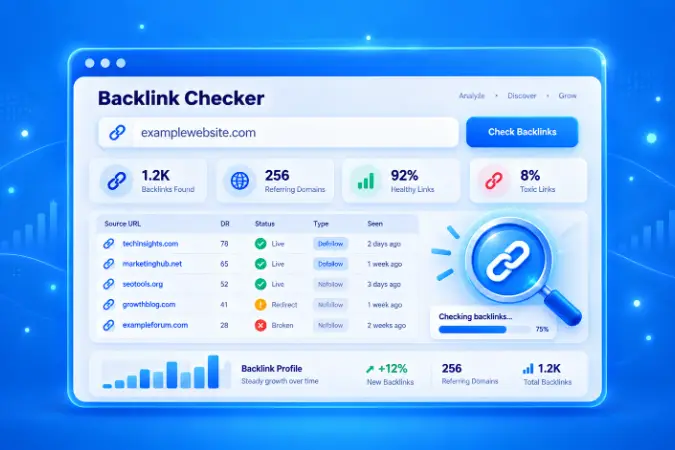
[…] IO’s explanation of how link building helps SEO explores how backlinks work alongside the wider optimisation […]
[…] broader analysis of how link building helps SEO explains how backlinks fit alongside technical optimisation, content quality and long-term organic […]