

In the modern SEO landscape, businesses are constantly searching for trustworthy ways to improve search visibility, build authority, and earn high-quality backlinks.
Over the years, HARO link building became one of the most discussed white-hat SEO strategies because it allowed brands to gain editorial backlinks from trusted media websites without relying on manipulative link schemes.
However, the SEO industry has changed significantly. Google’s algorithms are smarter, AI-generated content has increased competition, and digital PR strategies are evolving rapidly.
Many marketers now wonder whether HARO link building still delivers meaningful SEO results in 2026 or whether it has become outdated.
The short answer is yes, HARO link building still works in 2026, but the approach required to succeed has changed considerably.
At ClickDo IO, we have observed that businesses using HARO strategically can still earn powerful editorial backlinks, strengthen E-E-A-T signals, and improve brand credibility.
However, success now depends more on expertise, relevance, response quality, and digital PR positioning than simply sending mass outreach replies.
This guide explains how HARO link building works today, what has changed, its advantages and limitations, and how businesses can still benefit from it in 2026.
What Is HARO Link Building and How Has It Changed?
HARO, originally known as “Help a Reporter Out,” was created to connect journalists with expert sources. Journalists submitted questions or story requests, and businesses or industry professionals responded with expert insights in exchange for possible media mentions and backlinks.
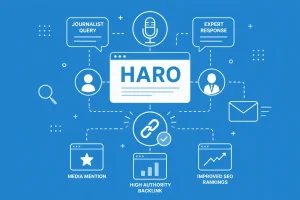
Over time, HARO became one of the most popular digital PR and link building methods because successful responses could earn backlinks from highly authoritative publications.
The platform experienced several changes in recent years. HARO was rebranded as Connectively under Cision before eventually returning under the HARO branding again after industry changes and acquisitions. Multiple SEO publications have reported on the platform’s transformation and the growing competition within journalist-source platforms.
In 2026, HARO link building is no longer simply about sending quick replies to journalists. Modern HARO campaigns require:
- Genuine expertise
- Fast response times
- Clear and concise pitches
- Trustworthy brand positioning
- Human-written insights
- Strong E-E-A-T signals
This shift happened partly because AI-generated responses flooded journalist inboxes. As a result, reporters now prioritize authentic expertise and unique perspectives rather than generic responses.
At ClickDo IO, we have noticed that personalized and experience-based HARO responses consistently outperform templated outreach.
Does HARO Link Building Still Work in 2026?
Yes, HARO link building still works, but it works differently compared to previous years.
Businesses can still earn powerful editorial backlinks through HARO and similar digital PR platforms. However, the success rate is lower for low-quality outreach because journalists now receive far more responses than before.
Recent SEO discussions suggest that modern HARO outreach is becoming more quality-focused rather than volume-focused.
The strategy remains effective because Google continues to value:
| SEO Signal | Why It Matters |
| Editorial backlinks | They indicate trust and authority |
| Brand mentions | They strengthen online credibility |
| Topical relevance | They improve semantic SEO |
| E-E-A-T signals | They support trustworthy content |
| Natural link acquisition | They align with Google guidelines |
HARO backlinks often come from established websites with strong editorial standards. These links can help improve domain authority, organic rankings, and brand recognition.
However, businesses should understand an important distinction.
In reality, HARO can still generate high-authority backlinks and media exposure and many SEO professionals now combine HARO with broader digital PR campaigns instead of relying on HARO alone.
Some marketers claim HARO is “dead.” In reality, the strategy still works when executed correctly with expert-driven outreach.
At ClickDo IO, we recommend treating HARO as one component of a broader authority-building strategy rather than a standalone SEO shortcut.
Why HARO Backlinks Still Matter for SEO?
Backlinks remain one of Google’s strongest ranking factors in 2026. While search engines have become better at evaluating content quality and user experience, authoritative backlinks still influence rankings significantly.
HARO backlinks are valuable because they are typically:
- Editorially placed
- Contextually relevant
- Earned naturally
- Difficult to manipulate
- Published on trusted websites
These qualities align closely with Google’s focus on trustworthiness and authority.
Many businesses now prioritize digital PR link building because AI-driven search experiences increasingly rely on trusted sources and authoritative mentions. Industry reports show that digital PR remains one of the most effective modern link building methods.
For example, if a cybersecurity consultant provides expert commentary to a major technology publication through HARO, Google may view that mention as a strong trust signal within that niche.
At ClickDo IO, we often see HARO backlinks contributing to:
- Improved keyword rankings
- Increased referral traffic
- Higher brand trust
- Better visibility in AI-generated search summaries
- Stronger topical authority
Another important advantage is that HARO backlinks are usually difficult for competitors to replicate, which increases their long-term SEO value.
How We at ClickDo IO Approach HARO Link Building?
At ClickDo IO, we approach HARO link building as a long-term digital PR and authority-building strategy rather than a shortcut for acquiring backlinks. In 2026, earning editorial links requires far more than sending generic outreach emails.
Google’s evolving algorithms now prioritize experience, expertise, authority, and trustworthiness, meaning businesses must demonstrate real value before journalists or search engines consider them credible sources.
Our HARO strategy is designed around E-E-A-T principles while also aligning with modern SEO, AI search experiences, and user trust signals. Instead of focusing purely on link quantity, we concentrate on building brand authority that can support sustainable rankings over time.
Identifying Highly Relevant Journalist Opportunities
One of the most common mistakes businesses make with HARO is responding to every available journalist query regardless of relevance. This outdated volume-based approach often results in poor-quality responses, low placement success, and weak topical relevance.

At ClickDo IO, we carefully evaluate each opportunity before responding. We focus only on journalist requests that align closely with:
- The client’s industry expertise
- The website’s topical authority
- Existing content themes
- Audience relevance
- Search intent alignment
This selective process helps strengthen topical authority, which is increasingly important in Google’s semantic search systems. When a cybersecurity website consistently earns mentions in technology and cybersecurity publications, Google is more likely to recognize the website as a trusted source within that niche.
Our targeted approach improves:
- Response quality
- Editorial acceptance rates
- Journalist trust
- Link relevance
- Organic ranking potential
We also analyze the publication itself rather than focusing only on domain metrics. A highly relevant industry website with engaged readers can often provide stronger SEO and branding benefits than a generic high-DR publication.
Creating Human-Centered HARO Responses
As AI-generated content becomes more common, journalists are becoming increasingly selective about the responses they publish. Many reporters now receive hundreds of generic AI-written submissions that lack originality, practical experience, or expert insight.
At ClickDo IO, we prioritize authentic human expertise in every HARO response. Rather than producing robotic answers filled with keywords, we focus on delivering genuinely useful information that helps journalists improve the quality of their articles.
Our responses are built around:
- Real industry experience
- First-hand expertise
- Unique perspectives
- Actionable advice
- Clear and concise explanations
- Natural conversational language
For example, instead of providing a vague marketing statement about SEO trends, we may include:
- A real campaign outcome
- A practical challenge faced by a client
- Data-backed observations
- Lessons learned from industry experience
This type of expert-driven response increases the likelihood of being featured because journalists value original insights that readers cannot easily find elsewhere.
In addition, human-centered responses support Google’s growing emphasis on content authenticity. As AI search systems continue evolving, search engines are becoming better at identifying whether content demonstrates genuine expertise or simply rephrases existing information.
Strengthening E-E-A-T Signals Through Digital PR
Google’s E-E-A-T framework (Experience, Expertise, Authoritativeness, and Trustworthiness) has become one of the most important foundations of modern SEO. HARO link building can play a powerful role in strengthening these signals when used strategically.
At ClickDo IO, we use HARO not only to earn backlinks but also to establish real industry authority. Every successful media placement contributes to broader brand credibility across search engines, AI-generated search summaries, and user perception.
Our HARO campaigns help strengthen:
- Expert visibility across authoritative publications
- Brand trust within competitive industries
- Author reputation and recognition
- Industry-specific authority signals
- Digital PR footprint
- Citation consistency across the web
For example, when a business founder is repeatedly quoted in respected publications discussing their area of expertise, search engines may begin associating that individual and brand with authority in the topic area.
This becomes especially valuable in industries where trust directly affects user decisions, such as:
- Finance
- Healthcare
- Legal services
- SaaS
- Marketing
- Cybersecurity
We also ensure that expert contributions align with the broader content strategy of the client’s website. Consistency between on-site expertise and off-site mentions helps reinforce topical relevance and strengthens overall SEO performance.
Building Relationships Instead of Chasing Links
Another important aspect of our HARO strategy is relationship-building. Many businesses treat HARO purely as a transactional link-building system, but long-term success often comes from establishing credibility with journalists and editors over time.
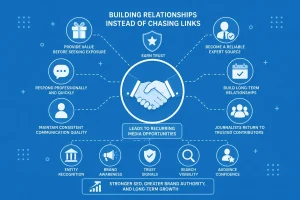
At ClickDo IO, we focus on:
- Providing value before seeking exposure
- Responding professionally and quickly
- Maintaining consistent communication quality
- Becoming reliable expert sources for journalists
Journalists frequently return to trusted contributors who consistently provide useful insights. Over time, this can lead to recurring media opportunities without requiring constant outreach efforts.
This relationship-driven strategy supports both SEO and brand authority because repeated mentions across trusted publications can strengthen:
- Entity recognition
- Brand awareness
- Trust signals
- Search visibility
- Audience confidence
As AI-powered search engines continue relying on entity-based understanding, consistent brand mentions may become even more valuable in future ranking systems.
Measuring SEO Impact Beyond Backlink Quantity
One of the biggest misconceptions in link building is that success should be measured only by the number of backlinks acquired. In reality, a single highly relevant editorial mention can often provide more long-term value than dozens of low-quality links.
At ClickDo IO, we evaluate HARO performance using broader SEO and branding metrics rather than focusing only on backlink counts.
We measure:
- Referral traffic quality
- Organic keyword improvements
- Brand mentions across the web
- Topical relevance of placements
- User engagement metrics
- Link sustainability
- Publication authority
- Audience trust alignment
For example, if a HARO placement generates:
- Qualified referral visitors
- Higher engagement
- Increased branded searches
- Improved topical rankings
then the campaign is contributing meaningful SEO value even if the total number of backlinks is relatively small.
This long-term approach aligns more closely with Google’s direction toward rewarding genuine authority and trustworthy online presence rather than manipulative link-building tactics.
Why This Approach Matters in 2026?
In 2026, SEO is driven by AI search, semantic relevance, E-E-A-T, entity authority, and brand trust. This means link building is no longer about quantity alone.
At ClickDo IO, we focus on real expertise, editorial relevance, and human-first outreach to earn backlinks that support long-term authority, stronger rankings, and sustainable search visibility.
Conclusion
HARO link building still works in 2026, but success now depends on quality, expertise, and authenticity.
The era of mass generic outreach is fading. Businesses that provide genuine insights, respond strategically, and focus on building authority can still earn valuable editorial backlinks through HARO and similar platforms.
At ClickDo IO, we see HARO as part of a larger authority-building ecosystem that combines:
- Digital PR
- expert positioning
- brand trust
- editorial visibility
- white-hat SEO
Businesses should approach HARO with realistic expectations. Results may take time, but a single authoritative backlink can deliver long-term SEO value far beyond short-term link quantity tactics.
For brands focused on sustainable SEO growth, HARO link building remains a relevant and effective strategy in 2026.
FAQs
Is HARO link building safe for Google SEO?
Yes. HARO is considered a white-hat SEO strategy because backlinks are earned naturally through editorial contributions rather than purchased manipulative schemes.
How long does it take to get results from HARO?
Results vary significantly. Some businesses receive placements within weeks, while others may take several months depending on industry competition and response quality.
Are HARO backlinks always dofollow?
No. Some publications provide dofollow links, while others use nofollow attributes or mention brands without linking directly.
Can small businesses succeed with HARO?
Yes. Small businesses often perform well when they provide niche expertise and practical insights that journalists find valuable.
Is HARO better than guest posting?
HARO and guest posting serve different purposes. HARO focuses on earned editorial authority, while guest posting provides more content control.
Does AI affect HARO outreach success?
Yes. Journalists increasingly prefer authentic human insights over generic AI-generated responses, making originality more important than ever.
What industries benefit most from HARO link building?
Industries with strong expertise-based content perform particularly well, including finance, SaaS, marketing, healthcare, cybersecurity, legal services, and business consulting.