


Quick Picks: Finding the Best Backlink Checker Tool for 2026
- Best Overall: Semrush (43T+ links, real-time toxic link detection).
- Best for Pros: Ahrefs (Industry-leading crawler speed, best for competitor gaps).
- Best for Beginners: Ubersuggest (Simplest UI, most affordable pricing).
- Best Free Tool: Google Search Console (100% accurate data for your own site).
For deep competitive research, Ahrefs remains the gold standard; for protecting your site from AI-driven penalties, Semrush is superior. Whether you need deep data or a simple interface, finding the best backlink tool depends entirely on your specific ranking goals.
Selecting the best backlink checker tool is no longer just about seeing a list of links; it’s about understanding the authority and ‘health’ of those links in real-time.
What Are Backlinks and Why Do They Matter for SEO?
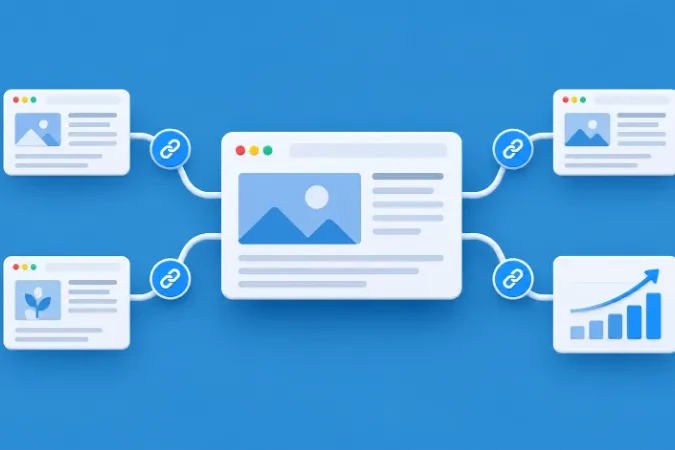
Backlinks are links from one website to another, and they play a foundational role in how search engines evaluate and rank websites. When another site links to your content, it signals to search engines that your content is valuable, trustworthy, and relevant.
In the context of SEO, backlinks function much like recommendations. If multiple reputable websites point to your content, search engines interpret this as a sign that your site deserves visibility.
Why Backlinks Are Important?
Backlinks influence several key aspects of your website’s performance:
- Search Engine Rankings: Websites with strong backlink profiles tend to rank higher in search results
- Website Authority: Backlinks contribute to metrics like Domain Authority and trust signals
- Organic Traffic Growth: More visibility leads to increased clicks and traffic
- Content Discovery: Search engines use backlinks to find and index new pages
Example:
I once worked with a small eCommerce website that had well-optimized product pages but struggled to gain traction. After analyzing its backlink profile, I noticed it had very few referring domains.
We implemented a simple outreach strategy like guest blogging and directory submissions. Within four months:
- Organic traffic increased by over 60%
- Several keywords moved to page one
- Domain authority improved significantly
This experience clearly showed that backlinks are not optional, they are essential.
How Does a Professional SEO Backlink Tool Work?
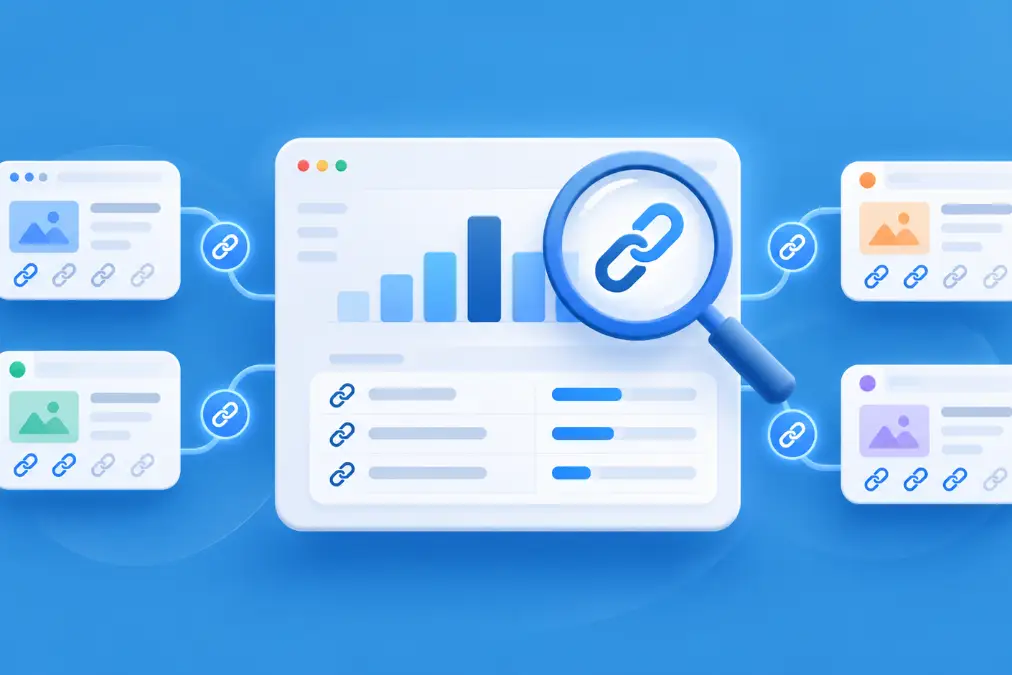
SEO tools to check backlinks rely on sophisticated crawling systems that scan billions of web pages. These tools continuously gather data about links across the internet and store it in massive databases.
When you enter your website into a backlink checker tool, it retrieves all available link data and presents it in a structured format.
What These Tools Actually Do?
Backlink analysis tools help you:
- Identify which websites link to you
- Understand the quality of those links
- Analyze anchor text patterns
- Discover new link-building opportunities
- Monitor changes in your backlink profile over time
Key Metrics You Will See
Most SEO tools provide a range of metrics that help evaluate backlink quality:
- Domain Authority (DA): Predicts how well a domain can rank
- Page Authority (PA): Measures the ranking potential of a page
- Referring Domains: Number of unique websites linking to you
- Anchor Text: The clickable text used in backlinks
- Spam Score: Indicates potential risk from low-quality links
Understanding these metrics is crucial because not all backlinks are beneficial. Some can actually harm your SEO performance. Every reliable backlink SEO tool will provide a core set of metrics to help you judge link quality.
What Should You Look for in Backlink Analysis Tools?
Choosing the right tool can make a significant difference in your SEO strategy. Not all tools provide the same level of accuracy or features.
Key Factors to Consider
Data Accuracy and Size
Tools with larger databases provide more reliable backlink data. This is especially important when analyzing competitors.
Competitor Analysis Capabilities
A strong backlink tool should allow you to explore competitor backlinks. This helps you identify opportunities you might otherwise miss.
Toxic Link Detection
Some backlinks can be harmful, especially those from spammy or irrelevant websites. A good tool should help you identify and manage these links.
Ease of Use
An intuitive interface ensures you can quickly understand and act on the data without confusion.
Quiz: Which Backlink Tool Do You Actually Need?
Answer these 3 questions to skip the reading:
What is your primary goal?
- Recover from a penalty → Use CognitiveSEO or Semrush.
- Steal competitor strategies → Use Ahrefs.
- Just starting out/Free → Use Ubersuggest or Google Search Console.
What is your technical level?
- Beginner → Use Moz or Ubersuggest.
- Data Nerd/Pro → Use Ahrefs or SEO SpyGlass.
Are you tracking AI search mentions?
- Yes → Use Ahrefs (Brand Radar) or Semrush.
- No, just Google → Any of the top 12.
Top 5 100% Free Best Backlink Checker Tool for 2026
If you are just starting a new blog or managing a small business site on a budget, you don’t necessarily need a $100/month subscription to get actionable data. While premium tools offer more “bells and whistles,” these five tools provide reliable, no-cost data to help you understand your link profile today.
1. Google Search Console (The Ultimate Source of Truth)
If you want to know which links are actually influencing your rankings, look no further than Google Search Console (GSC). Because this data comes directly from Google’s index, it is the only 100% accurate “source of truth” for your own domain.
- Best For: Monitoring your own site’s growth and seeing exactly which pages Google recognizes as “linked.”
- Pro Tip: Navigate to the “Links” report in the sidebar. You can see your “Top linking sites” and “Top linked pages” to identify which content is your best “link magnet.”
2. Ahrefs Free Backlink Checker (The Gold Standard Lite)
Ahrefs maintains the world’s largest index of live backlinks (after Google). Their free version is a “teaser” of their premium power, allowing you to check any URL, not just your own.
- What You Get: It displays the top 100 backlinks, the top 5 anchors, and the top 5 pages.
- Best For: Quick competitor “sniff tests.” If a competitor has thousands of links, this tool shows you their most powerful 100 so you can try to replicate them.
3. SEO SpyGlass (Best for Deep Audits)
Unlike the other web-based tools on this list, SEO SpyGlass is a desktop software (part of the SEO PowerSuite). Because it uses your own computer’s processing power, the free version is surprisingly generous.
- The “Free” Edge: It allows you to crawl and analyze up to 1,100 links per project.
- Best For: Deep technical audits. It provides data on “Link Penalty Risk,” helping you find spammy links that might be hurting your rankings before you even spend a penny.
4. OpenLinkProfiler (No Paywalls, Just Data)
OpenLinkProfiler is one of the few web-based tools that doesn’t hide its best data behind a login or a credit card prompt. It uses its own fresh web crawler to provide a massive list of links for any domain.
- Standout Feature: It allows you to filter links by “Industry” or “Context,” making it easy to see if your competitors are getting links from niche-relevant blogs or generic directories.
- Best For: Users who need a quick, exportable list of backlinks without signing up for a trial.
5. Moz Link Explorer (Best for Authority Metrics)
Moz famously invented the “Domain Authority” (DA) metric. While their full suite is premium, their Link Explorer offers a free tier for registered users.
- The Deal: You get 10 search queries per month. Each query provides a breakdown of a site’s DA, its “Spam Score,” and its “Linking Domains.”
- Best For: Checking the “quality” of a potential link partner. Before you reach out for a guest post, use Moz to ensure their Spam Score isn’t dangerously high.
Top 12 SEO Tools to Check Backlinks (Free & Paid)
Choosing the right SEO backlink tools can significantly influence how effectively you monitor and improve your website’s authority Each tool offers a different approach. Some are built for deep technical audits, while others prioritise simplicity, affordability, or specific use cases such as competitor tracking or toxic link detection.
From my experience working on multiple SEO projects and managing backlink strategies across different websites, I’ve realised that relying on a single tool often creates blind spots. That’s why I always compare data across platforms and focus on trends rather than absolute numbers. The comparison tables below will help you quickly understand which tool aligns best with your workflow.
While there are hundreds of SEO tools for backlink analysis available, only a few provide the depth required for professional agency work. Below, we’ve vetted the top SEO tools backlink databases for accuracy and speed.
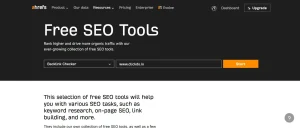
1. Ahrefs – Advanced Backlink Analysis Tool
Check Ahrefs
Ahrefs is widely considered a foundational SEO backlink tool, known for its massive database and industry-leading accuracy
| Feature | Details |
| Data Size | Very Large |
| Accuracy | High |
| Competitor Analysis | Excellent |
| Ease of Use | Moderate |
| Pricing | Paid |
AI & GEO Capability: Brand Radar
In 2026, Ahrefs introduced Brand Radar, a dedicated AI visibility tracker. It monitors over 100 million prompts across ChatGPT, Gemini, and Perplexity to see if your brand is mentioned or cited.
- Key Metric: AI Share of Voice (SoV), this tells you what percentage of AI-generated answers in your niche include a link to your site.
- Why it matters: It helps you identify “citation gaps” where competitors are being recommended by AI but you are not.
Ahrefs is ideal when you need deep insights into backlinks, including lost links, anchor text distribution, and competitor strategies.
From my perspective, Ahrefs is the closest thing to a “single source of truth” for backlink data. I often use it to reverse-engineer competitor link-building strategies and identify patterns that can be replicated.
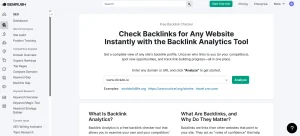
2. SEMrush – Complete SEO Backlink Audit Tool
Check Semrush
| Feature | Details |
| Data Size | Very Large |
| Accuracy | High |
| Toxic Link Detection | Advanced |
| Competitor Analysis | Excellent |
| Pricing | Paid |
AI & GEO Capability: AI Visibility Toolkit
Semrush has integrated a full AI Visibility Toolkit that treats “Prompts” like “Keywords.” It allows you to track your brand’s presence in Google’s AI Overviews and ChatGPT Search.
- Key Metric: AI Sentiment Analysis, it doesn’t just track if you are mentioned, but whether the AI’s “opinion” of your brand is positive, neutral, or negative.
- Why it matters: In 2026, appearing in an AI answer is step one; ensuring the AI recommends you as a “top choice” is step two.
It is particularly useful for maintaining a healthy backlink profile and identifying harmful links.
In my workflow, SEMrush stands out when it comes to backlink audits. I rely on it heavily for identifying toxic links and maintaining a clean link profile, especially after algorithm updates.
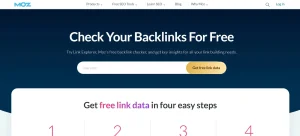
3. Moz Link Explorer – Reliable Backlink Checker
Check Moz
| Feature | Details |
| Data Size | Medium |
| Accuracy | Good |
| Spam Score | Yes |
| Ease of Use | Easy |
| Pricing | Free + Paid |
This tool is great for users who want simple and reliable backlink insights.
Personally, I use Moz as a validation tool. When I want a second opinion on link quality or domain strength, Moz metrics like Domain Authority and Spam Score provide a quick, reliable check.
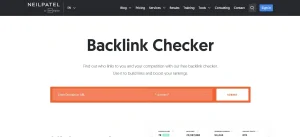
4. Ubersuggest – Beginner-Friendly Backlink Tool
Check Ubersuggest
| Feature | Details |
| Data Size | Medium |
| Accuracy | Moderate |
| Ease of Use | Very Easy |
| Free Version | Yes |
| Pricing | Free + Paid |
It is best suited for bloggers and small businesses starting their SEO journey.
From my experience, Ubersuggest is a great starting point, but not something I rely on for advanced decision-making. It’s useful for quick insights and early-stage SEO planning.
5. Majestic SEO – Trust Flow & Citation Flow Analysis
Check Majestic
| Feature | Details |
| Trust Flow | Yes |
| Citation Flow | Yes |
| Historical Data | Available |
| Ease of Use | Moderate |
| Pricing | Paid |
This tool is valuable when you want to assess backlink quality rather than just quantity.
I personally value Majestic for its Trust Flow metric. It helps me quickly identify whether backlinks are coming from authoritative sources or low-quality networks.
6. Collaborator – Free Backlink Checker & Link-Building Opportunity Finder
Check Collaborator Free Backlink Checker
The backlink data allows you to analyse backlinks pointing to virtually any website and quickly inspect important metrics without purchasing a premium SEO subscription.
| Feature | Details |
| Cost | Free |
| Strongest Backlinks | Up to 50 |
| Newest Backlinks | Up to 50 |
| Competitor Analysis | Yes |
| Dofollow/Nofollow Data | Yes |
| Anchor Text Analysis | Yes |
| Link-Building Opportunities | Yes |
| Ease of Use | Very Easy |
| Backlink Data | Powered by SE Ranking |
One feature I particularly like about Collaborator is that it goes beyond simply showing you where competitors are getting their backlinks.
If a referring website is also available through the Collaborator marketplace, the tool highlights it. This means you can analyse a competitor’s backlink, identify the referring domain and potentially explore an opportunity to secure a placement from the same website without spending hours manually researching publishers.
7. SERPSTAT – Competitor Backlink Research Tool
Check SERPSTAT
| Feature | Details |
| Competitor Comparison | Yes |
| Keyword Tools | Yes |
| Site Audit | Yes |
| Data Accuracy | Good |
| Pricing | Paid |
It helps uncover backlink opportunities by analyzing competitors.
I often use SERPSTAT when I want to identify overlooked backlink opportunities. It can reveal competitor gaps that are not always visible in other tools.
8. OpenLinkProfiler – Free Backlink Analysis Tool
Check OpenLinkProfiler
| Feature | Details |
| Cost | Free |
| Data Depth | Limited |
| Fresh Data | Yes |
| Export Options | Yes |
| Ease of Use | Easy |
Best for quick checks and beginners who need basic backlink data.
From my experience, OpenLinkProfiler is useful for quick audits, but I never rely on it for strategic decisions due to its limited dataset.
9. SEOptimer – Backlink Tracking Made Easy
Check SEOptimer
| Feature | Details |
| Alerts | Yes |
| Link Tracking | Yes |
| Keyword Tracking | Yes |
| Ease of Use | Easy |
| Pricing | Paid |
This tool is ideal for ongoing backlink monitoring.
I find this tool particularly helpful for staying updated. The alert system allows me to react quickly when links are gained or lost, which is critical for maintaining rankings.
10. CognitiveSEO – Backlink Audit & Toxic Link Detection
Check CognitiveSEO
| Feature | Details |
| Toxic Link Detection | Advanced |
| Backlink Audit | Yes |
| Recovery Tools | Yes |
| Reporting | Detailed |
| Pricing | Paid |
It is especially useful if your site has been affected by harmful backlinks.
In my experience, this tool becomes essential during penalty recovery. It provides a deeper level of toxic link analysis compared to most standard tools.
11. BuzzSumo – Content & Backlink Insights Tool
Check BuzzSumo
| Feature | Details |
| Content Insights | Yes |
| Backlink Tracking | Yes |
| Influencer Data | Yes |
| Ease of Use | Easy |
| Pricing | Paid |
This tool is perfect for content-driven link-building strategies.
I personally use BuzzSumo when planning content campaigns. It helps me understand what type of content naturally earns backlinks, which is key for sustainable SEO growth.
12. SEO SpyGlass – Detailed Backlink Checker Tool
Check SEO SpyGlass
| Feature | Details |
| Backlink Reports | Detailed |
| Competitor Analysis | Yes |
| Penalty Risk Detection | Yes |
| Data Depth | High |
| Pricing | Free + Paid |
It is ideal for advanced users who want detailed insights and control.
From my perspective, SEO SpyGlass is underrated. It provides detailed backlink reports and is especially useful for those who want more control without relying entirely on cloud-based tools.
The Ultimate 2026 Backlink Tool Comparison
This table represents the current state of link indexes as of early 2026. For a successful strategy, prioritize Index Freshness if you are doing active outreach, and Database Size if you are doing deep competitor forensics.
| # | Tool | Database Size (Backlinks) | Freshness (Crawl Rate) | Best For… |
| 1 | Semrush | 43.1 Trillion | Every 15 Min | Real-time Audit & Toxicity |
| 2 | Ahrefs | 35.0 Trillion | Every 15 Min | Competitor Link Gaps |
| 3 | Majestic | 21.0 Trillion+ | Daily | Forensic Link Quality (Trust Flow) |
| 4 | Moz Pro | 12.0 Trillion | 3–5 Days | DA/PA Authority Tracking |
| 5 | SE Ranking | 3.0 Trillion | Daily | Agency White-label Reporting |
| 6 | SERPSTAT | 2.5 Trillion | Daily | Regional Competitor Research |
| 7 | SEO SpyGlass | 2.0 Trillion+ | Daily / Custom | Desktop-based Deep Analysis |
| 8 | Ubersuggest | 2.0 Trillion | Weekly | Small Business / Beginner SEO |
| 9 | BuzzSumo | 1.5 Trillion* | Continuous | Content-Driven Link Building |
| 10 | CognitiveSEO | 1.0 Trillion+ | Daily | Penalty Recovery & Visual Audits |
| 11 | SEOptimer | 800 Billion | Daily | New/Lost Link Alerts |
| 12 | OpenLinkProfiler | 500 Billion | Weekly | 100% Free Quick Checks |
*BuzzSumo focuses on “Sharable Content” links rather than a general web crawl.
Strategic Analysis of the Data
- The “Speed” Tier: Semrush and Ahrefs are the only tools currently operating on a 15-minute refresh cycle. If you are running high-velocity PR campaigns, these are non-negotiable.
- The “Forensic” Tier: Majestic remains the king of “Historical Data.” If you need to see what a domain looked like in 2012 to investigate a legacy penalty, their index is the most reliable.
- The “Value” Tier: SE Ranking and SEO SpyGlass offer the best “Data-to-Dollar” ratio. They provide trillion-scale data at a fraction of the “Big Three” cost.
Final Insight
No single tool provides a complete picture of your backlink profile. Each platform has its own strengths and limitations, and understanding how they complement each other is where real SEO advantage comes in.
From my experience, the biggest mistake many people make is trusting one tool blindly. Backlink databases vary, which means you will always see differences in link counts, referring domains, and metrics.
What has consistently worked for me is a layered approach:
- I use Ahrefs or SEMrush as my primary analysis tool to get a comprehensive overview
- I validate important backlinks using Moz or Majestic to assess quality and trust
- I monitor ongoing changes with tools like Monitor Backlinks or SE Ranking
More importantly, I focus less on the number of backlinks and more on relevance and authority. A few high-quality links from trusted websites often outperform hundreds of low-quality ones.
In practical terms, combining tools with human judgment is what makes the difference. Tools provide data, but strategy comes from interpreting that data correctly and applying it consistently.
Step-by-Step: How to Reverse Engineer Competitor Backlinks?
Finding the right tool is only half the battle; knowing how to use it to outperform your competition is where real SEO growth happens. You don’t always need more links than your competitors; you need better ones.
Follow this 3-step blueprint to reverse-engineer any competitor’s link profile and identify gaps in your own strategy:
Step 1: Identify and Input the “Market Leader”
Open your preferred analysis tool, we recommend Ahrefs or Semrush for this due to their massive database size. Enter the URL of a competitor who is currently outranking you for your target keyword.
- In Ahrefs: Navigate to Site Explorer and enter the domain.
- In Semrush: Use the Backlink Analytics module.
Step 2: Filter for High-Authority “Dofollow” Links
A competitor might have thousands of links, but many could be “No-Follow” or low-quality spam. To save time, apply filters to see only the links that pass actual ranking power:
- Filter 1: Set “Link Type” to Dofollow.
- Filter 2: Set “Domain Rating” (DR) or “Authority Score” (AS) to 30+.
- The Goal: You now have a “hit list” of high-quality websites that are already proven to link to content in your specific niche.
Step 3: Close the Gap with the “Link Gap” Tool
This is the most powerful shortcut in modern SEO. Use the Backlink Gap (Semrush) or Link Intersect (Ahrefs) tool to find missed opportunities.
- Input your domain and up to 3 competitors.
- The tool will generate a list of websites that link to all of your competitors but not to you.
- The Action: These sites are “low-hanging fruit.” Since they already link to multiple sites similar to yours, they are highly likely to link to you if you reach out with superior content or a better value proposition.
Common Mistakes to Avoid When Using Backlink Checker Tools
Even with the best tools, mistakes can lead to poor SEO outcomes.
Common Errors
- Prioritizing quantity over quality
- Ignoring toxic backlinks
- Relying on a single tool
- Failing to monitor backlinks regularly
Misinformation vs Reality
Misinformation:
- More backlinks always lead to better rankings
- Every backlink is beneficial
Reality:
- High-quality, relevant backlinks have the most impact
- Poor-quality links can harm your SEO performance
Understanding this distinction is essential for building a sustainable SEO strategy.
Best Tools for Detecting and Removing Toxic Backlinks
With the rise of automated AI-generated spam in 2026, the risk of “toxic” link injection is higher than ever. To maintain a clean profile and avoid algorithmic penalties, you need a proactive defense strategy.
- Semrush Backlink Audit Tool: This is the gold standard for toxicity detection. It assigns a “Toxicity Score” to every incoming link based on over 50 markers, such as link networks, manipulative anchor text, and spammy environments.
- Google Search Console (Disavow Tool): While Google’s official stance is that their systems now “ignore” most spam , the Disavow Tool remains your final line of defense for critical situations like manual actions.
- The “Safety” Benefit: Identifying these links early prevents AI-driven penalties where Google’s spam brain might otherwise flag your site for “unnatural link patterns”. Catching these before a major algorithm update is the difference between staying on page one and losing your rankings entirely.
Toxic Link Management: Is the Google Disavow Tool Still Relevant?
As we move through 2026, the SEO community’s stance on “disavowing” has shifted. Google’s official line remains that their systems are now sophisticated enough to ignore spam rather than penalize you for it.
The “Tool, Not a Religion” Rule
Google’s John Mueller famously stated in March 2026 that the disavow file is a “tool, not a religion.” For most websites, it is a “billable waste of time.” However, there are two “Break Glass” scenarios where you must still use it:
- The Manual Action: If you receive a notification in Google Search Console for “Unnatural Inbound Links,” you must use the disavow tool as part of your reconsideration request.
- Targeted Negative SEO: If you see a massive spike (thousands of links) from a specific TLD (like .xyz or .top) that is clearly a malicious attack, a proactive disavow can prevent algorithmic volatility.
2026 Pro-Tip: Disavowing Entire TLDs
A “hidden” feature confirmed by Google in early 2026 is the ability to disavow an entire Top-Level Domain. If 99% of your spam comes from one TLD, you can use the command domain:xyz in your text file to tell Google to ignore every link from that extension.
Expert Verdict: Use Semrush’s Toxicity Score to monitor the health of your profile, but only hit the “Disavow” button if you see a direct correlation between spam spikes and a drop in rankings.
Conclusion: Choosing the Right SEO Tools to Check Backlinks
Selecting a high-performance backlink SEO tool is a crucial step in building a resilient online presence for 2026. Each tool offers unique features, and the best choice depends on your specific goals.
If you are new to SEO, starting with user-friendly tools like Ubersuggest or OpenLinkProfiler can help you understand the basics. As your needs grow, investing in advanced platforms like Ahrefs or SEMrush will provide deeper insights and more effective strategies.
Ultimately, success in SEO comes from consistent effort, informed decisions, and a focus on quality over quantity.
Backlinks are not just technical elements, they are a reflection of your website’s credibility and authority. Ultimately, the most effective backlink research tools are the ones that integrate seamlessly into your existing workflow, allowing you to move from ‘data collection’ to ‘link building’ in minutes.
FAQs About SEO Tools to Check Backlinks
Are backlink checker tools accurate?
Most tools are highly reliable, but no tool has 100% complete data. Using multiple tools can improve accuracy.
How often should backlinks be monitored?
It is recommended to review your backlink profile at least once a month to maintain quality.
What is a good number of referring domains?
There is no fixed number, but more high-quality referring domains generally improve SEO performance.
Can backlinks improve traffic instantly?
Backlinks usually take time to impact rankings and traffic, often weeks or months.
What are dofollow and nofollow links?
Dofollow links pass SEO value, while nofollow links typically do not, but both can drive traffic.
Is it necessary to disavow bad backlinks?
Only in cases where harmful backlinks are affecting your rankings.
Which tool is best for beginners?
Ubersuggest is widely considered one of the easiest tools for beginners.



[…] This is particularly useful when comparing data from different SEO tools for checking backlinks. […]